Birds
From the ducks, coots and moorhens on the ponds, to the parakeets, woodpeckers, and treecreepers in the woods, you can get to know the feathered friends of Fog Lane through the bird profiles below. The park is home to over 40 bird species, so there are plenty out there for you to find! You can use the eBird app to log your sightings and share your photos on the Friends of Fog Lane Park Facebook group.
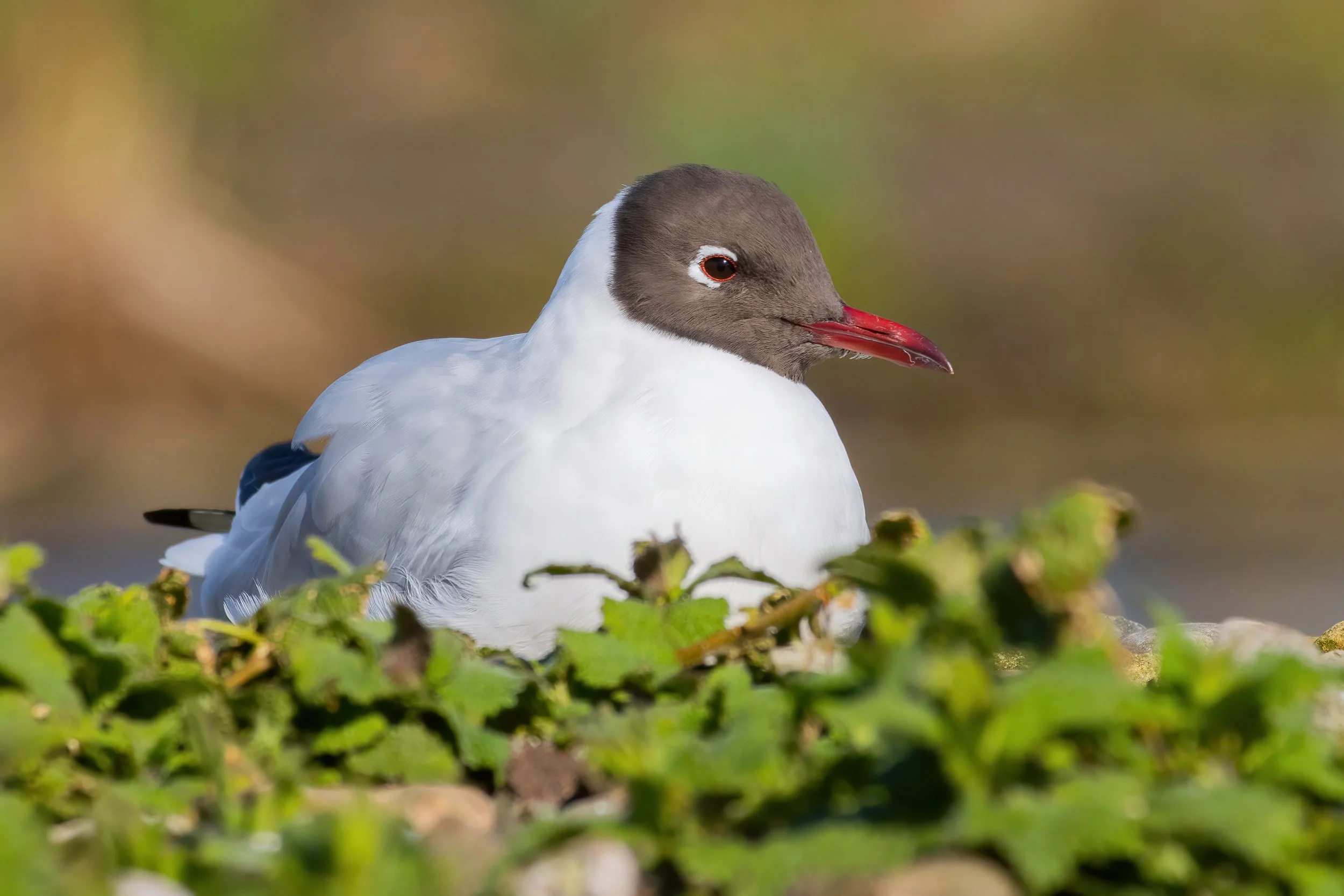
Black-headed gull
A small gull that got its name from its breeding plumage, which is actually more of a chocolate brown than black. This colouration disappears outside of its breeding season, making it harder to tell apart from other small gulls. The black-headed gull is a very active, squarky scavenger, and can often be seen flying in a flock over Fog Lane’s ponds and on the sports field, where they have made a habit out of perching on the goal crossbars.
Photo Credit: James Conibear
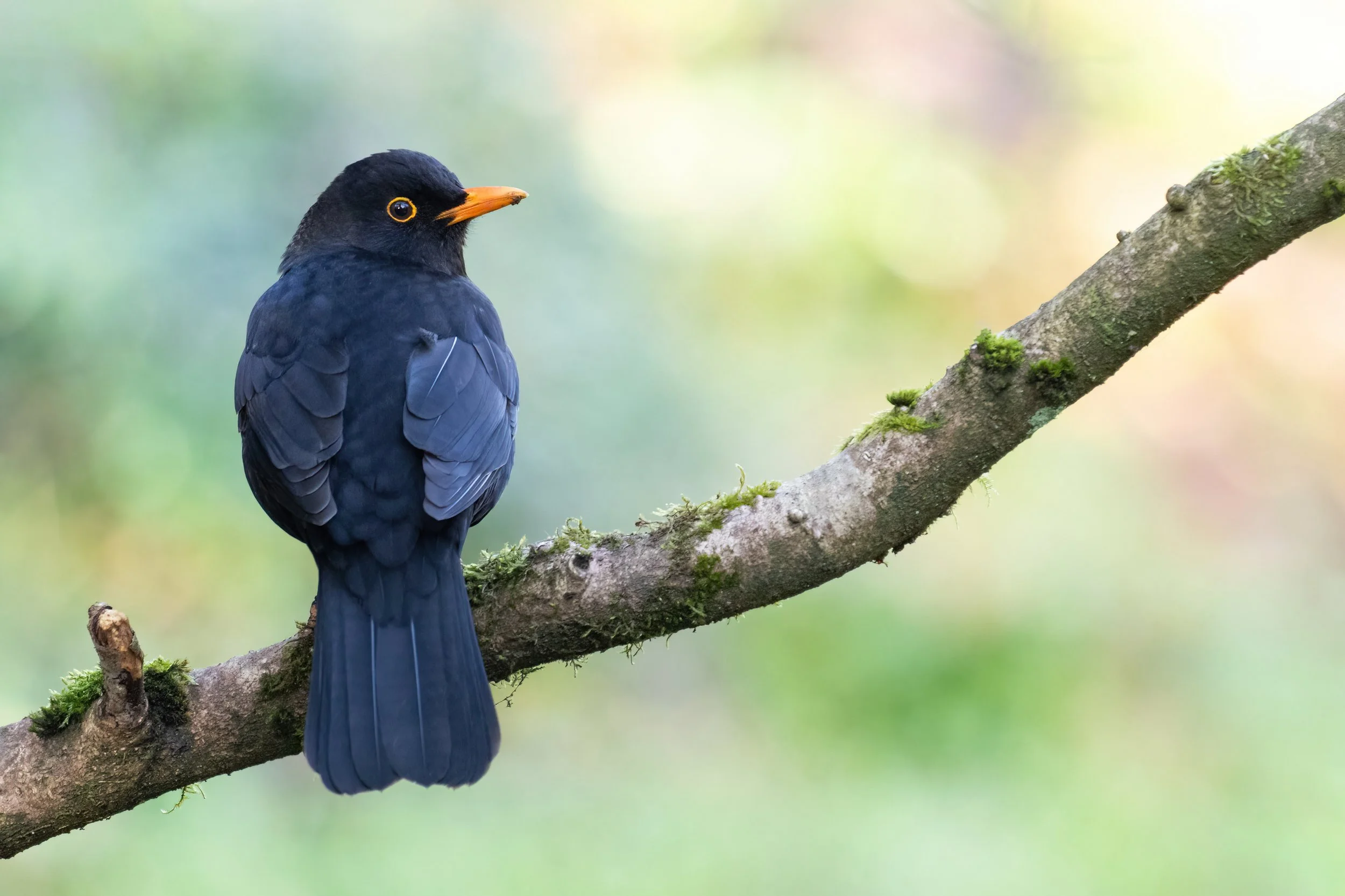
Blackbird
This member of the thrush family is a common sight in the park and can often be seen on the grass hunting for insects, worms and other invertebrates, and beneath the feeders in the hide area. The species' name is somewhat misleading, as not all blackbirds are black. The name is in reference to the male bird, as a female blackbird is actually brown! Other distinguishing features include an orange beak and yellow eyering on the male, and a brown beak and eyering on the female. The blackbird is known for its beautiful song, which is a favourite among birders.
Photo Credit: James Conibear
Blackcap
Sometimes referred to as the northern nightingale due to pleasant fluting song, the blackcap is a distinctive greyish warbler that primarily visits during the summer months, though is increasingly spending the winter in the UK. Only the male has its namesake black cap; the female’s is a chestnut brown. In Fog Lane Park they can be seen in Tiger Wood and in the woodland along the Serpentine Path..
Photo Credit: James Conibear
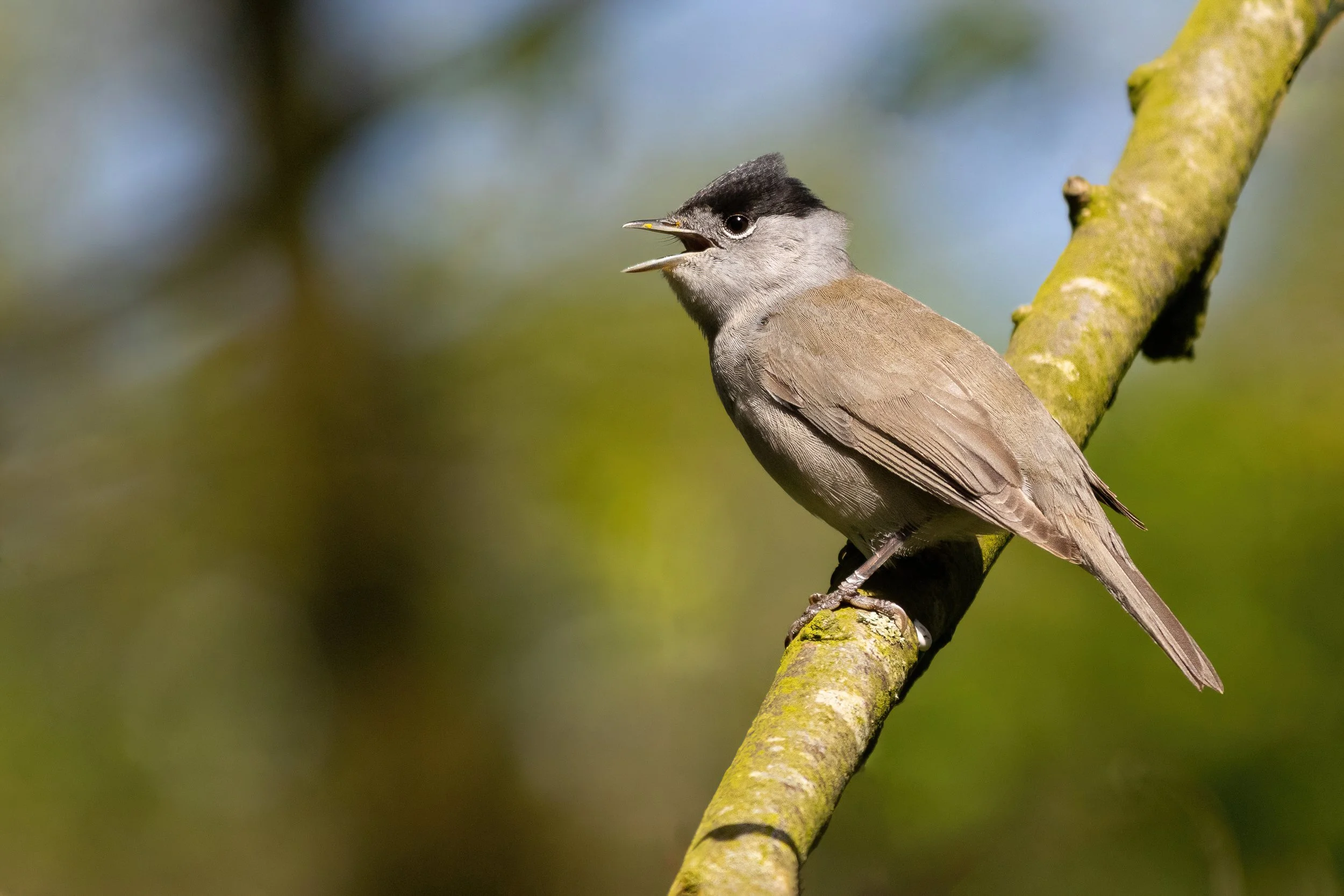
Blue Tit
Sitting among the UK's more colourful common species, the blue tit is easily recognisable thanks to its namesake plumage, and is a welcome sight in woodland, gardens and (you guessed it) parks! Outside of the breeding season, this small species can often be seen feeding alongside other members of the tit family, such as the great tit, coal tit and long-tailed tit. Advantages of this mixed-species foraging flock include increased feeding efficiency and better protection from predators like sparrowhawks. Blue tits can be found all around the park, and are regulars at the bird hide, where you can get a good view.
Photo Credit: James Conibear
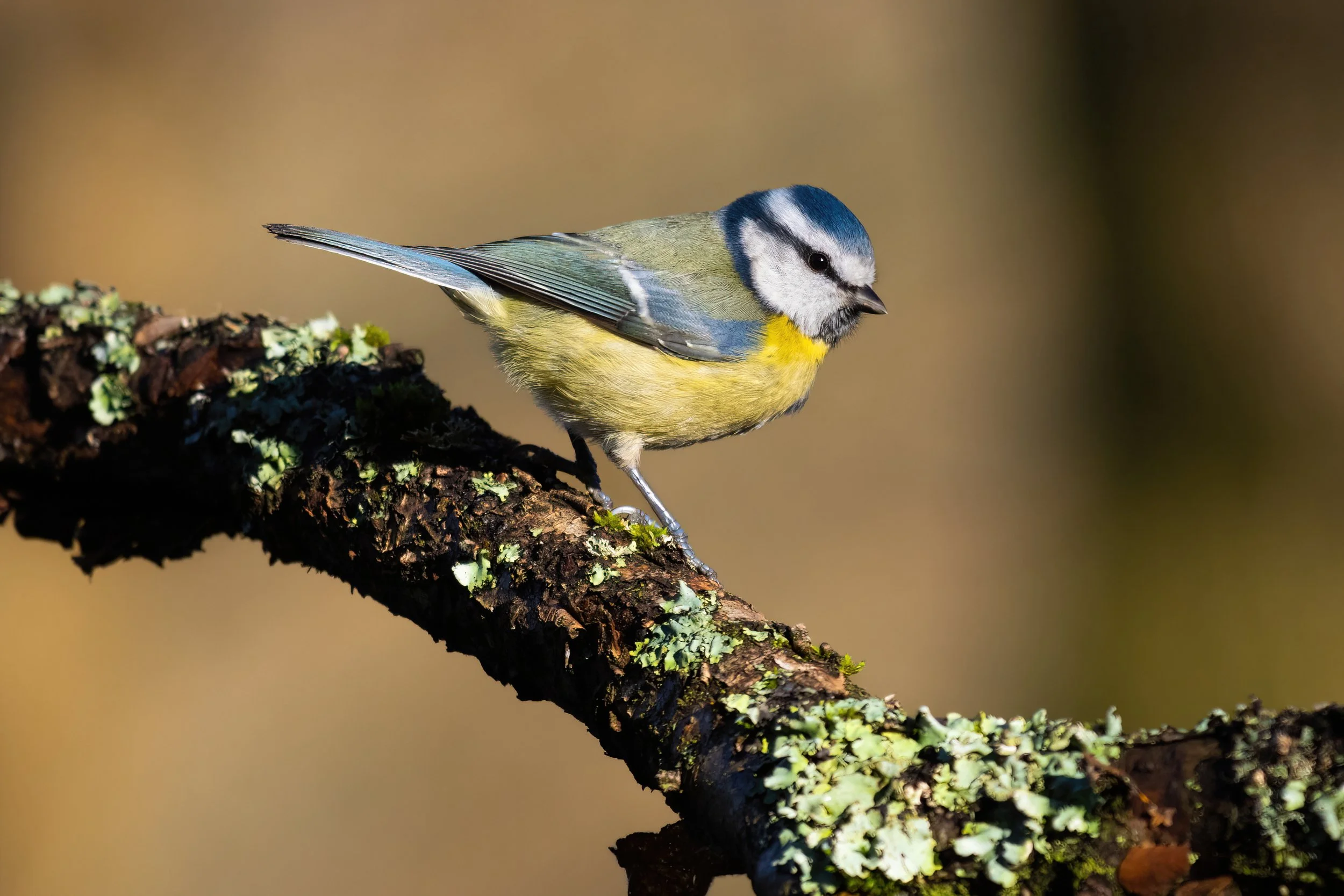
Bullfinch
The bullfinch is the bulkiest finch species in the park, with the male easily recognisable due to its vibrant rose-red breast, black cap, and thick bill; the female lacks the red plumage and is predominantly a more subtle light brown. Bullfinches are shy and secretive birds, though if you learn to identify their call (which sounds like a wheel that needs oiling) then you’ll be able to tell when they’re near. In Fog Lane bullfinches can be found on the outskirts of Tiger Wood and among the brambles along the Serpentine Path. If you’re lucky you may also spot one visiting the feeders at our park’s bird hide!
Photo Credit: James Conibear
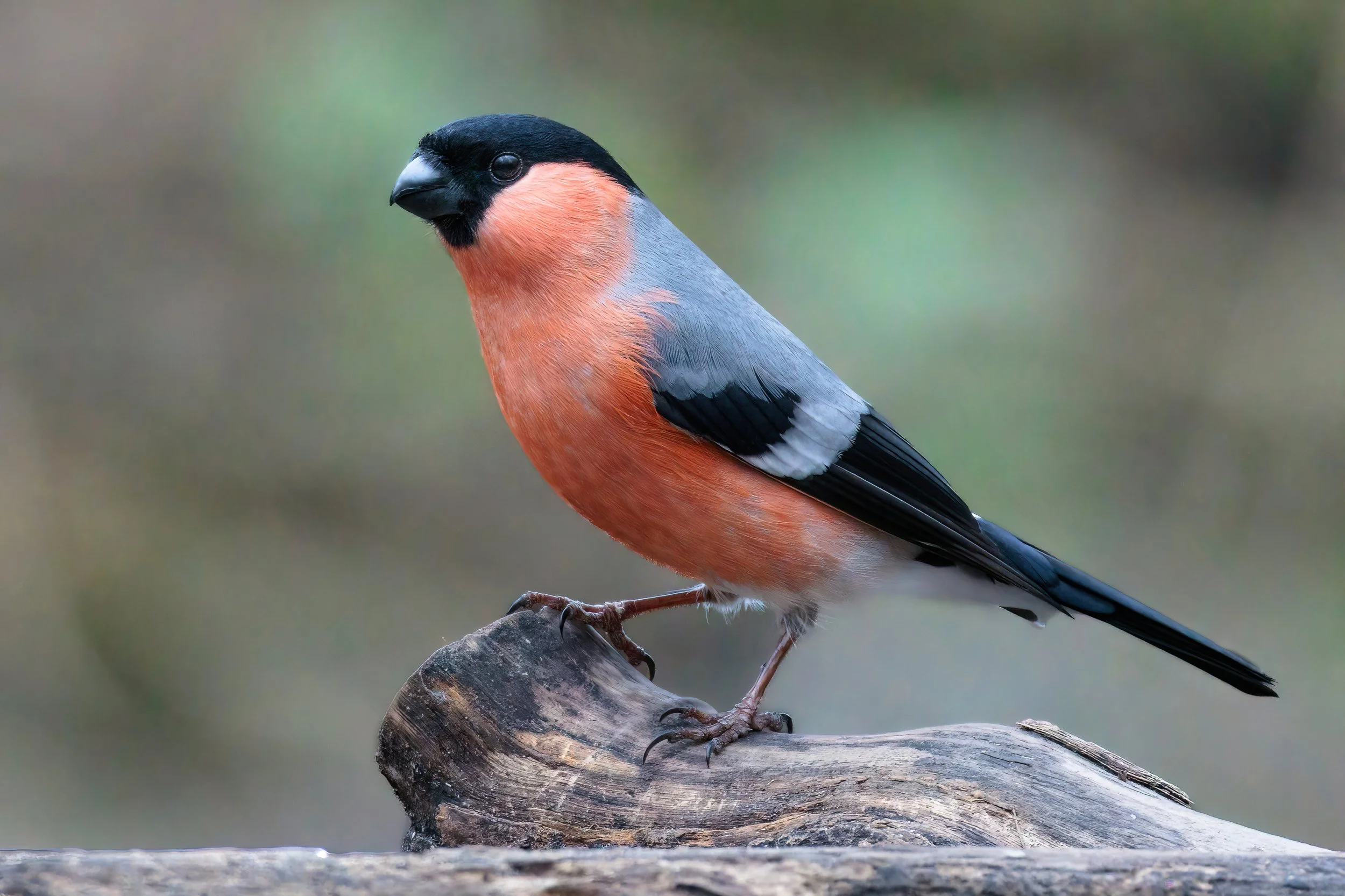
Buzzard
This large raptor is the UK’s most common bird of prey, with the population having bounced back remarkably thanks to conservation efforts, after suffering from severe persecution and pesticide poisoning. While not a Fog Lane resident, buzzards are occasionally spotted soaring over the park’s meadow and sports fields on the lookout for their next meal. Listen out for their distinctive 'kee-yaaa' call!
Photo Credit: James Conibear
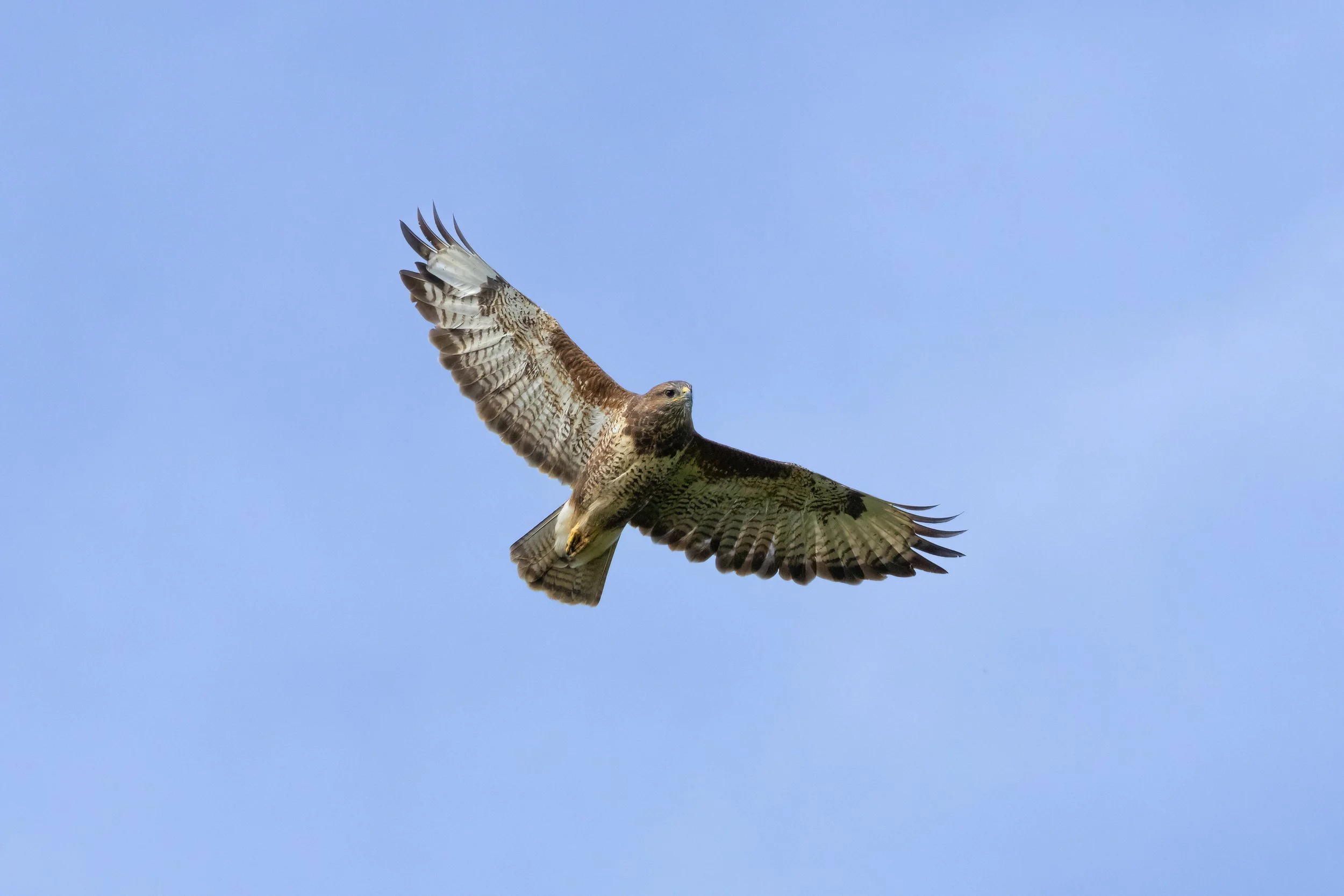
Canada Goose
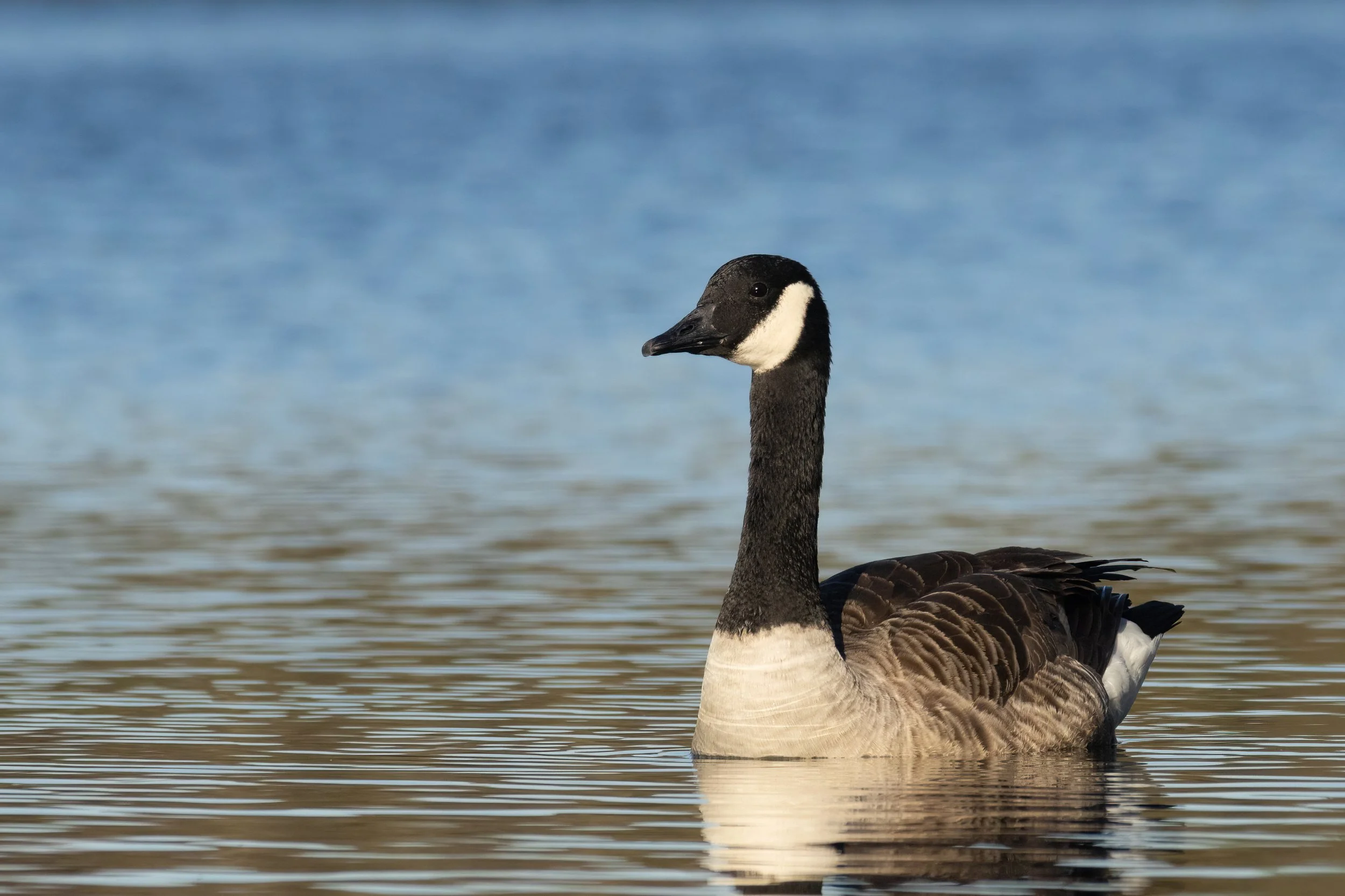
A bird with a fearsome reputation, and for good reason! Canada geese aren’t afraid to stand their ground against animals much larger than them – especially when goslings are around – and will bite when threatened, with children often finding out the hard way. The species is now very common across the UK, having spread to Britain from North America. They can be entertaining to watch, just give them space (some individuals need more than others) and don’t ignore that warning hiss!
Photo Credit: James Conibear
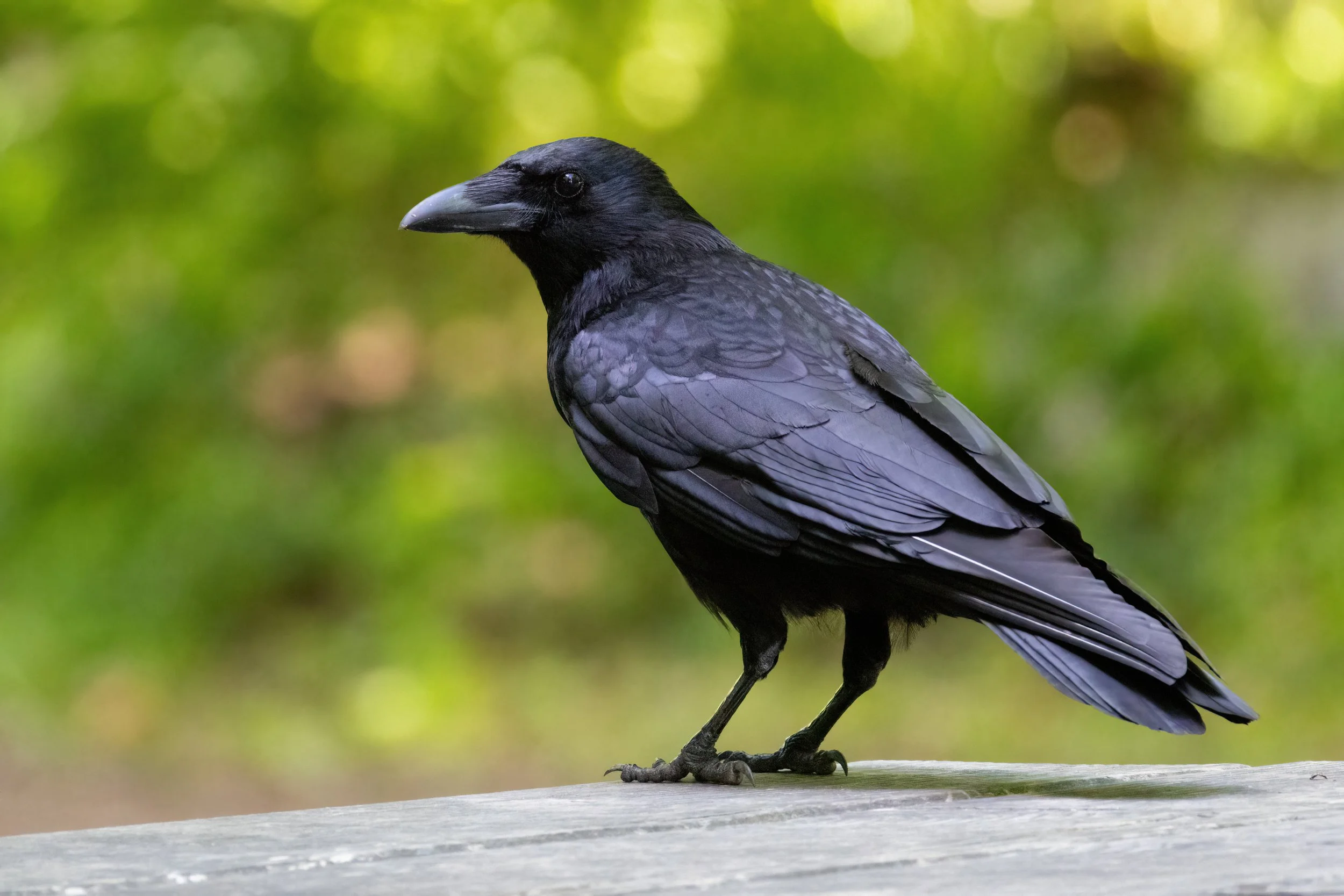
Carrion Crow
A large, jet-black corvid with a distinctive "caw" for its call. As the name suggests, this species scavenges on dead animals, but will also forage for fruit, hunt invertebrates, and raid nests. Like its larger relative, the raven, the carrion crow has a reputation for intelligence, and research has recorded its impressive problem-solving, tool use, and social learning abilities.
Photo Credit: James Conibear
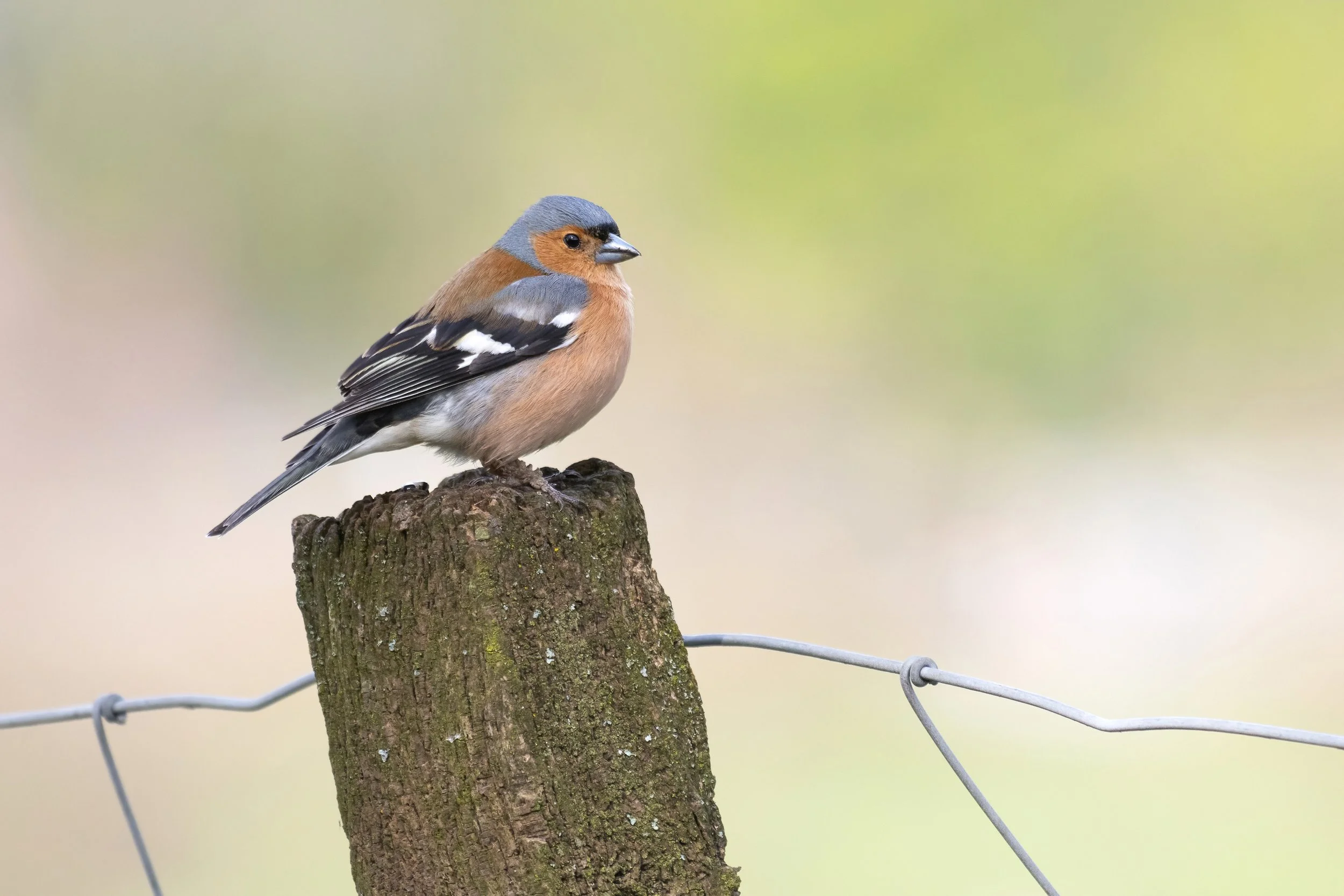
Chaffinch
As the most common finch species here in the UK, the chaffinch is a very recognisable bird, particularly the male, whose orange-pink breast makes him easy to spot as he feeds on the ground and among the trees. Your chances of spotting a chaffinch are increased further still in the winter, when migrants from Scandinavia boost the local population. In Fog Lane Park chaffinches can be found in Tiger Wood and along the Serpentine Path.
Photo Credit: James Conibear
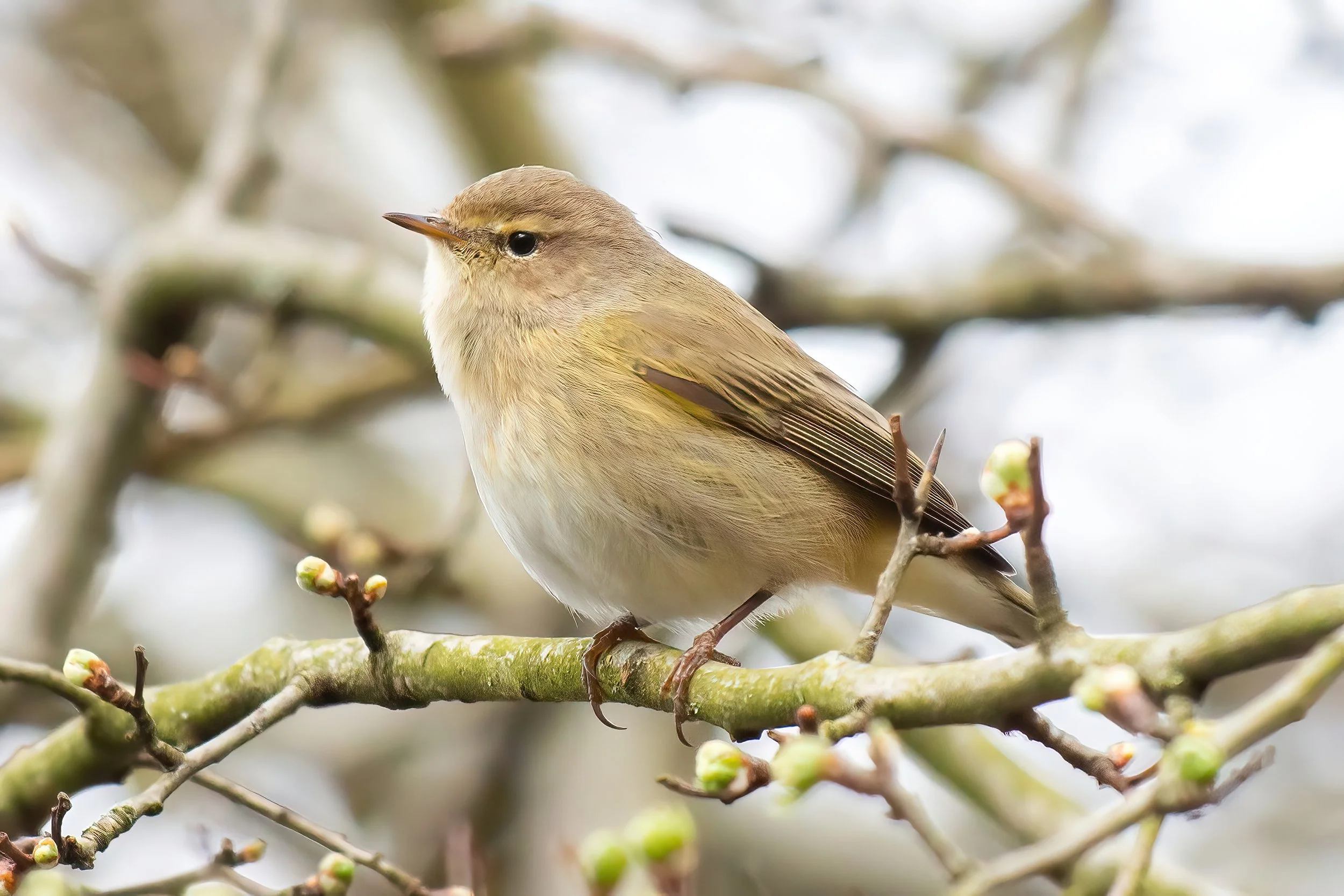
Chiffchaff
A small olive-brown warbler that is named after its ‘chiff chiff chaff chaff’ call, which is the easiest way to tell it apart from the strikingly similar-looking willow warbler. Its numbers are boosted in the summer, when migrant birds boost the resident population. In the park the chiffchaff is often seen in the woodland along the Serpentine Path.
Photo Credit: James Conibear
Coal Tit
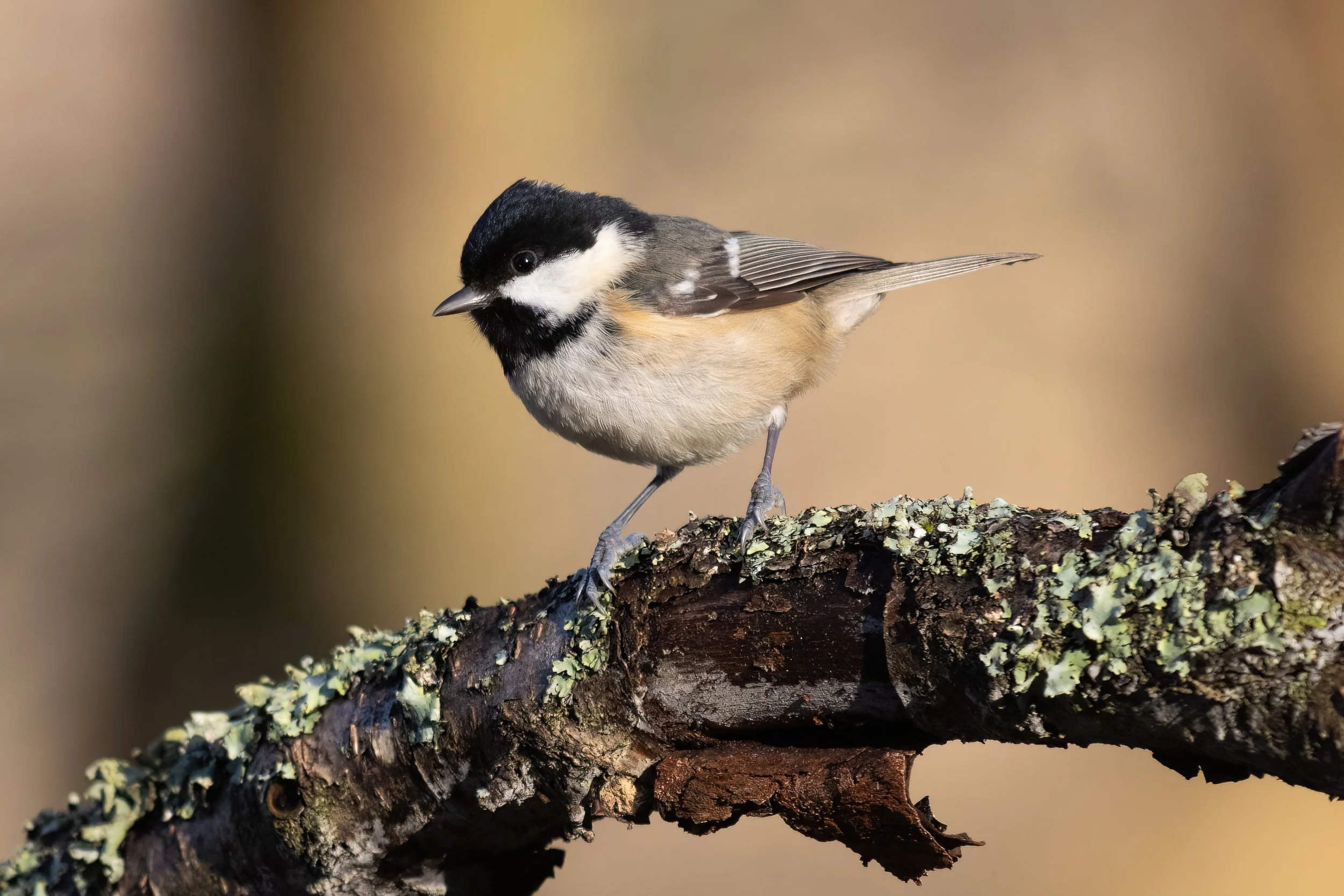
A small tit with a preference for coniferous woodland. In Fog Lane Park it is most often found in the woodland surrounding the Serpentine Path, which features a number of coniferous trees. Coal tits are regulars at the park’s bird hide, where you can get close-up views as they feed on sunflower hearts. Outside of the breeding season, this species can often be seen feeding alongside other members of the tit family, such as the blue tit, great tit, and long-tailed tit.
Photo Credit: James Conibear
Coot
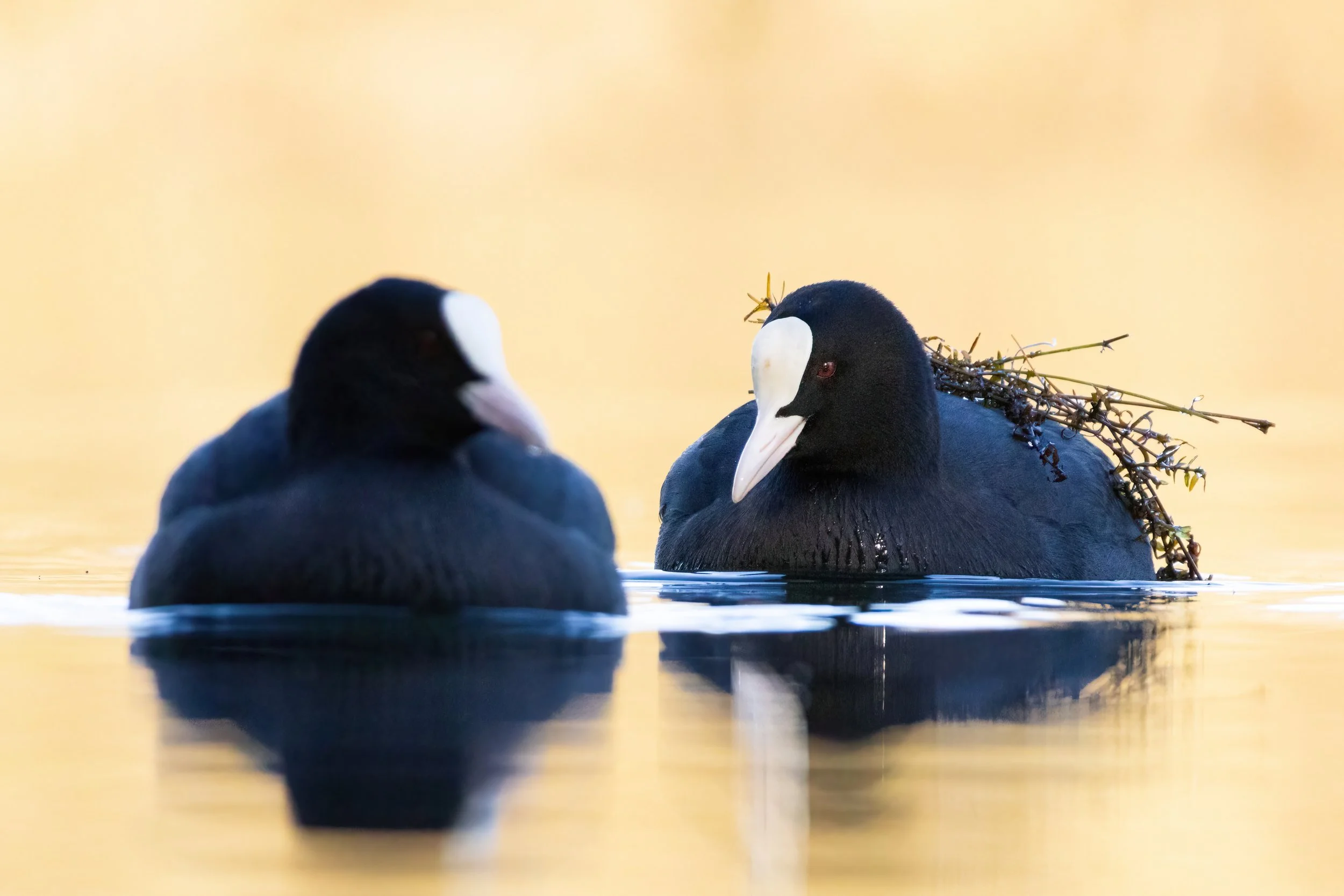
With its distinctive white beak and ‘shield’ above it, the coot is a common sight on British ponds. They can be very aggressive towards other birds, aren’t afraid of making their presence known – unlike their smaller, shier cousin, the moorhen – and will call and patter noisily over the water before taking flight. Their large lobed feet aid them in both swimming (much liked webbed feet) and fighting.
Photo Credit: James Conibear
Dunnock
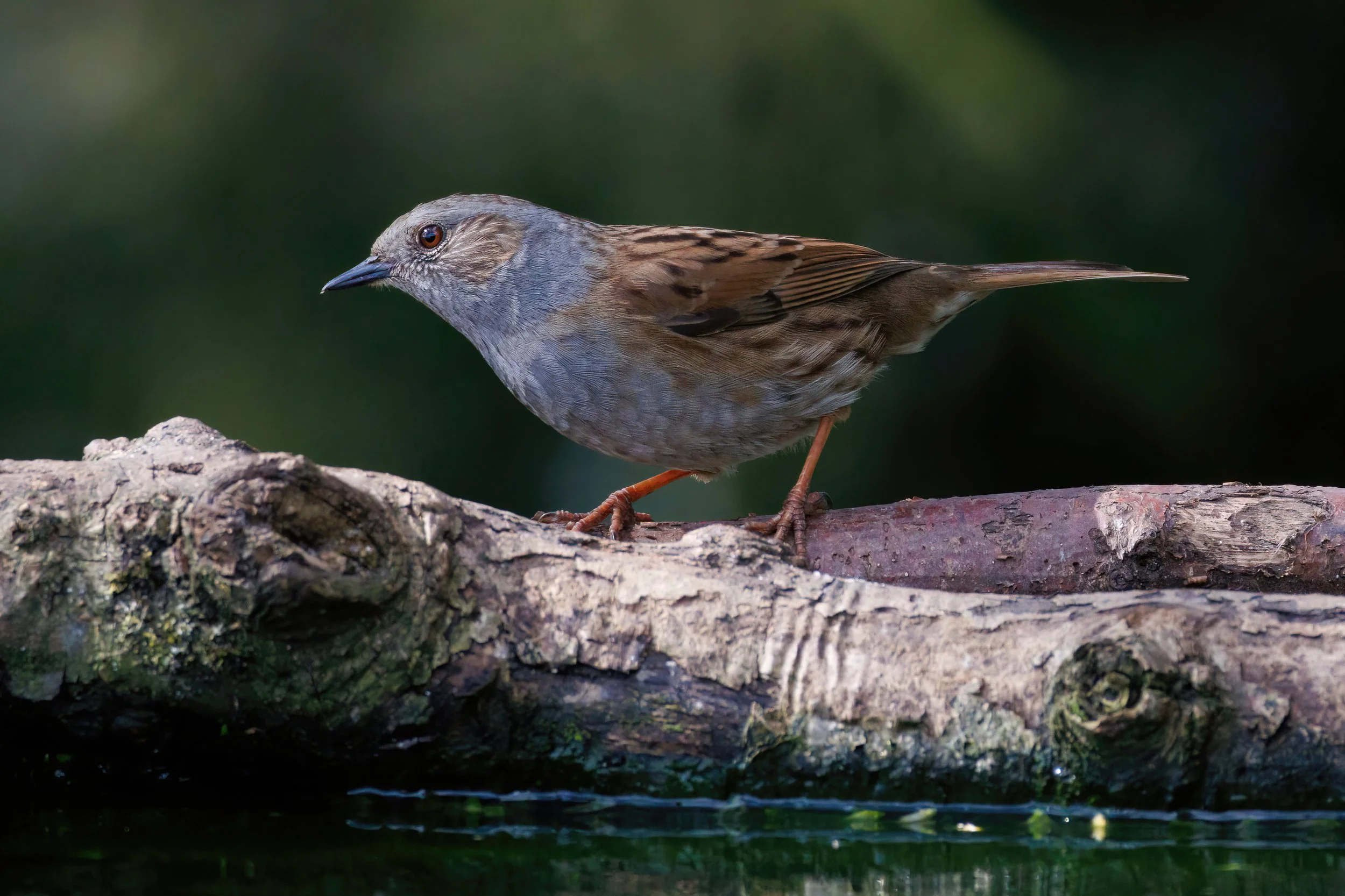
The dunnock, aka the hedge sparrow, is a small, quiet, and mostly solitary bird with subtle colouration, which helps it keep a low profile as it forages for food on the ground. You will often see them cautiously moving along the edge of a bush or flower bed, or gathering fallen seed beneath bird feeders. Rival males put their shyness aside when they meet, flicking their wings at each other and calling loudly. In Fog Lane Park they are often seen in the woodland along the Serpentine Path.
Photo Credit: James Conibear
Feral Pigeon
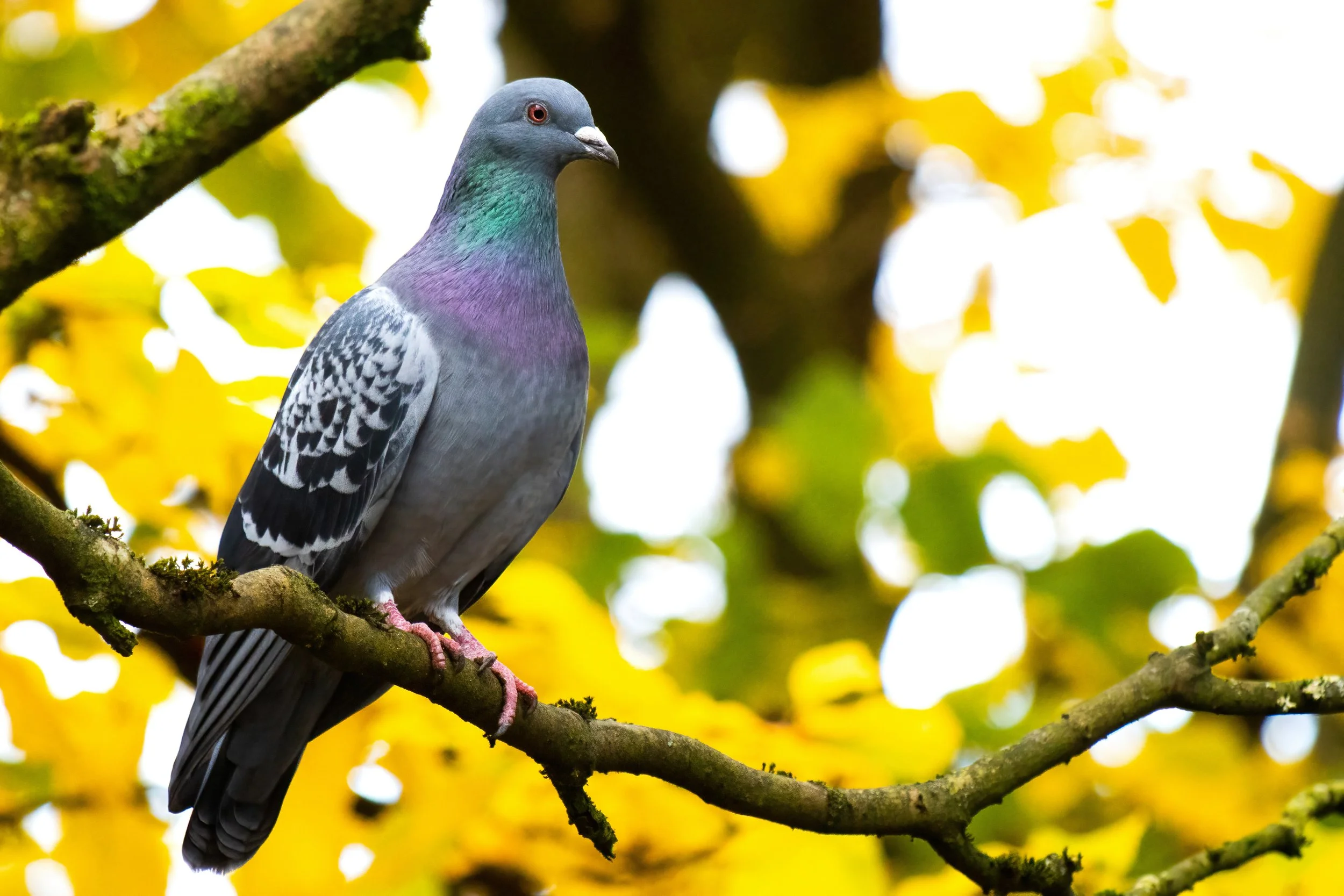
Feral pigeons descend from rock doves, which were originally domesticated to provide food, and were later selectively bred to serve as homing pigeons – post-carrying birds that became an essential form of communication during the Second World War. Unlike their wild rock dove cousins, these feral birds are dependent on humans, and are often considered a nuisance in urban areas, where they scavenge food and roost in buildings. In Fog Lane feral pigeons congregate in the pond area, where they enjoy being fed alongside the ducks.
Photo Credit: James Conibear
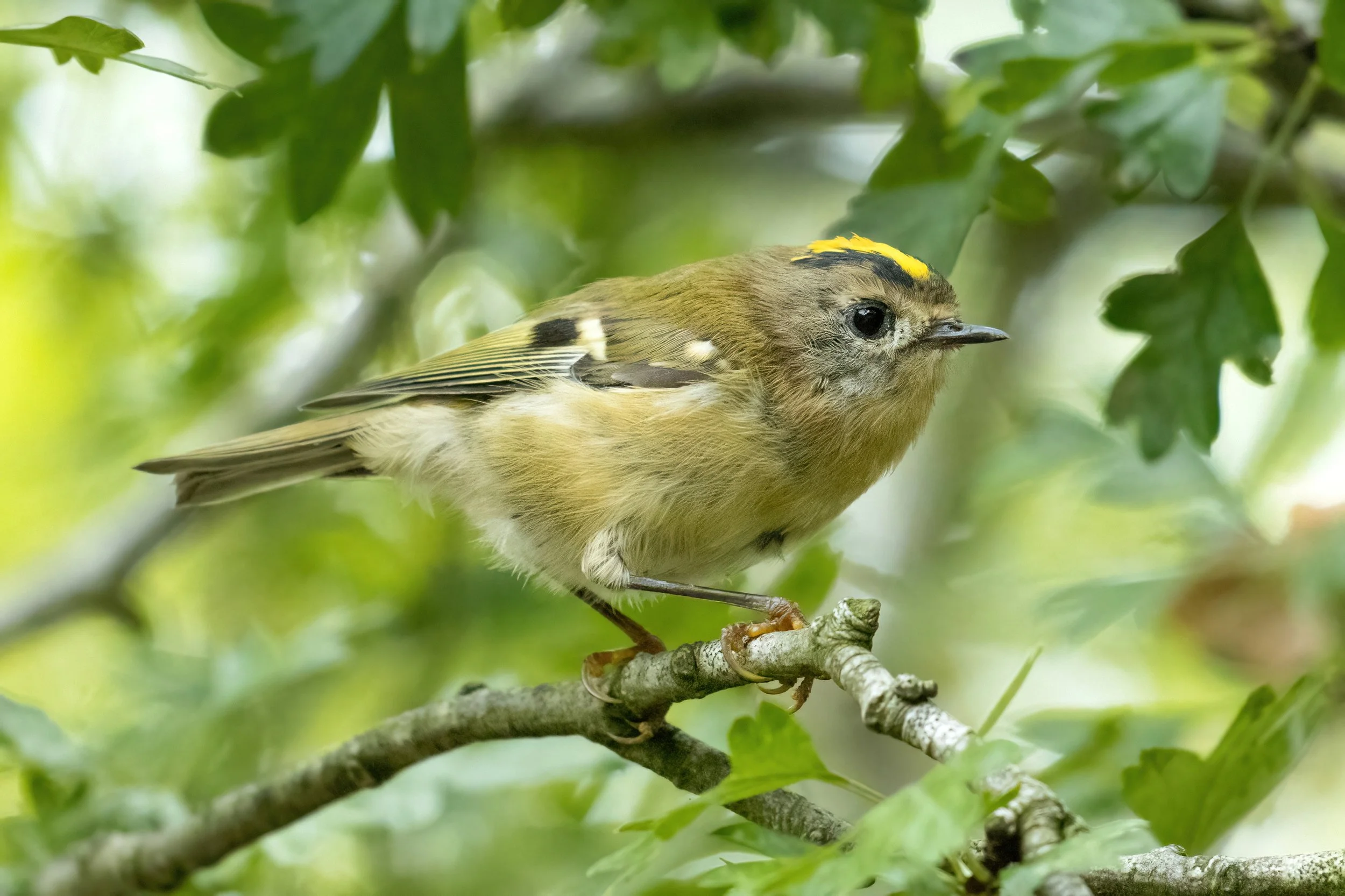
Goldcrest
A tiny, delicate species that – along with the firecrest – holds the title of Britain's smallest bird. The goldcrest can be difficult to spot due to its size and tendency to hide among the foliage of mature trees (particularly coniferous trees), where they forage for small invertebrates. Learning to recognise their high-pitched call will help you locate them. In Fog Lane Park goldcrests are often found along the Serpentine Path.
Photo Credit: James Conibear
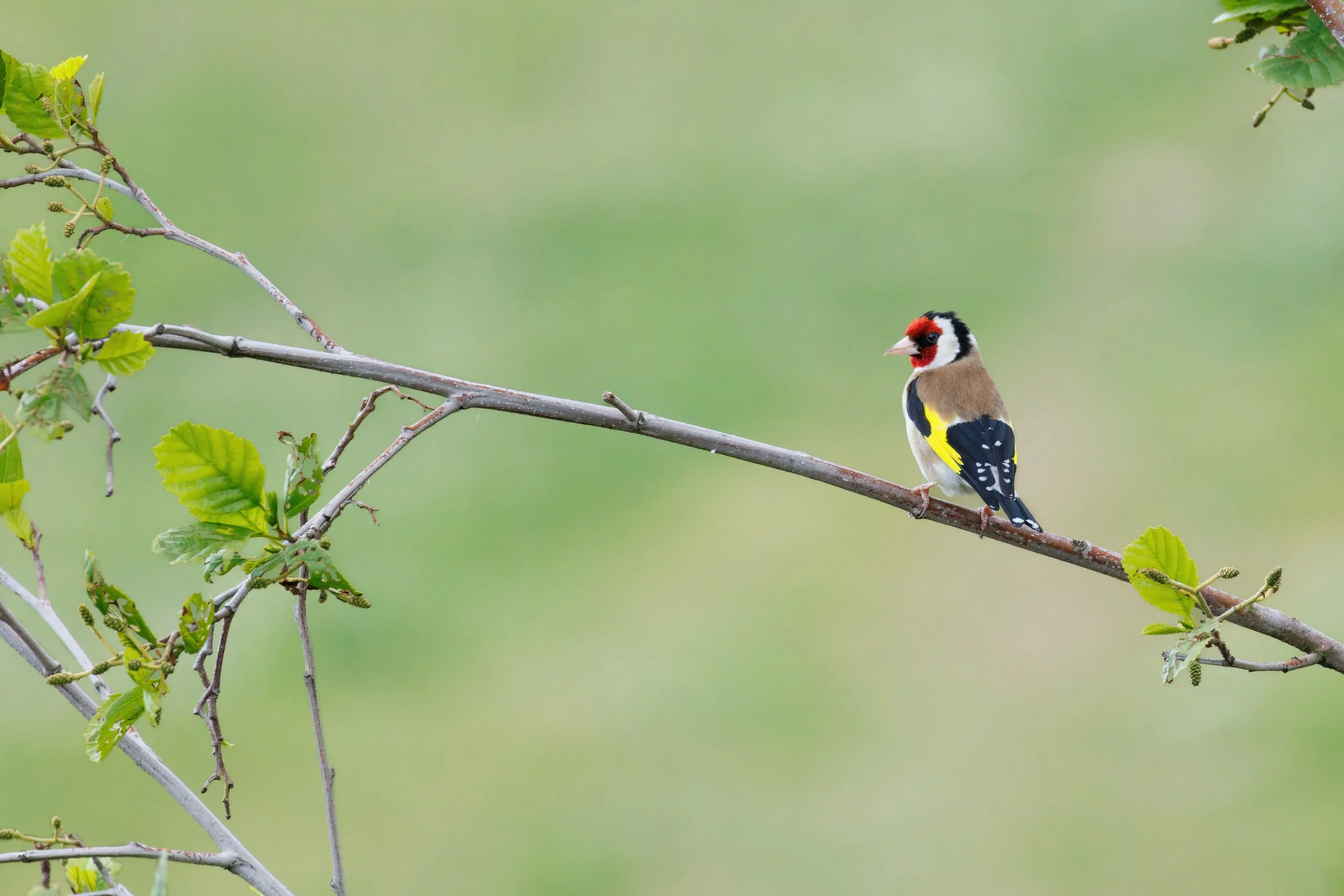
Goldfinch
A very noisy and sociable species – you will hear constant chattering whenever a goldfinch flock is around! These small, colourful little birds have a bright red face with prominent black and white markings, but it’s their yellow – or ‘gold’ – wing patch that earnt them their name. You can find them in Tiger Wood and in the woodland along the Serpentine Path.
Photo Credit: James Conibear
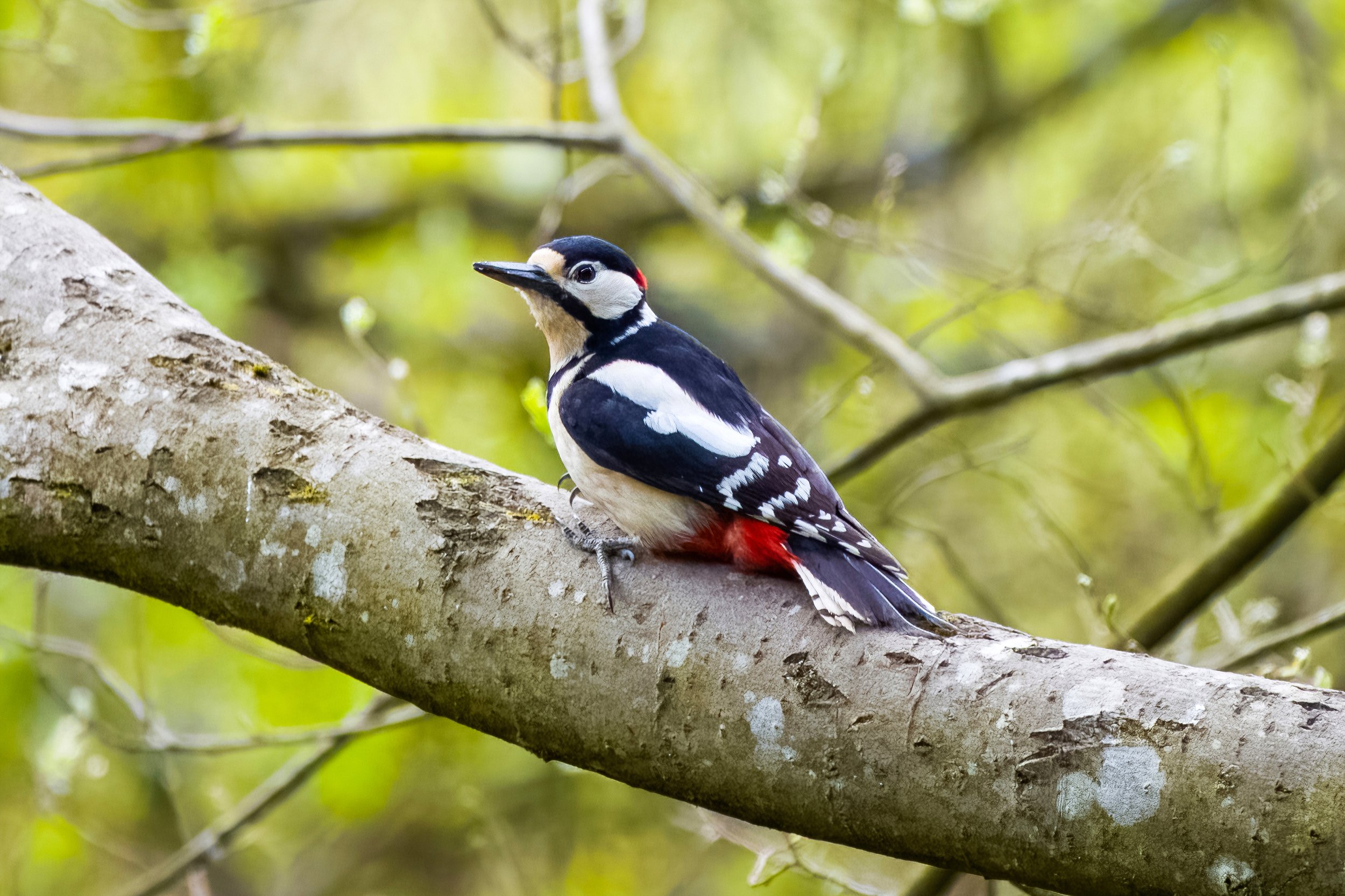
Great Spotted Woodpecker
If you ever spot a hole in a tree trunk in Fog Lane Park, there’s a good chance it was created by a great spotted woodpecker, one of the UK’s three native woodpecker species. These nesting holes are rarely used twice, but abandoned woodpecker homes are unlikely to be vacant for long, with species like jackdaw and ring-necked parakeet often quick to move in. The great spotted woodpecker is one of the harder species to spot in Fog Lane Park due to its tendency to stay high up in the treetops, however locating them becomes much easier if you can learn to recognise their call. In the late winter and spring, this bird also makes a distinctive drumming sound by rapidly striking trees with its bill; it does this in order to claim territory and attract a mate.
Photo Credit: James Conibear
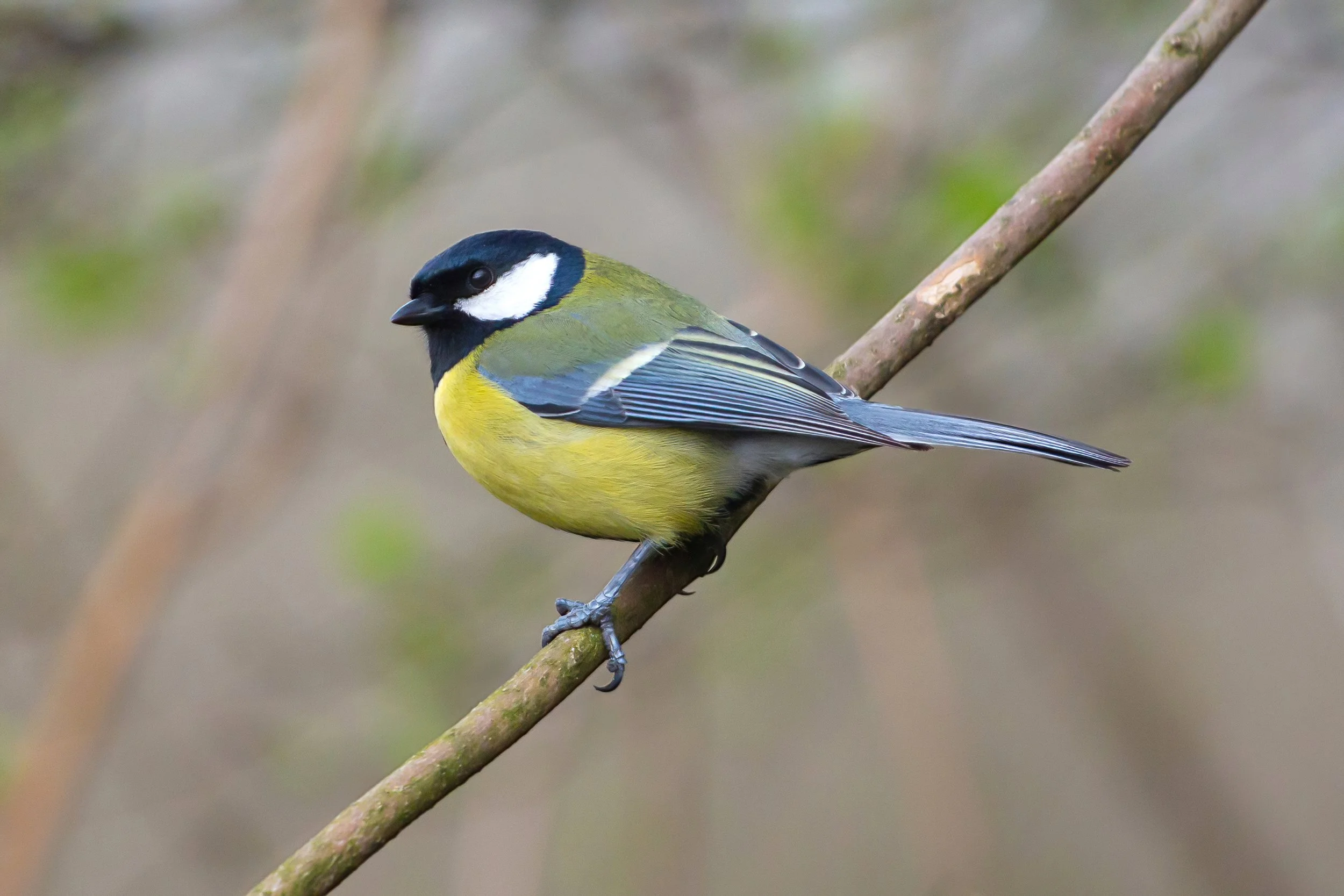
Great Tit
The largest UK tit is a common sight in Fog Lane and a regular bird at the park’s hide area, where you can get great views of it visiting the feeders. It has an extensive and varied range of calls that can often sound like other woodland birds. Outside of the breeding season, great tits can often be seen feeding alongside other members of the tit family, such as the blue tit, coal tit, and long-tailed tit.
Photo Credit: James Conibear
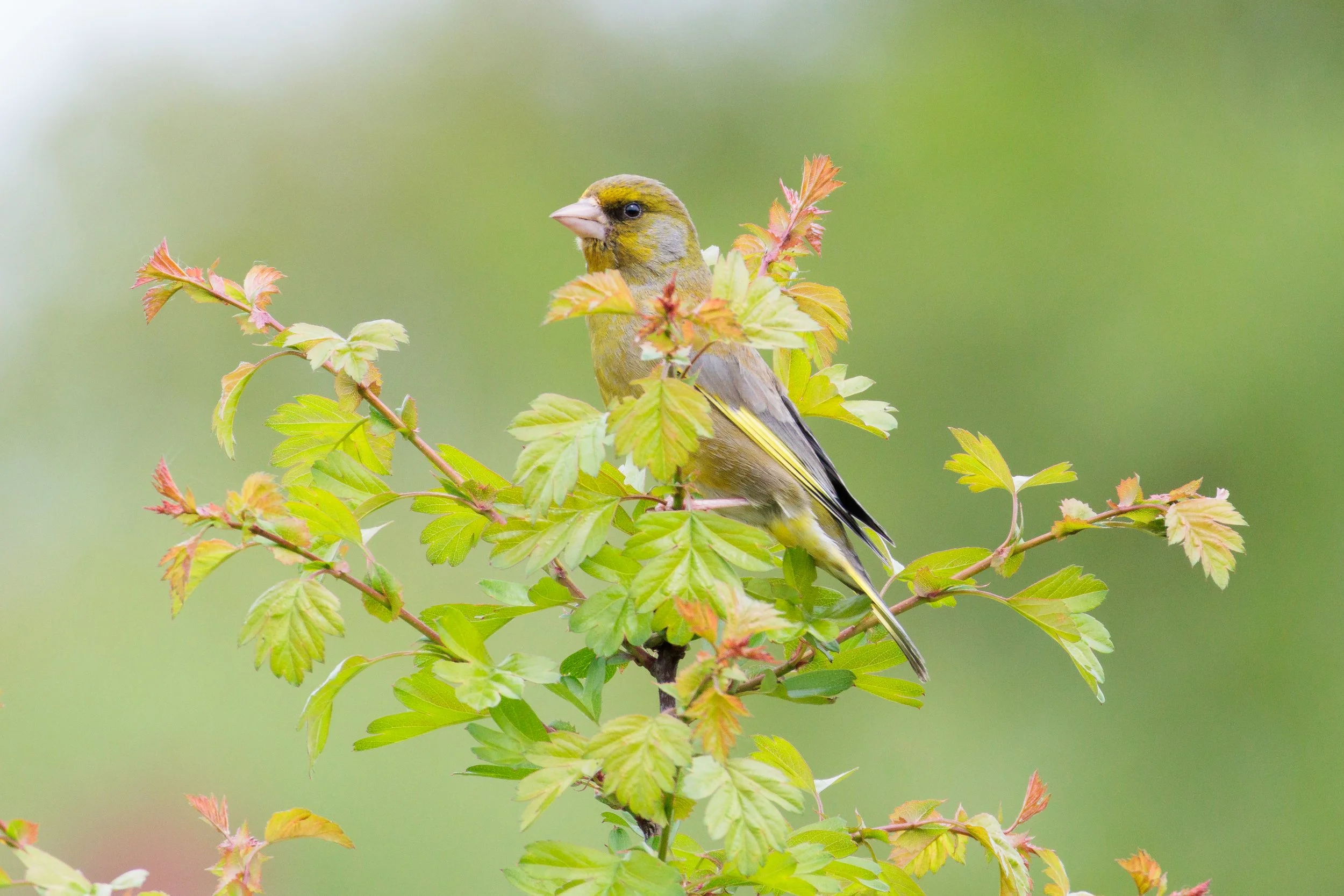
Greenfinch
This sociable finch produces a screeching sound that helps it stand out from calls of other birds. Only the male is green; the female is a dull brown, though shares the male’s characteristic yellow stripe on their wings and tail. In Fog Lane greenfinches can be found in Tiger Wood and in the woodland along the Serpentine Path.
Photo Credit: James Conibear
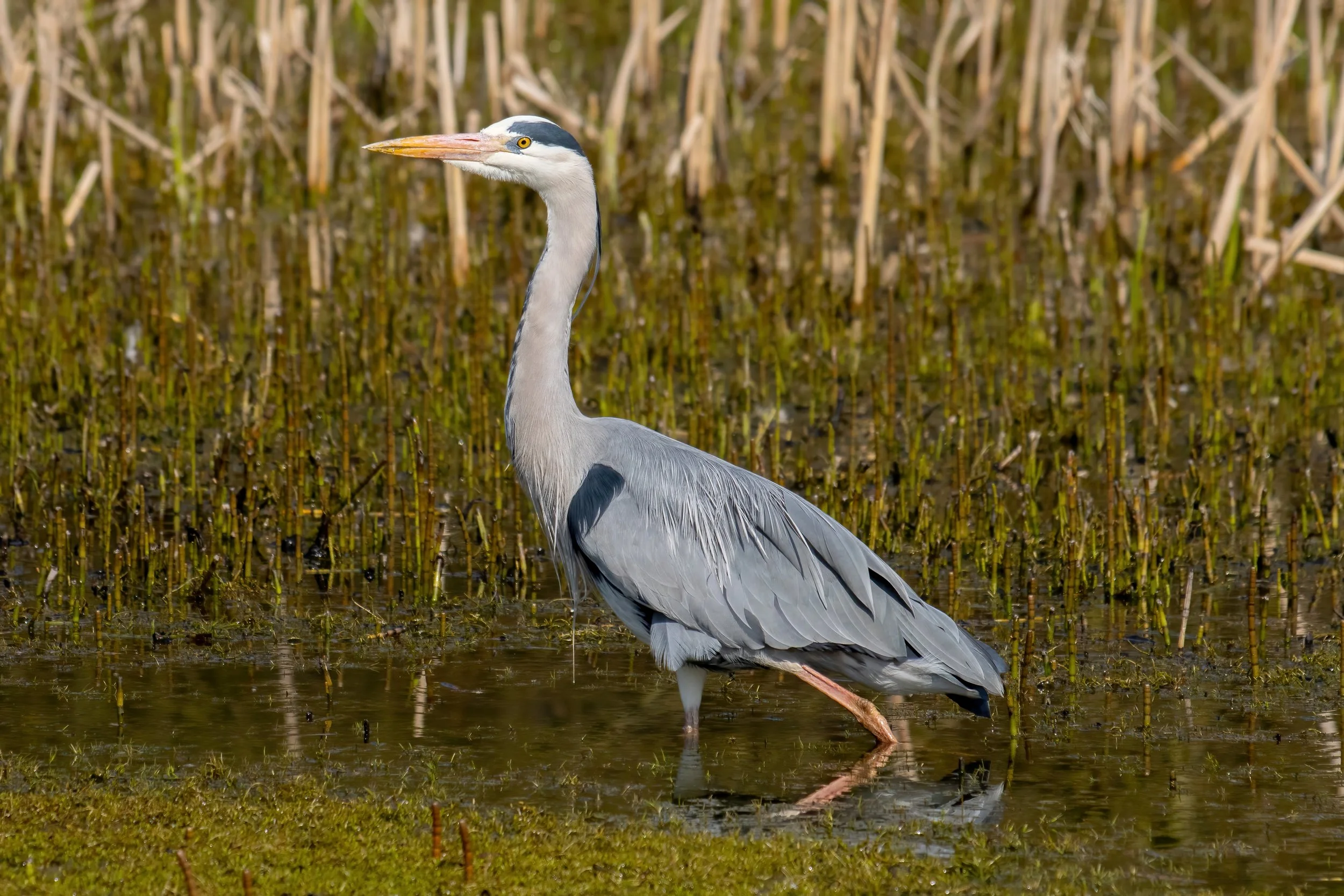
Grey Heron
With a wingspan of 1.8 metres, the grey heron is easily the largest bird you’re likely to see in Fog Lane. While not a park resident, it has become a frequent visitor throughout the spring and early summer months, when individuals can often be spotted around the ponds, where they prey on fish, frogs and young birds.
Photo Credit: James Conibear
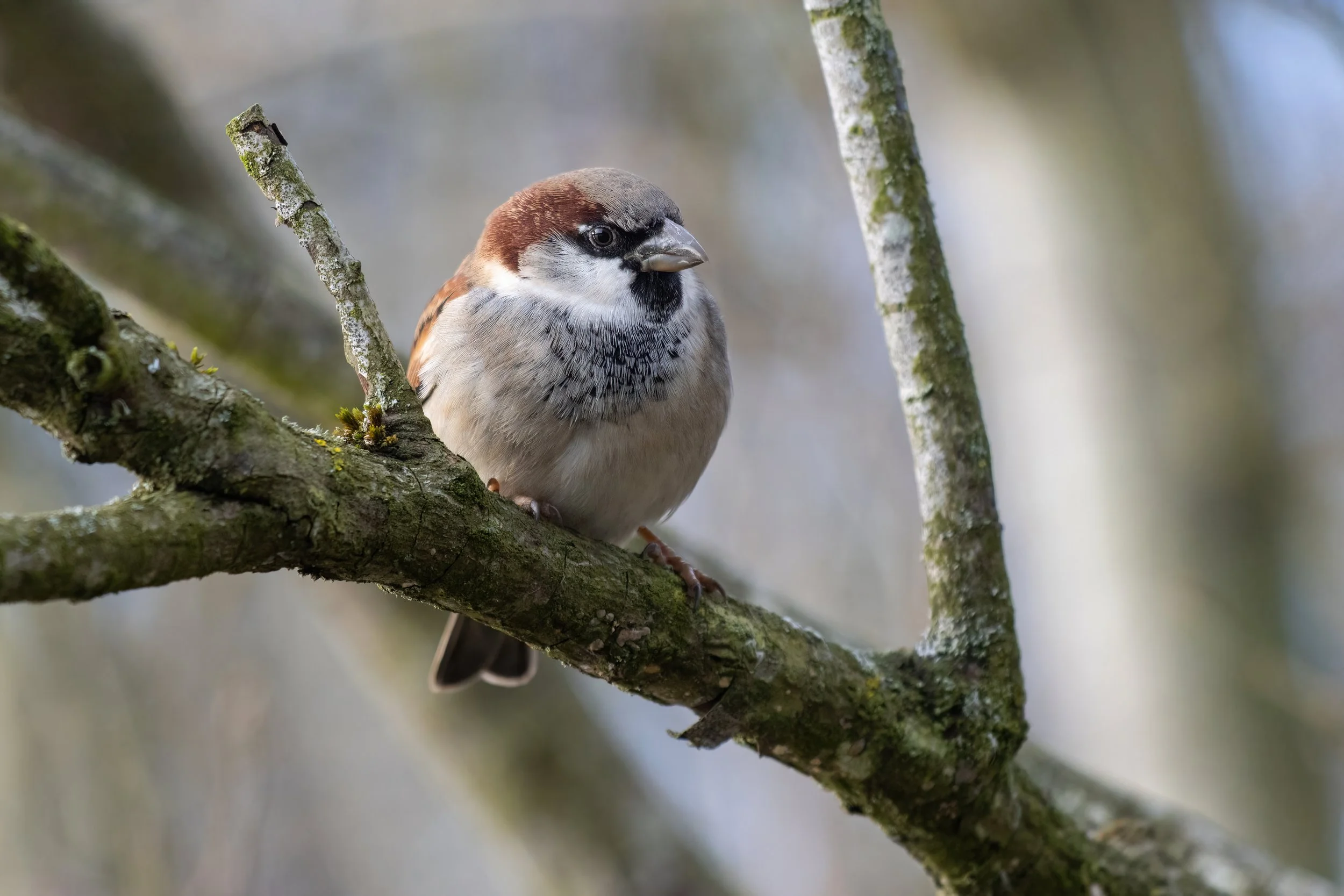
House Sparrow
A very chattery and active species known to move around in large, noisy flocks. Far from shy of humans, they can often be seen scavenging around picnic benches, and have a reputation for being accomplished opportunists. Despite this, the house sparrow is in decline here in the UK, and its conservation status is currently listed as red by the RSPB, indicating that it needs our help. Its decline has been linked to changes in agricultural practices, such as the loss of winter stubbles.
Photo Credit: James Conibear
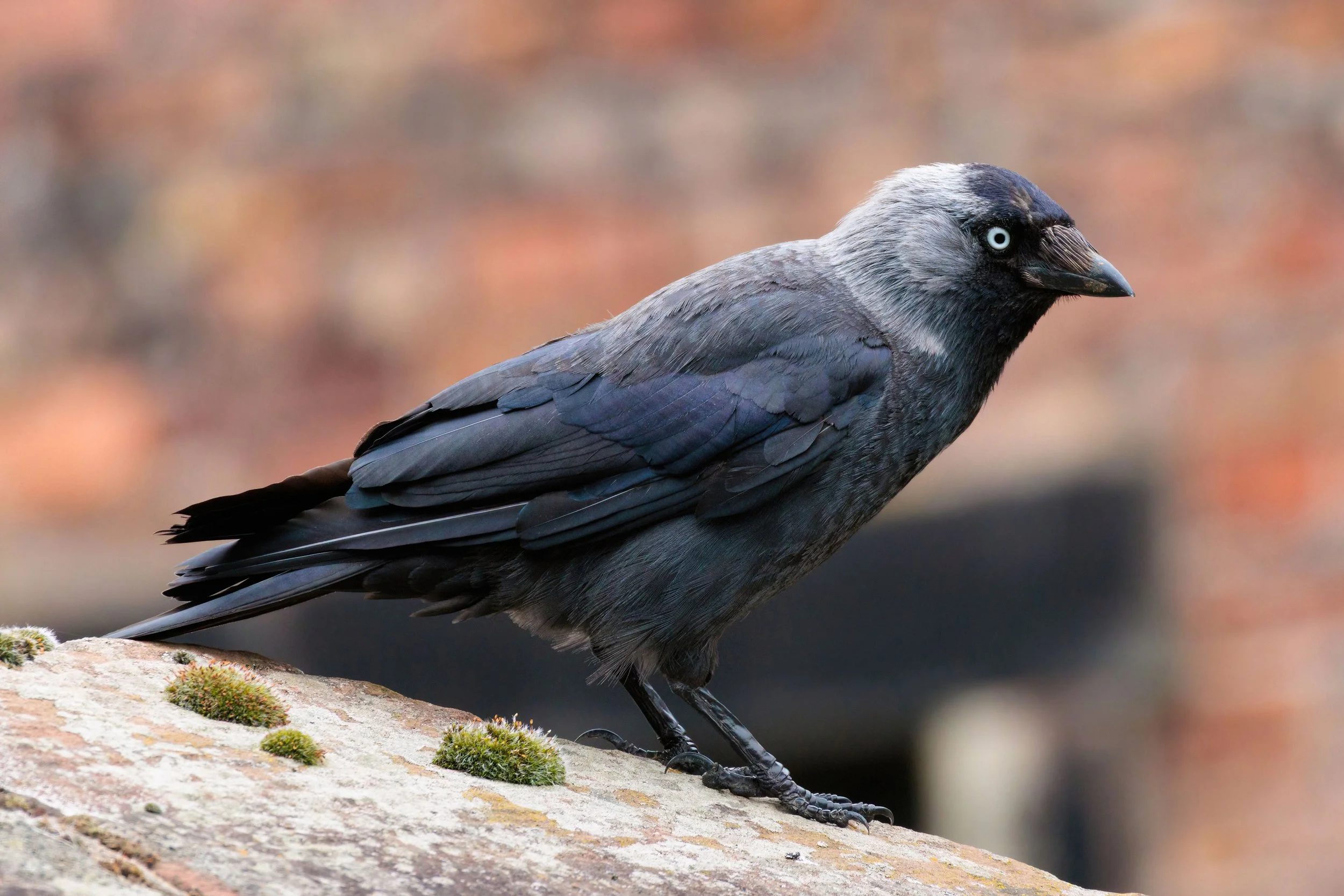
Jackdaw
This small black crow will often nest in buildings, rock crevices and tree holes, and is named after its distinctive call. In Fog Lane it can be found in the meadow and along the avenue of tall trees between the Old Broadway and Westholme Road park entrances.
Photo Credit: James Conibear
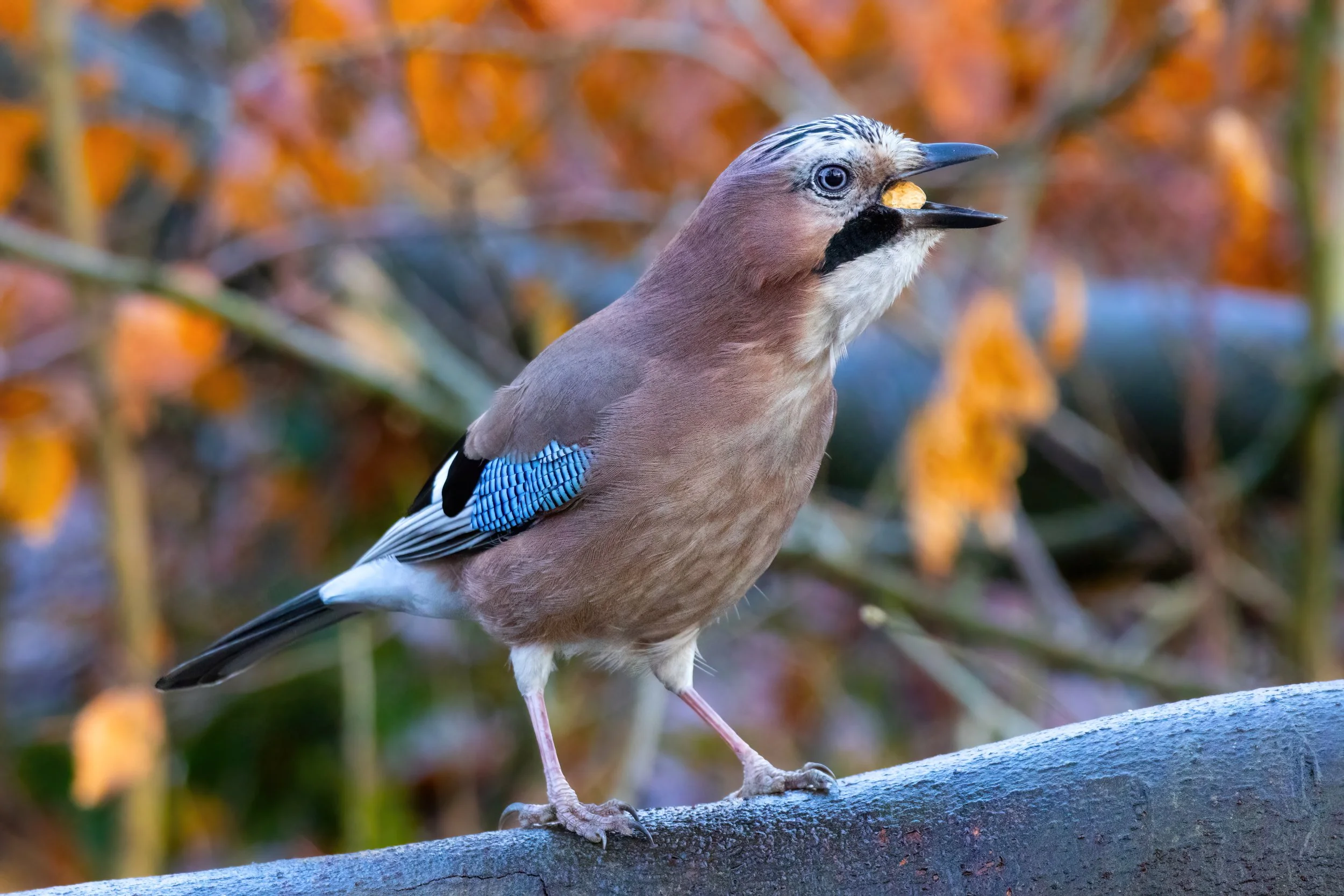
Jay
The jay is the most colourful British member of the corvid family, but is easily the hardest to see out of the four corvid species that live in our park. These shy birds prefer not to move far from cover, and will make a hasty retreat into the treetops if disturbed while foraging for food on the woodland floor. They are well known for collecting and burying acorns, which they stash away for the winter. Jays have a distinctive harsh call, which can give away the location of this secretive species. In Fog Lane Park you can spot them along the avenue of tall trees between the Old Broadway and Westholme Road park entrances, as well as along the Serpentine Path.
Photo Credit: James Conibear
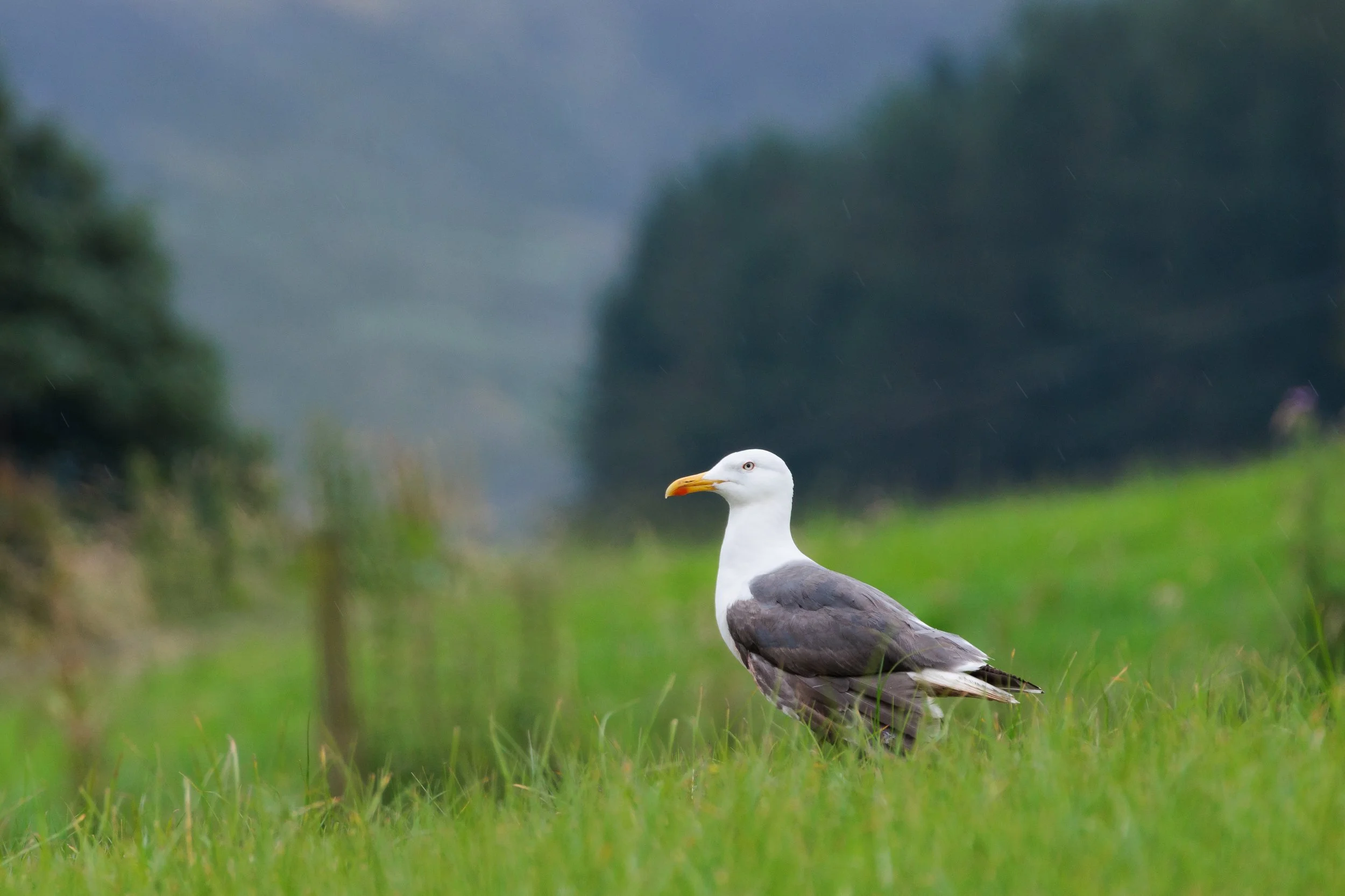
Lesser Black-backed Gull
A large gull with a dark grey to black back, and a species that is only found in Europe. This bird is currently in decline and is on the RSPB’s Amber List, with the UK now home to 40% of the European population. It scavenges a wide range of food and can often be seen on the park’s sports field.
Photo Credit: James Conibear
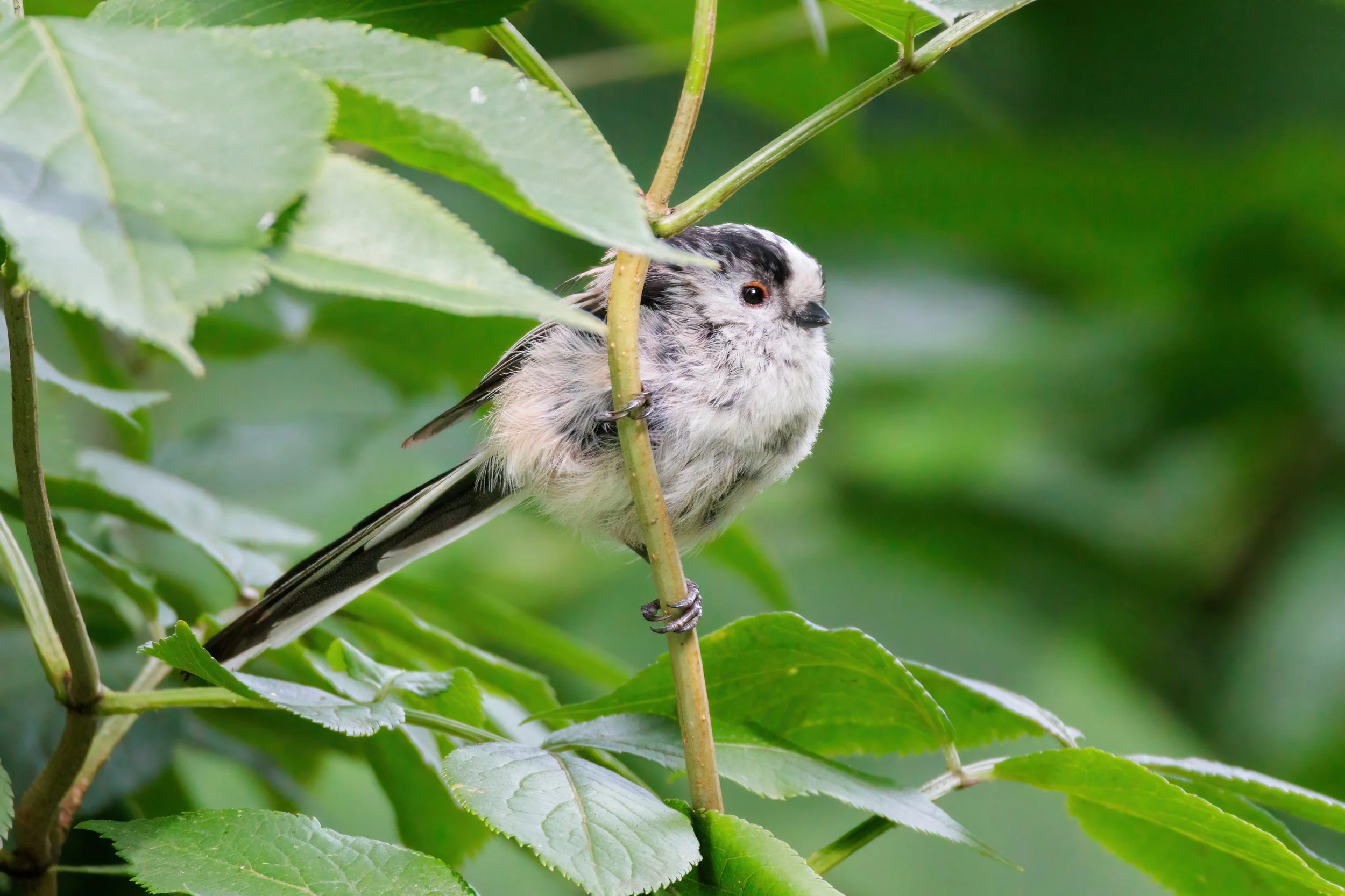
Long-tailed Tit
An easily recognisable tit that lives up to its name with its distinctive long tail. These little characters are a common sight across the park, and a very vocal bird, so are easy for birdwatchers to locate if they recognise the call. Outside of the breeding season, this small species can often be seen feeding alongside other members of the tit family, such as the great tit, blue tit, and coal tit.
Photo Credit: James Conibear
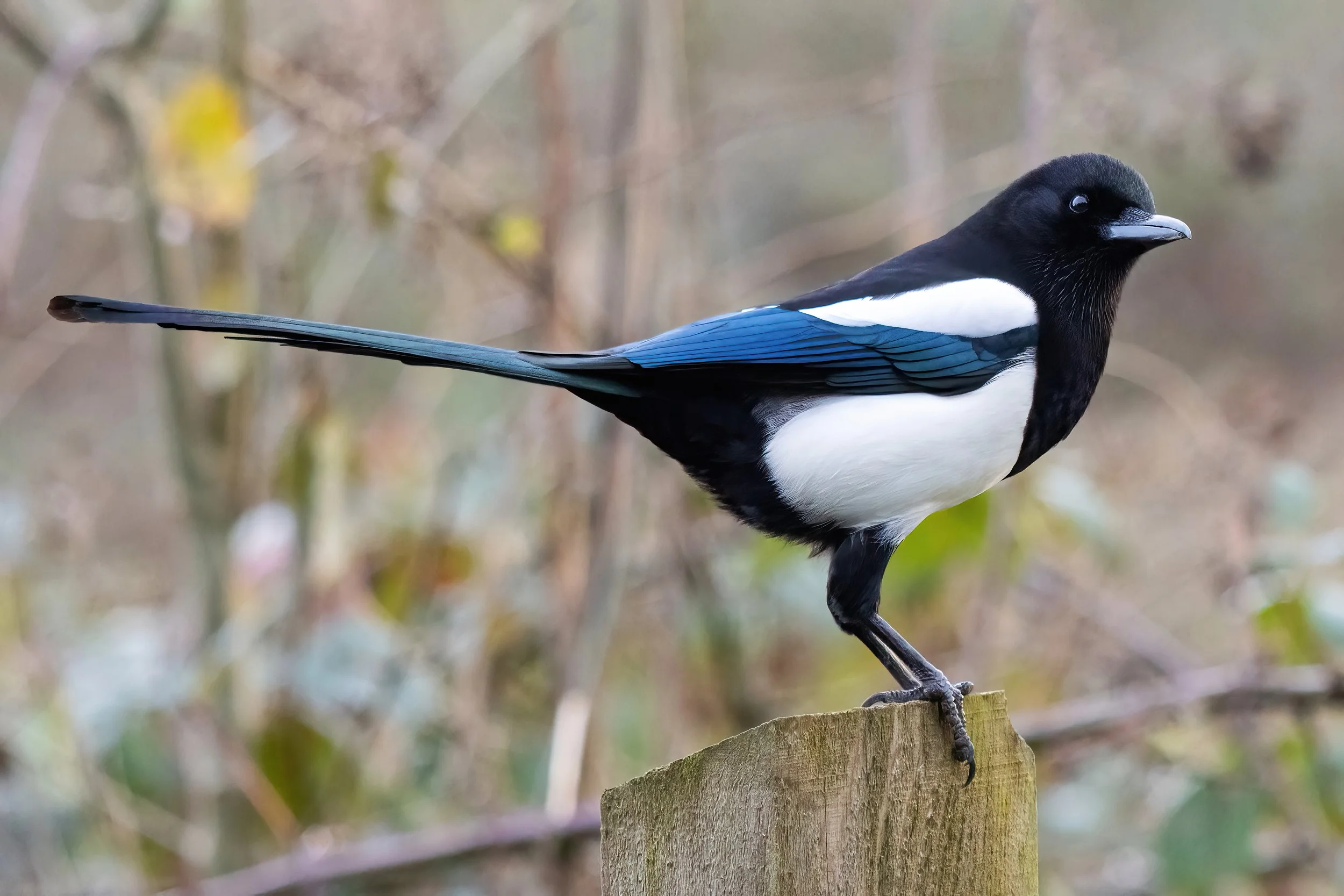
Magpie
Magpies are noisy social birds, scavengers and opportunistic predators. They can be found all over the park, and are one of the easiest birds to spot and identify thanks to their harsh rattling call and striking black and white plumage, which features a purplish-blue iridescent sheen on the wing feathers and a green gloss on the tail.
Photo Credit: James Conibear
Mallard
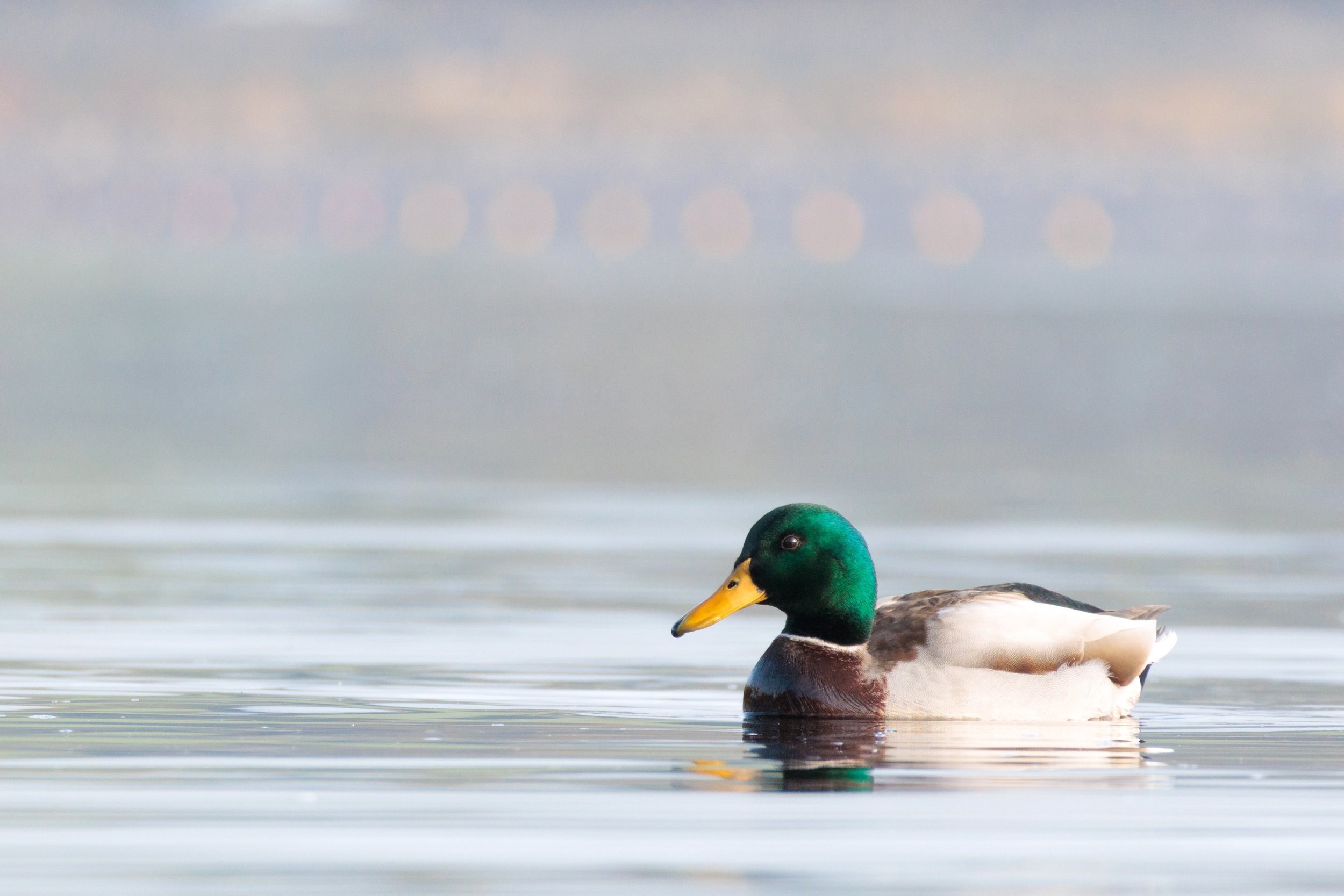
The mallard is the world’s most common and widespread species of duck, and a staple bird of Fog Lane Park. You can find these dabbling ducks on the park’s two ponds all year round, though the males lose their vibrant green and purple-brown plumage in the mid summer months, when they enter their eclipse (non-breeding) plumage, which makes them look similar to the mainly brown females.
Photo Credit: James Conibear
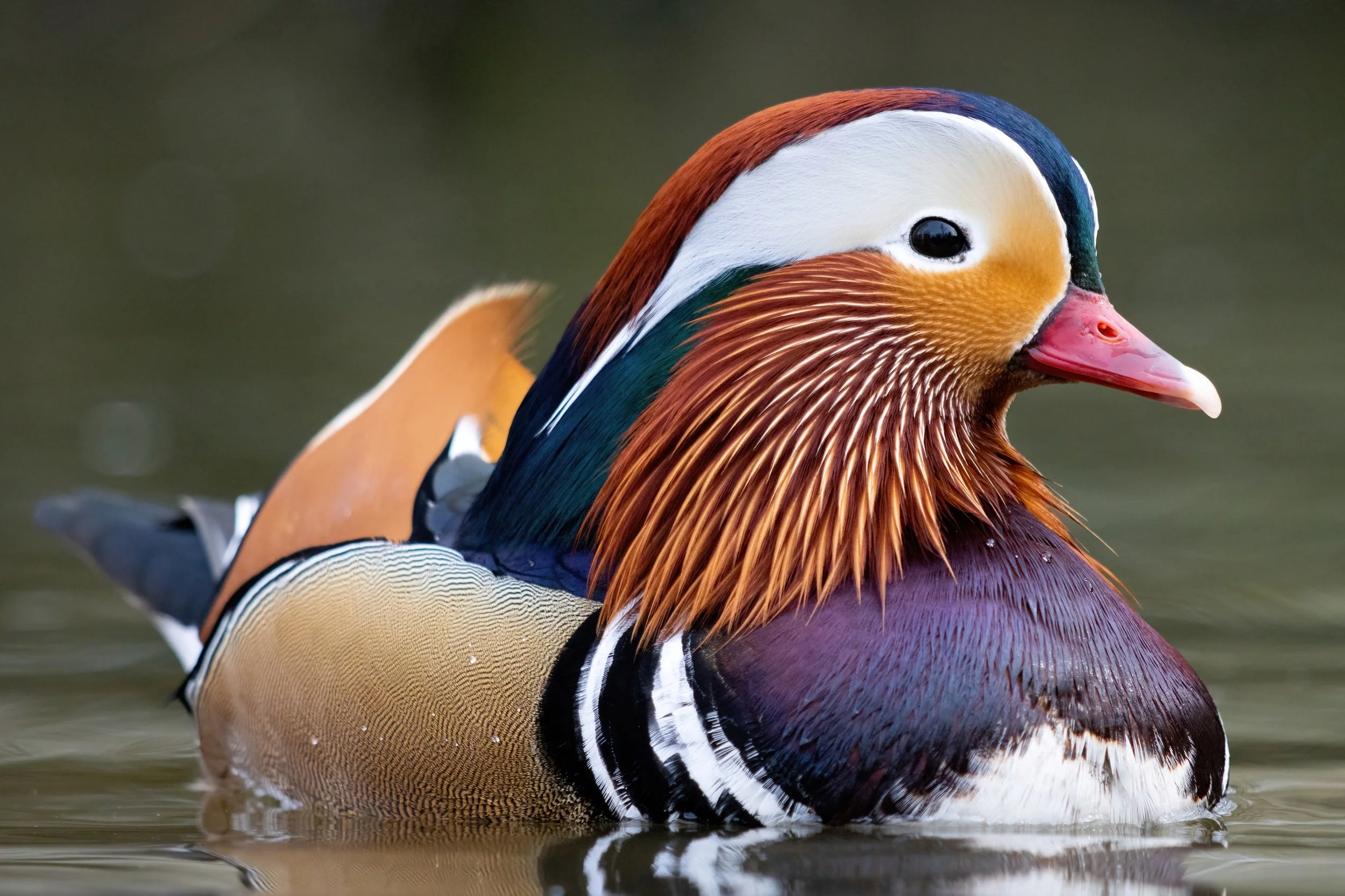
Mandarin
A Fog Lane favourite, the mandarin duck has become a regular visitor to the park in recent years, sometimes even staying for months at a time. The impressive, colourful plumage of the males makes them an eyecatching addition to our local biodiversity that even those otherwise underinterested in birds tend to notice. They are not a native species however, having been introduced to the UK from Asia. Unlike our park’s other duck species, the mandarin nests in trees and has a call that’s closer to a squeak than a quack.
Photo Credit: James Conibear
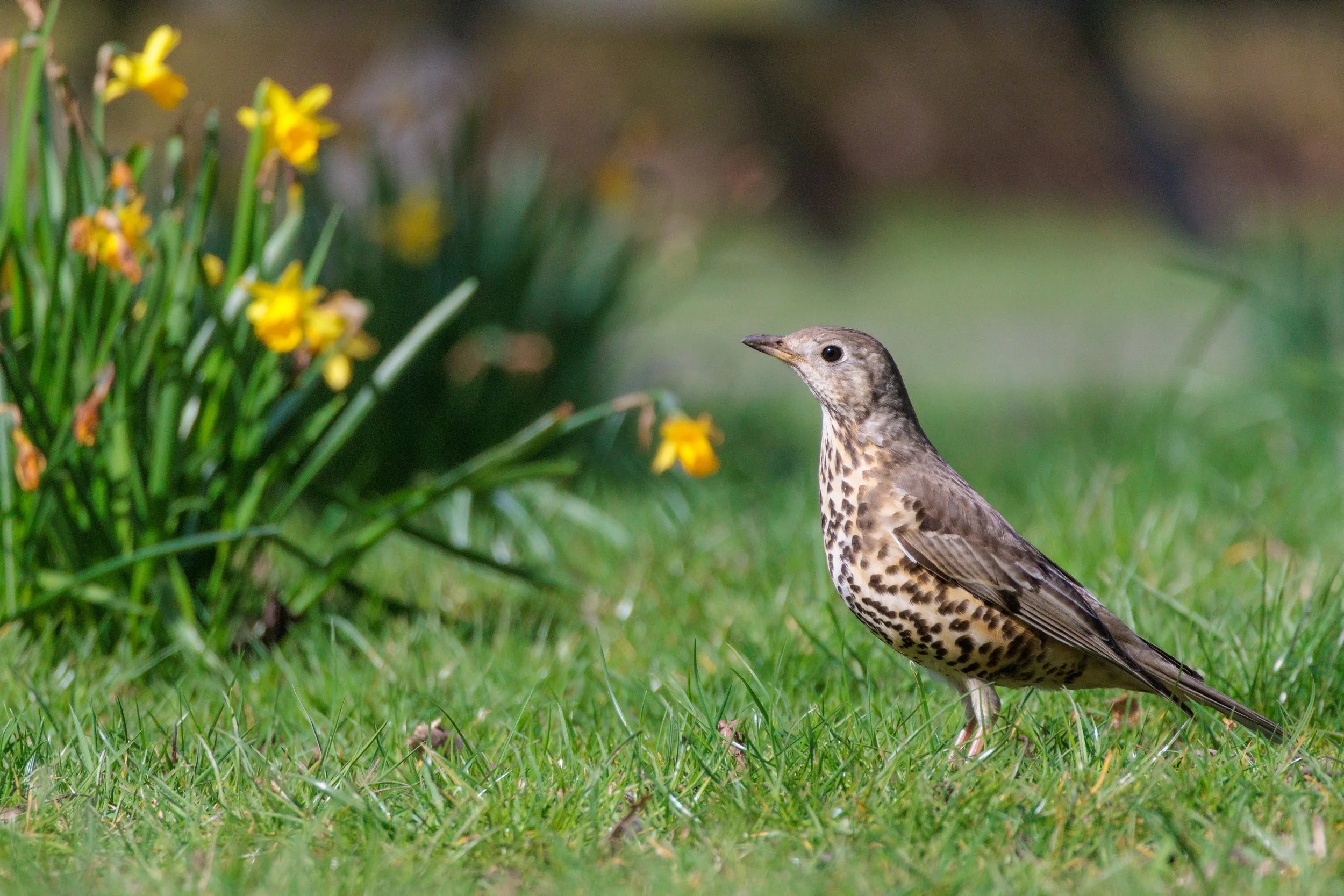
Mistle Thrush
The mistle thrush is the UK’s largest song bird, is significantly bigger and paler than the similar looking song thrush, and has a distinctive rattling call in flight. In Fog Lane Park it is often found on the square lawns in front of the cafe and the playground.
Photo Credit: James Conibear
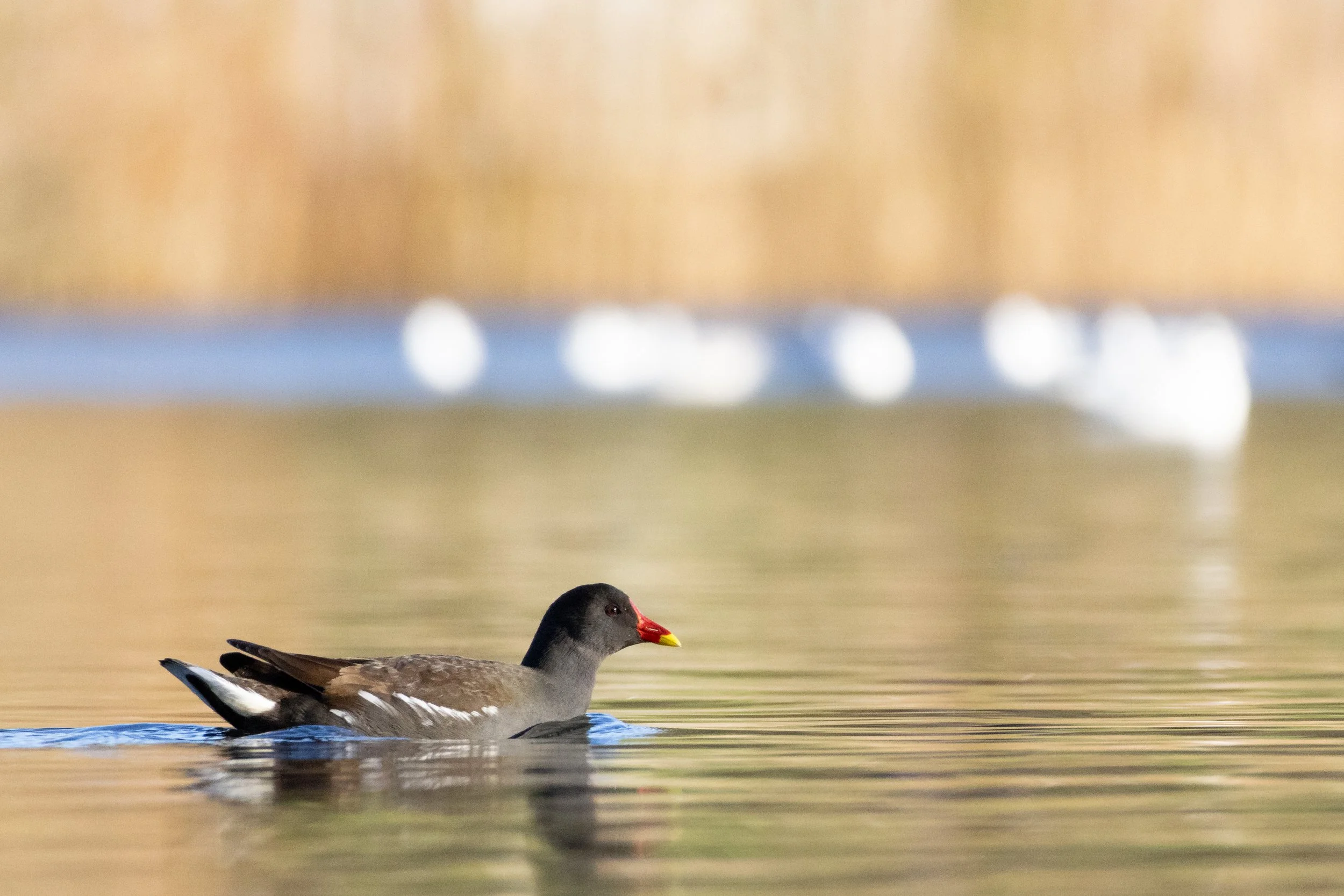
Moorhen
The smallest bird on Fog Lane’s ponds, the moorhen is noticeably shier than its larger cousin, the coot, though the birds in our park are very tame compared to those found in rural areas. They have a distinctive cluck, a colourful red and yellow beak, huge feet (which they use to fight), and a tendency to build large, untidy-looking nests on the water.
Photo Credit: James Conibear
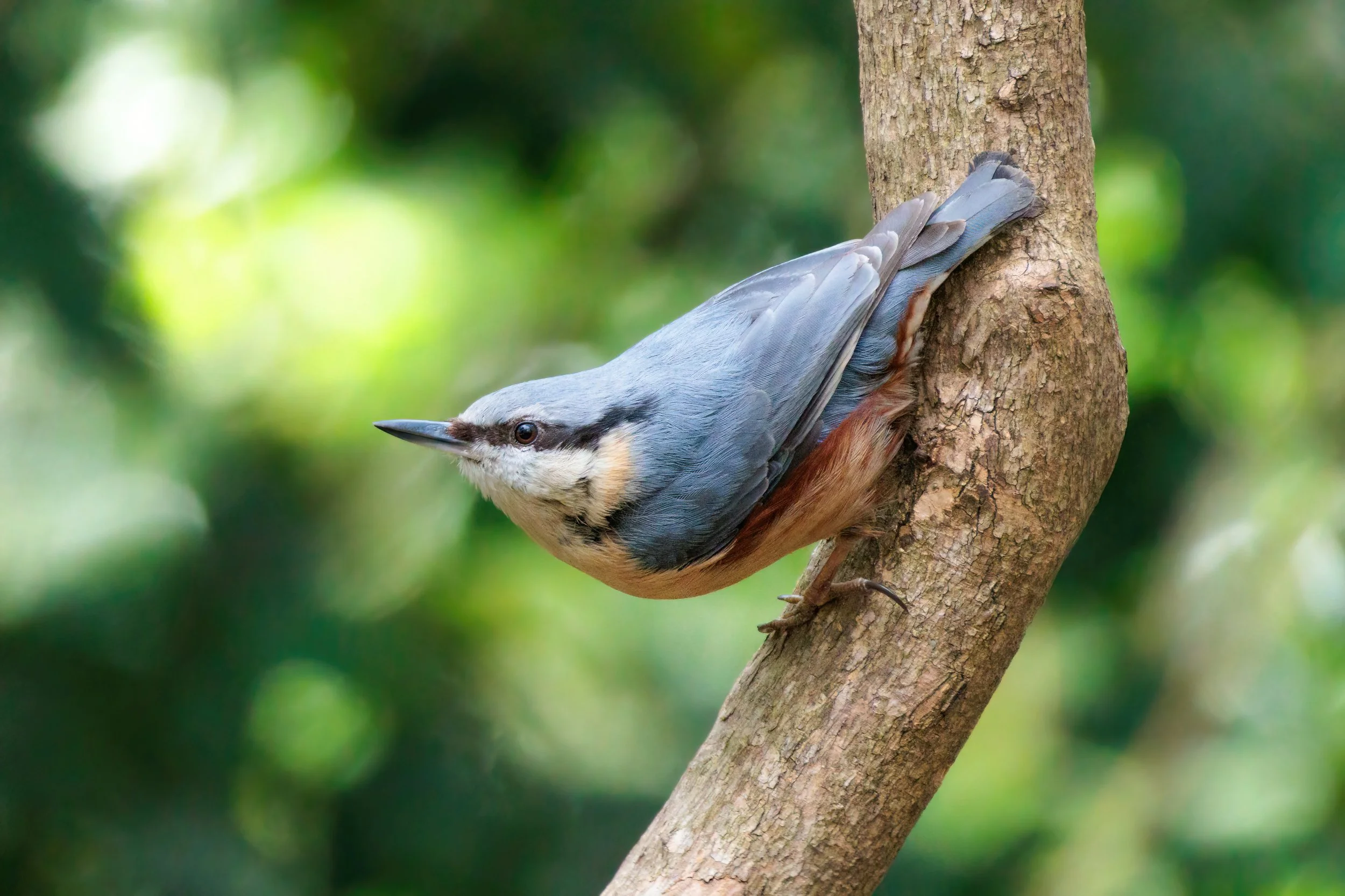
Nuthatch
Like woodpeckers, the nuthatch hunts on tree trunks and among the branches, using its long beak and tongue to grab any grubs hidden within. They are noticeably more agile than woodpeckers, and can often be seen descending head-first down a trunk and dangling upside down beneath branches. In Fog Lane Park you can get great views of nuthatches at the bird hide (where this photo was taken) and along the avenue of tall trees between the Old Broadway and Westholme Road park entrances.
Photo Credit: James Conibear
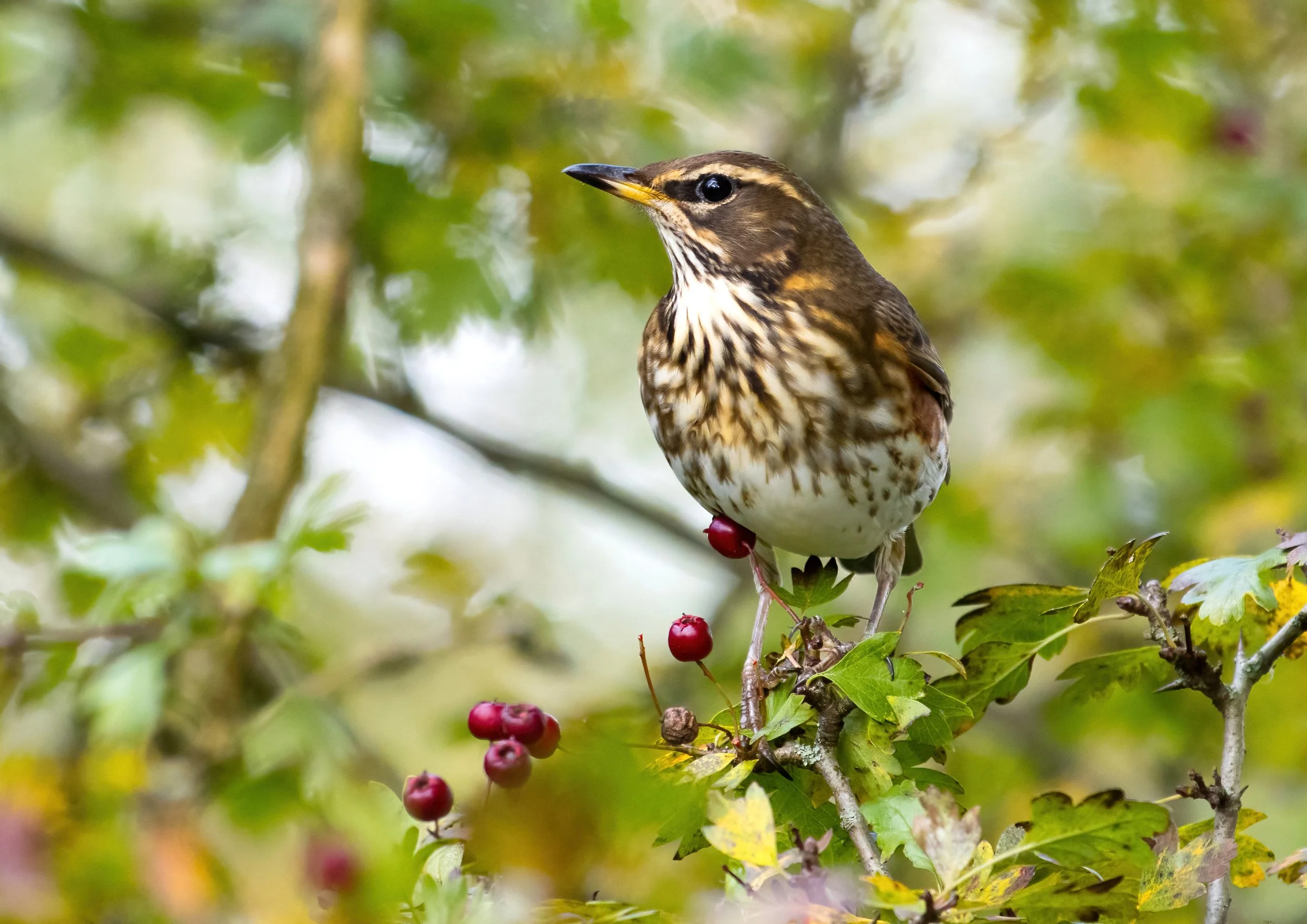
Redwing
A winter visitor that travels to our park all the way from Iceland and Scandinavia! At Fog Lane it enjoys a feast of seasonal berries and can also be seen foraging for food on the woodland floor. Listening for its bark-like call is a good way to locate this shy thrush species. Hotspots for redwing in the park are Tiger Wood, the berry trees along the Serpentine Path, the bushes behind the ponds, and the brambles near the old band stand circle.
Photo Credit: James Conibear
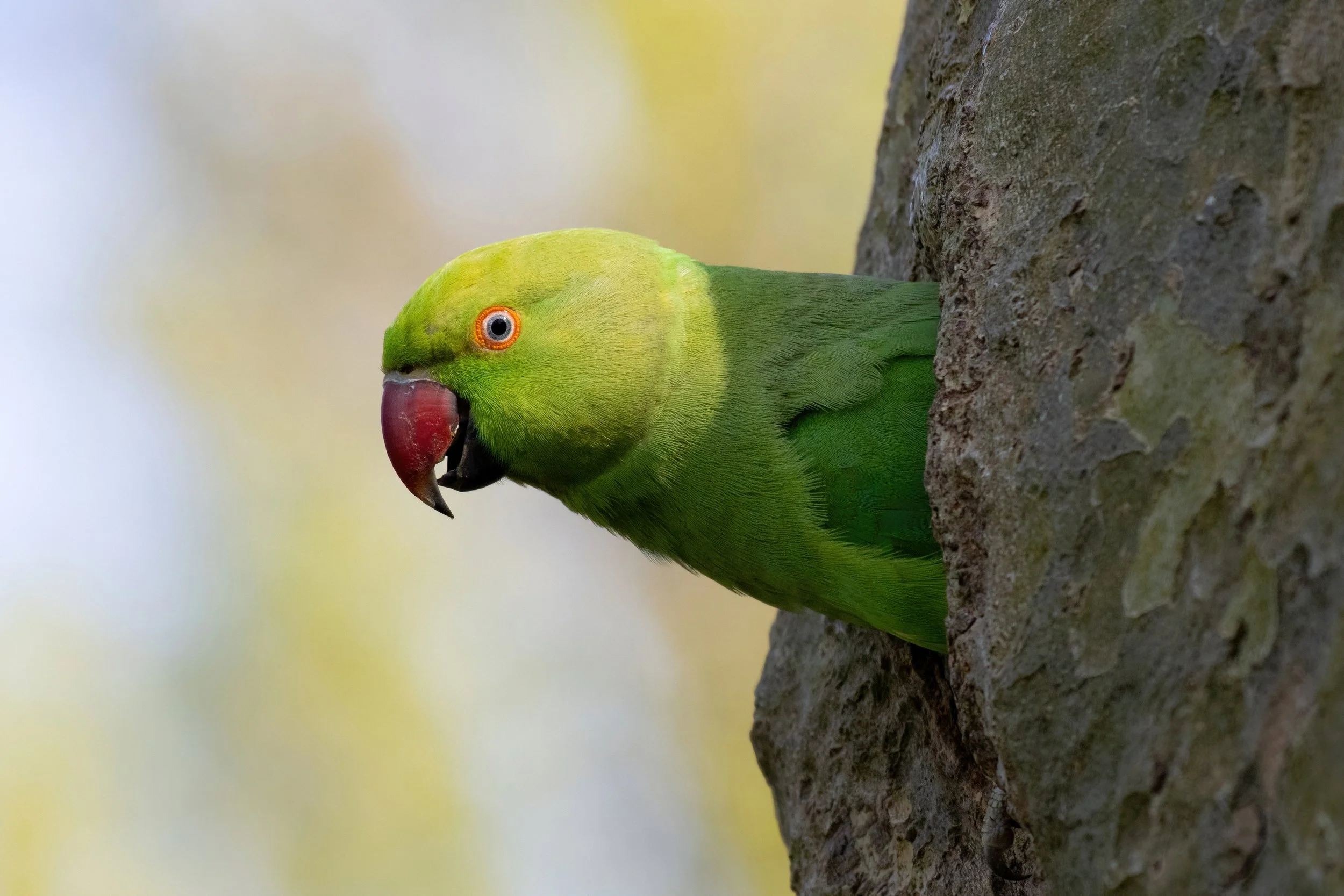
Ring-necked Parakeet
Native to India and parts of Africa, our country’s only naturalised parrot is now well-established in a number of areas across the UK, and Fog Lane Park is a great place to see them. With their colourful plumage, playful personalities, and tendency to make use of bird feeders, it’s easy to see why so many of us are fond of ring-necked parakeets. Their impact on the local ecosystem is still being assessed, though one key concern is their preference for tree trunk nesting holes, which puts them in competition with native species like the nuthatch and great spotted woodpecker. Ring-necked parakeets can be found all over Fog Lane Park, but you can get the best views at the bird hide and along the avenue of tall trees between the Old Broadway and Westholme Road park entrances.
Photo Credit: James Conibear
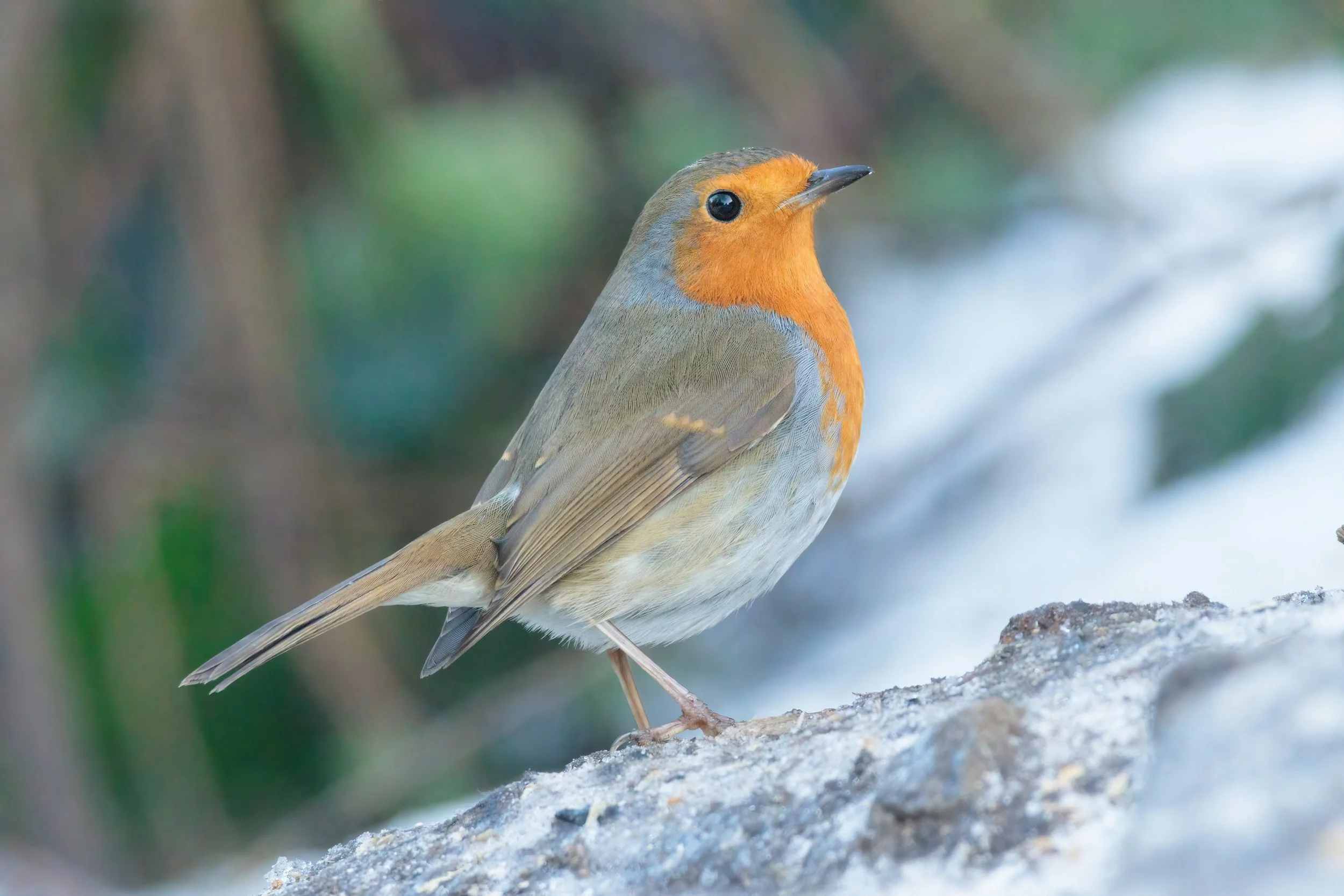
Robin
Perhaps the most recognisable British bird and easily the most Christmasy! The robin is a tiny songbird full of character. Its cheery call and inquisitive nature have made it a favourite among gardeners, who robins have a tendency to follow around, as they aim to take advantage of any grubs revealed by the soil disturbance. Robins can be found all over Fog Lane Park and are regulars at the bird hide.
Photo Credit: James Conibear
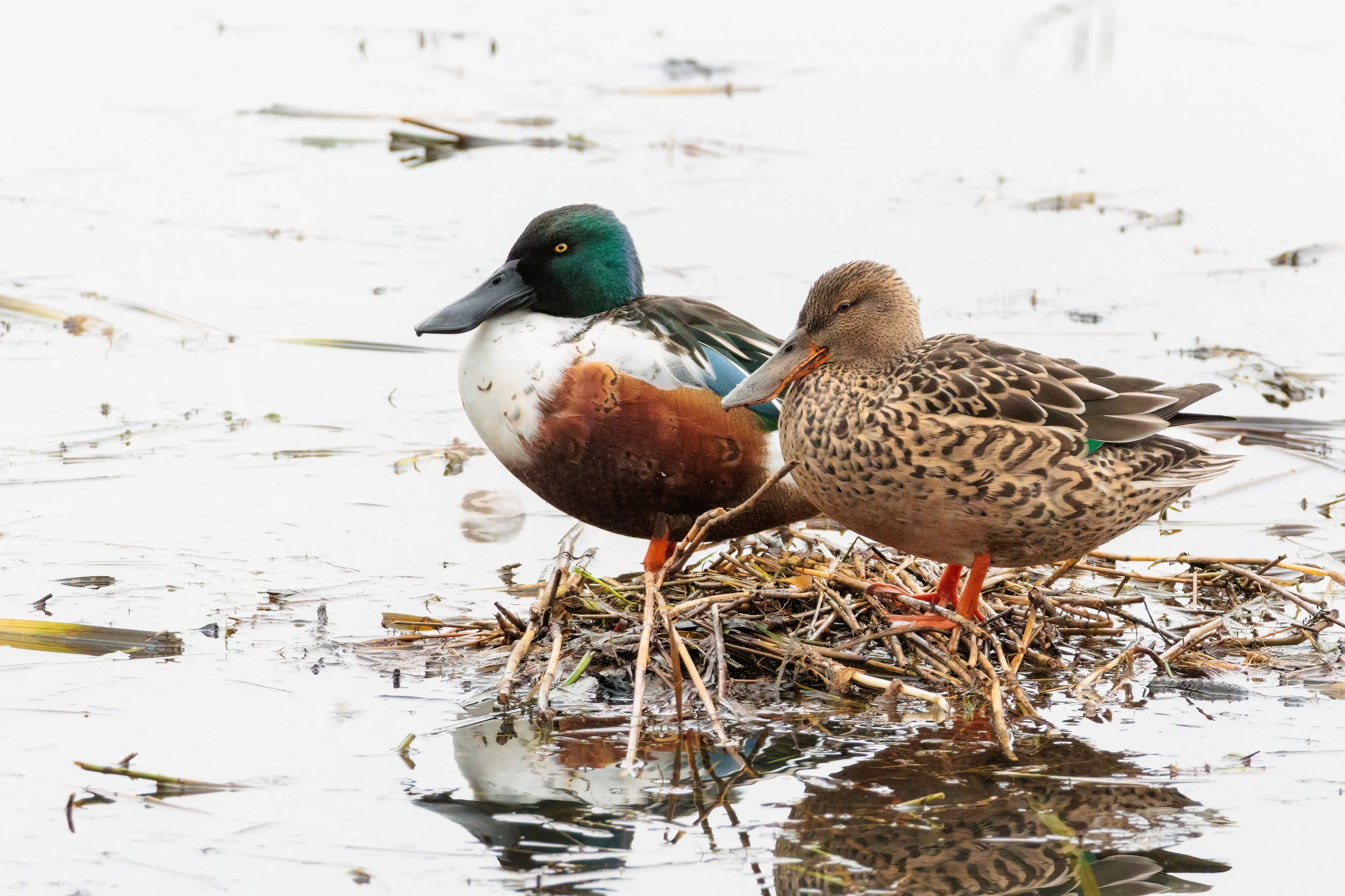
Shoveller
Named after its distinctive shovel-like bill, this duck often visits the park in the winter, when its numbers across the UK are boosted drastically by migrant birds. It spends much of its time swimming with its bill submerged beneath the water; this is the bird’s feeding behaviour, with the bill enabling it to filter out small invertebrates and plant matter.
Photo Credit: James Conibear
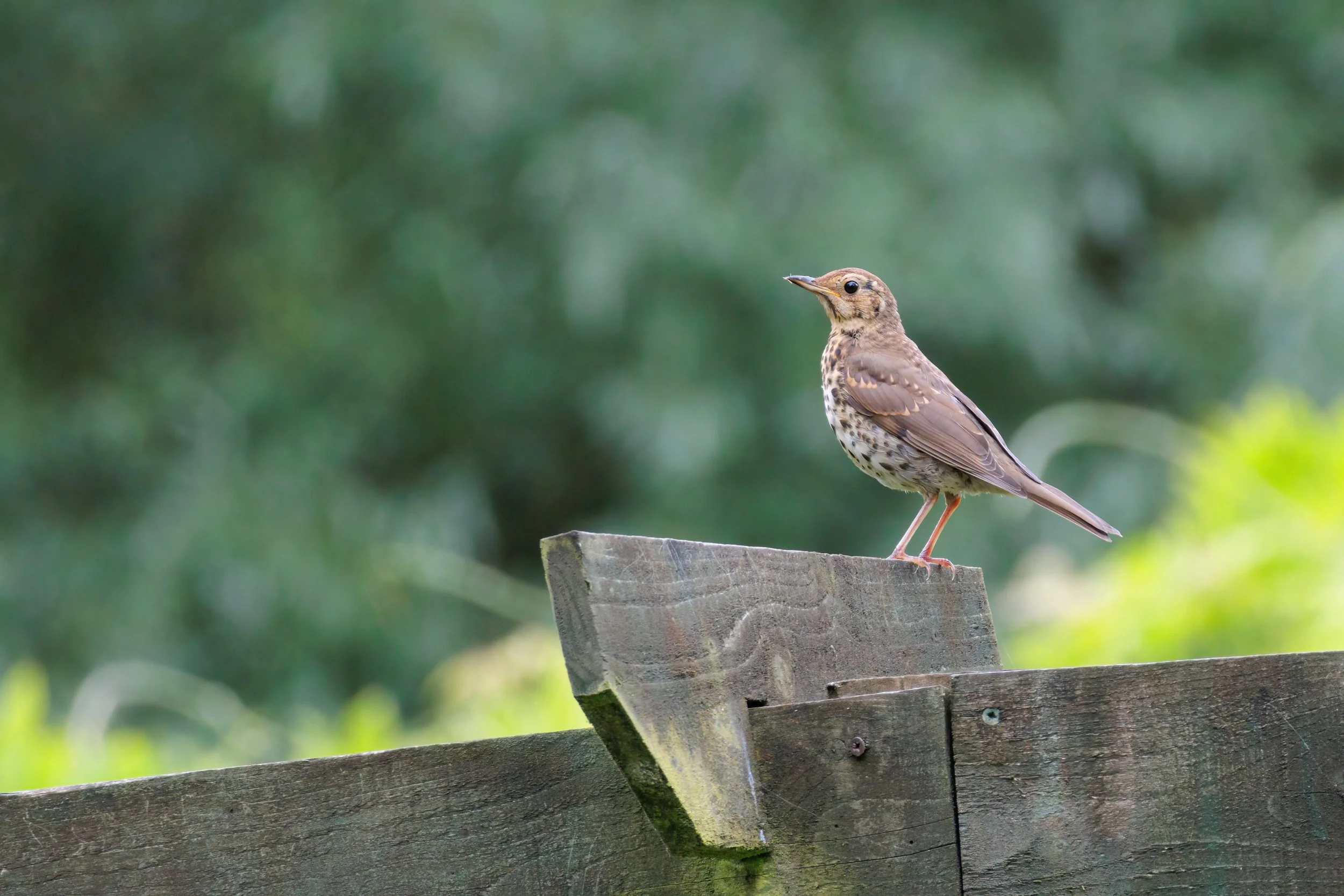
Song Thrush
Smaller and browner than the similar-looking mistle thrush, the song thrush is – as the name suggests – well known for its impressive singing abilities, and can often be heard belting out a tune across Fog Lane Park. Snails are a favourite prey of this species, which flicks its head to smash their shells against stones.
Photo Credit: James Conibear
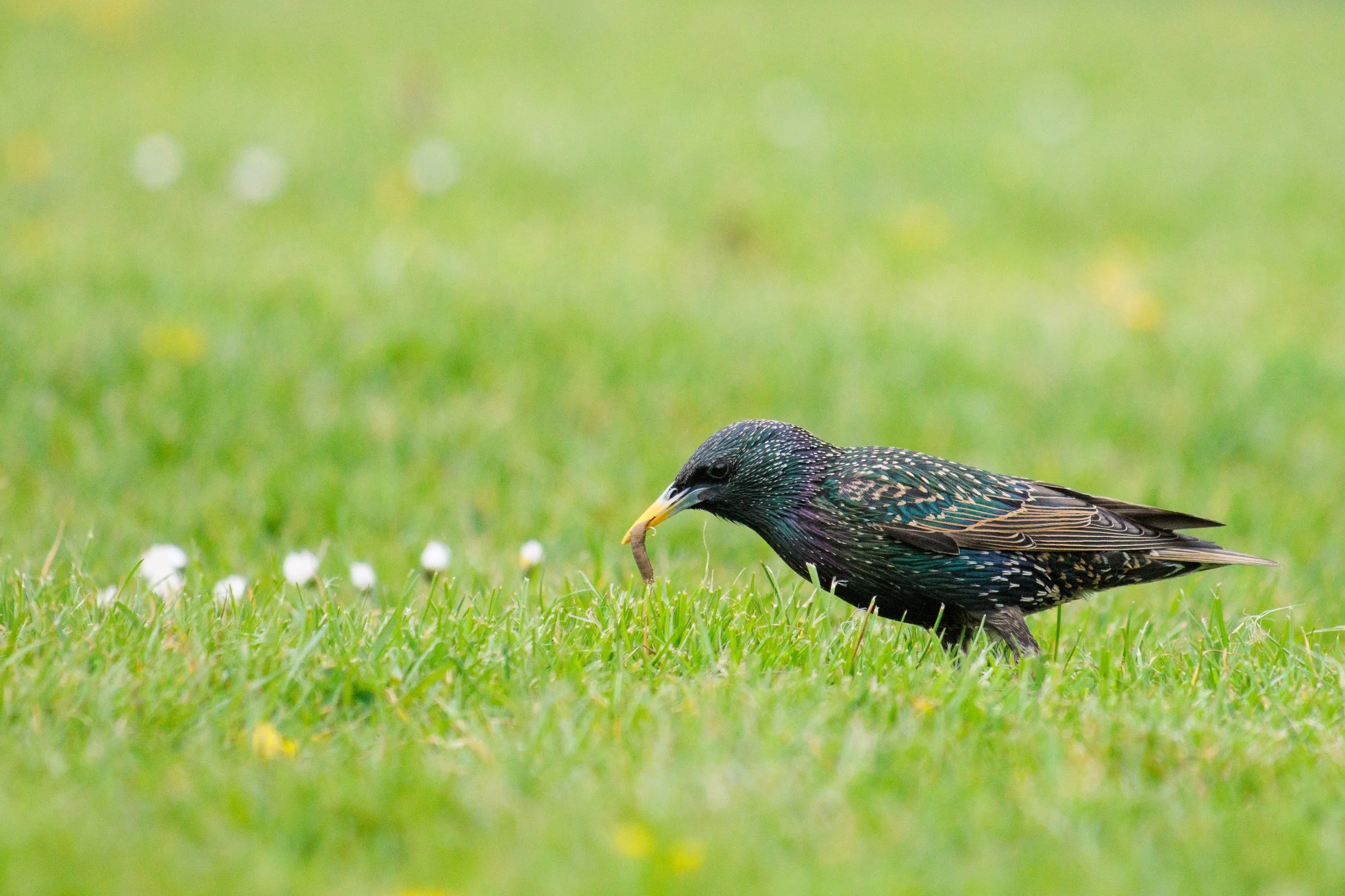
Starling
Boasting a beautiful purple-and-green sheen to its black plumage, this species is famous for its wintry aerial displays known as murmurations, which see huge flocks fly over towns and countryside, though Fog Lane’s numbers sadly aren’t high enough for a Winterwatch-worthy airshow. The easiest spots to find them in our park are the meadow and sports fields, where they can be seen either perched in trees and bushes along the edges or on the grass foraging for food.
Photo Credit: James Conibear
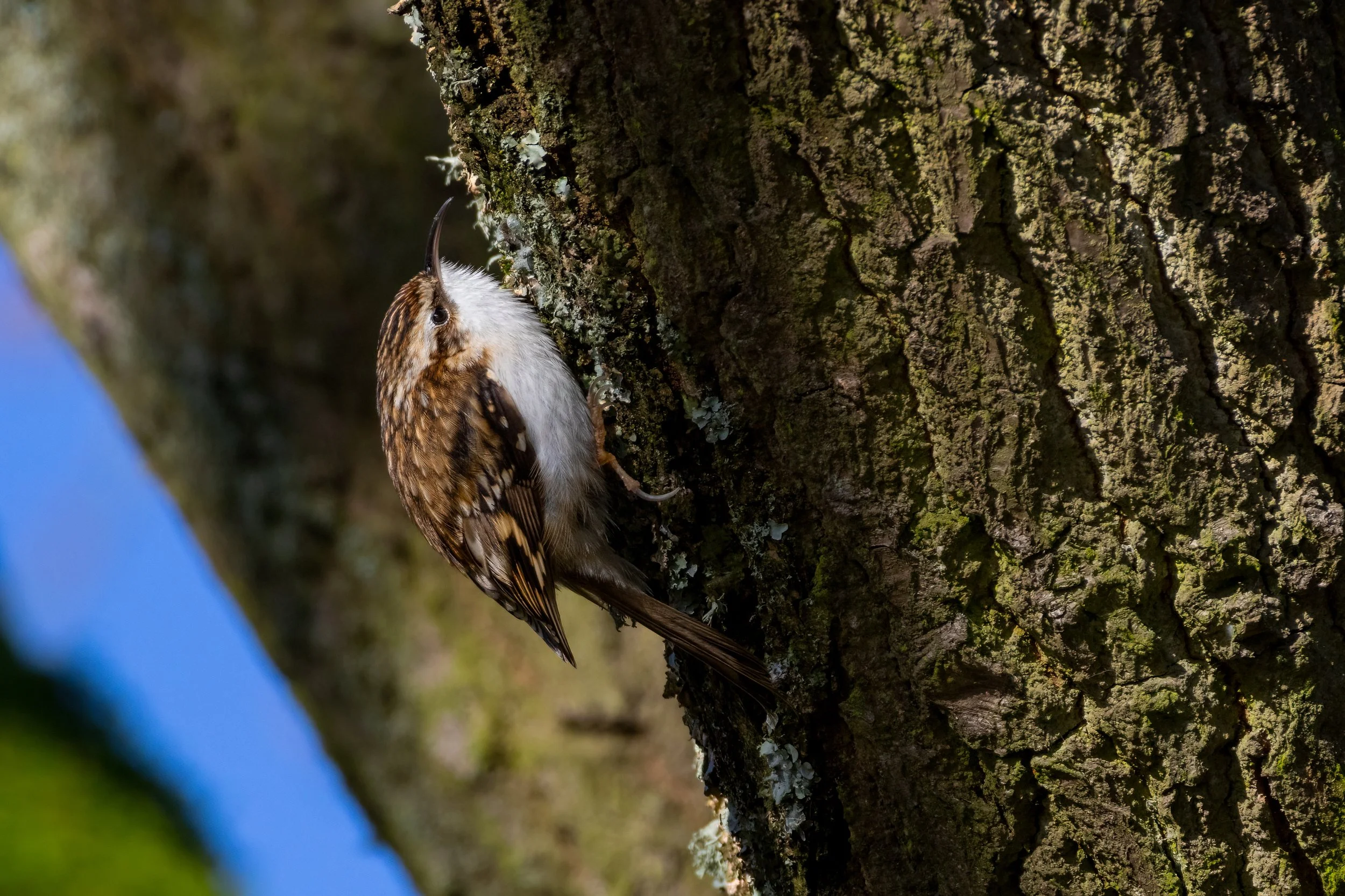
Treecreeper
A tiny, very active bird that quickly creeps around trunks and along branches in its pursuit of tree-dwelling grubs, which it prizes out from the bark with its specialist, downwards curved bill. In Fog Lane Park you can often spot treecreepers within the avenue of tall trees between the Old Broadway and Westholme Road park entrances, as well as in the woodland along the Serpentine Path.
Photo Credit: James Conibear
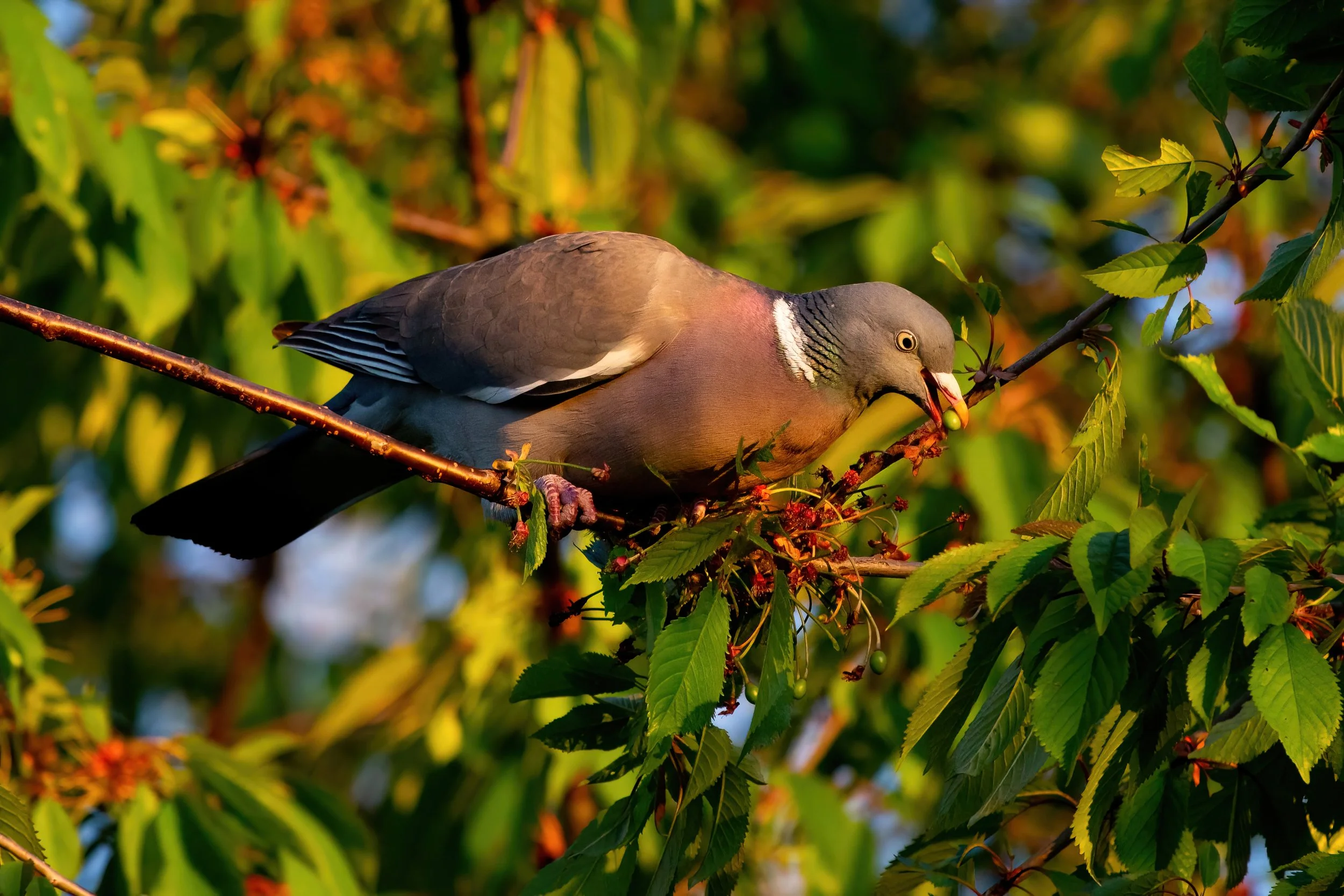
Wood Pigeon
"Cooo coo co coo, cooo coo co coo." And so goes the famous woodpigeon call, the backdrop to many a sunny afternoon in the park. This plump, clumsy bird has a reputation for being a greedy feeder and leaving colossal droppings, which you'll soon notice if you ever park your car under a favourite berry tree! Even so, it's hard not to find their goofy nature endearing, and despite being an everyday sight in Fog Lane, they're certainly still a welcome one.
Photo Credit: James Conibear
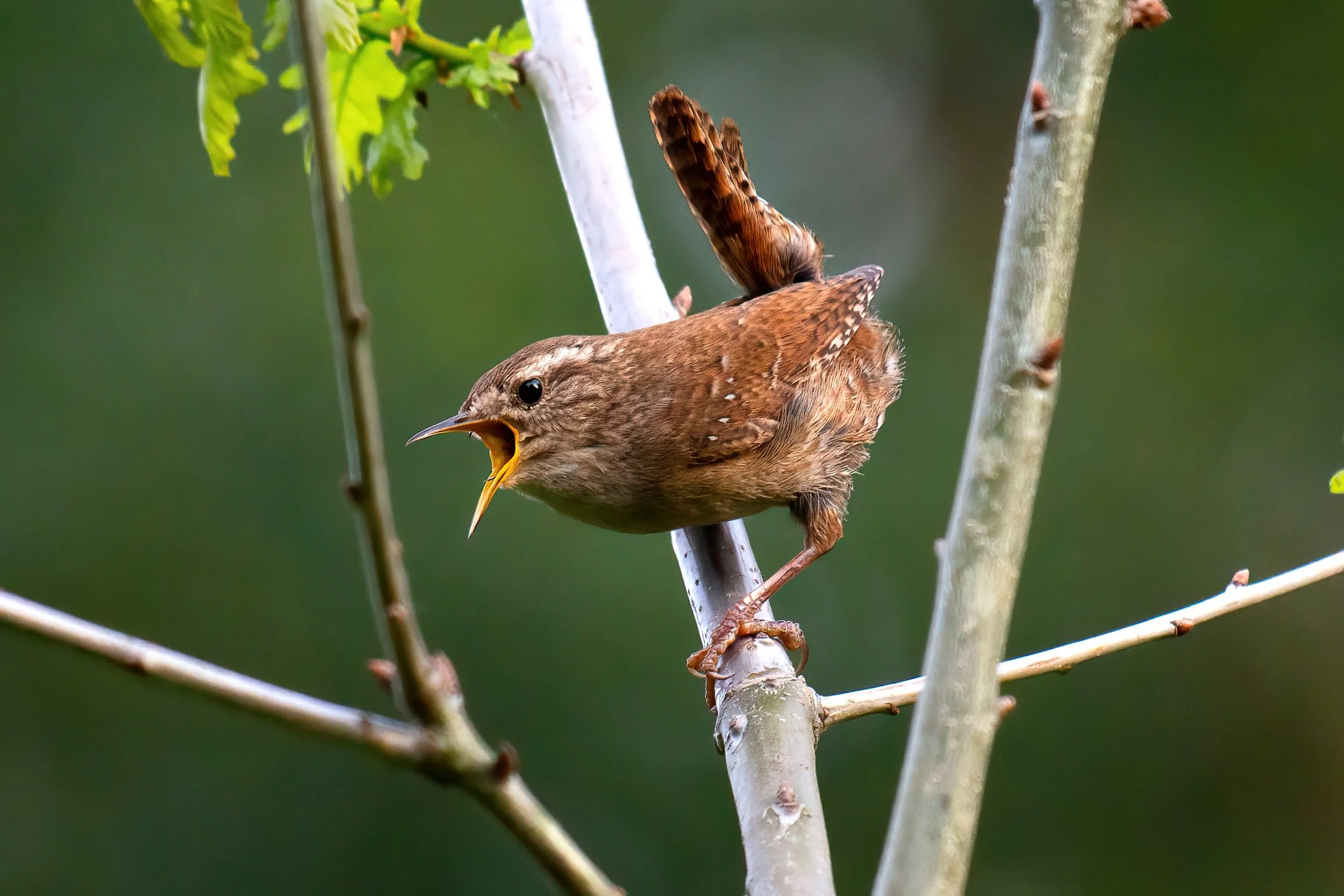
Wren
While only slightly larger than the UK's smallest bird (the goldcrest), the wren is much easier to find, due to both its abundance and behaviour. The wren is the UK's most common bird, with an estimated 11 million pairs spread across various habitats. It has a distinctive song that it sings while patrolling perches within its territory and tends to switch to a higher perch during each pause. Wrens are particularly keen on the brambles in Fog Lane Park, so keep an eye (and ear) out for them there.
Photo Credit: James Conibear