Trees
The park contains over a hundred different species of trees, some of which we believe date from when the park was first laid out in 1926 and includes some unusual and rare trees both native and from around the world. Our trees support a huge variety of wildlife including birds, insects, moths, fungi and lichens. There’s something to explore year-round, from bark textures in winter, spring blossom, summer leaf shapes and seeds and of course, the amazing oranges and reds of autumn leaves. Read more below about each of the different tree species we have in the park and where you can find them. You can use the links in the alphabetical list below, or just scroll and browse.
The different species of tree you can find in the park, listed by common name in alphabetical order
Babylon weeping willow
Salix babylonica
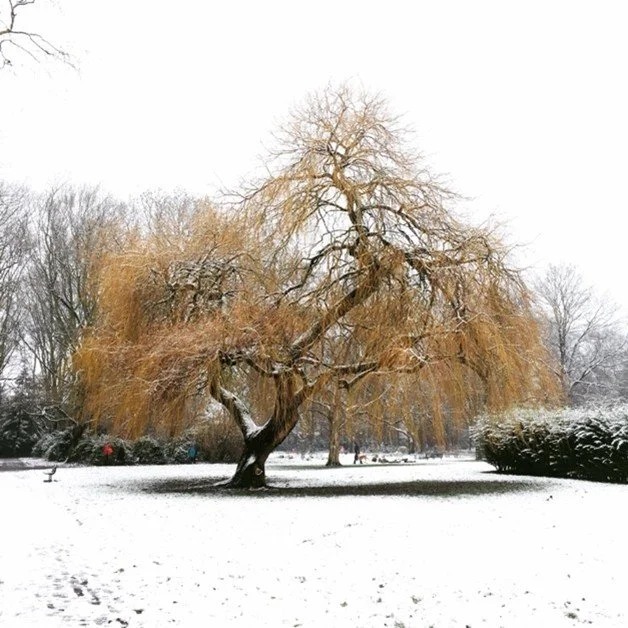
This majestic weeping willow can be found southwest of the old bowling greens. The twisted trunk and distinctive drooping and trailing branches give it an attractive ornamental shape – albeit reminiscent of the whomping willow in the Harry Potter series. Did you know that willow bark has a long history of use as an anti-inflammatory and for pain relief?
London Plane
Platanus x hispanica
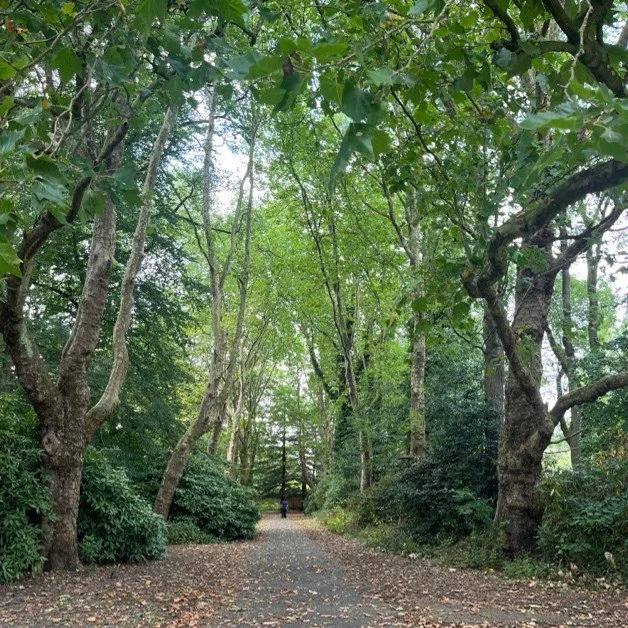
Our London plane trees are so large they must surely have been some of the original trees planted back in 1926. There’s a group of them around the western Parkville Road entrance and an avenue along the main path across the park. A hybrid of American sycamore, they became popular city trees due to their tolerance to pollution. Their signature attribute is the way the bark peels in patches.
Railway Poplar
Populus x canadensis ‘Regenerata’
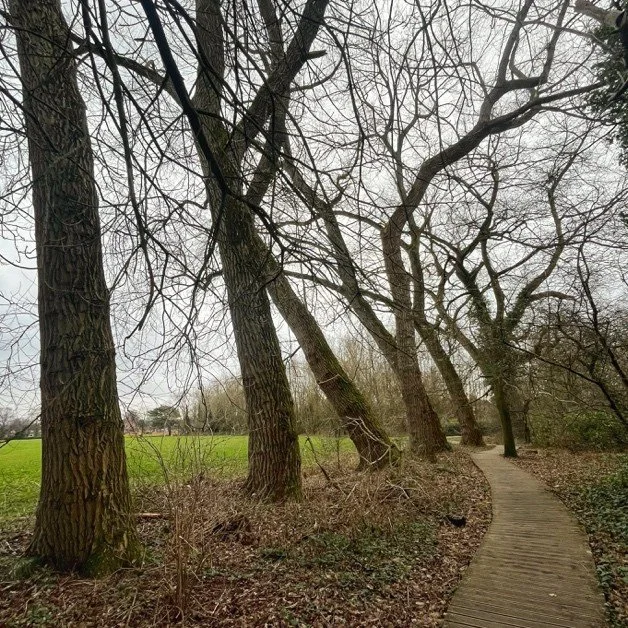
The boardwalk near the ponds weaves its way through a row of Railway poplars, so named as they were often planted along railway lines in the UK. It’s a hybrid of the native black poplar and the American eastern cottonwood and the female trees produce large balls of fluffy cotton like seeds in late summer that fall and blanket the ground. There’s also another row along the north of the meadow.
Silver Birch
Betula pendula
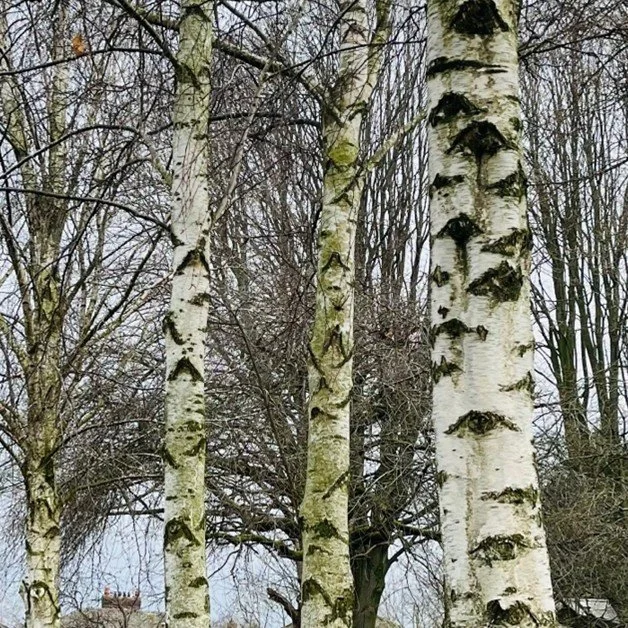
Silver birch trees are dotted around the park with a cluster near the Corinthians mural and a number planted along the Parrs Wood Road boundary. They are one of the easiest trees to identify in winter from their distinctive silvery white papery bark that develops diamond shaped fissures in older trees. This native tree is sometimes used as a symbol of renewal and purity.
Pedunculate (English) Oak
Quercus robur
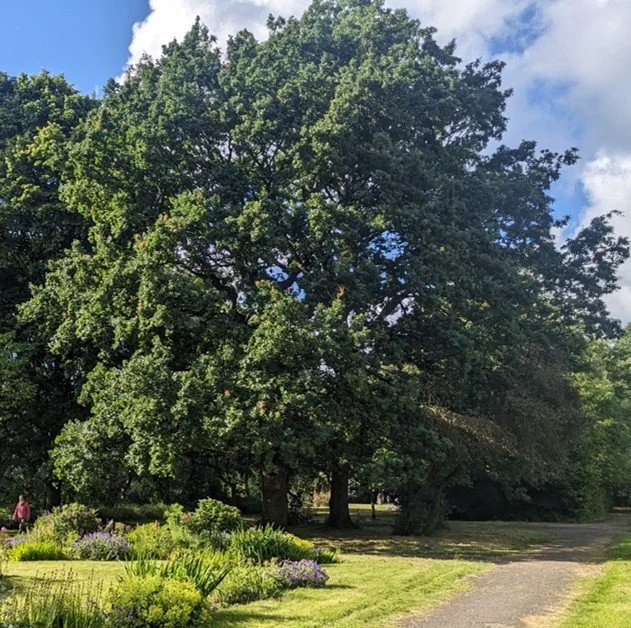
The pedunculate, or English oak is a true legend. Long living with a large crown it supports a huge and diverse ecosystem – according to the Woodland Trust more than any other native tree species. The main concentration of these trees in the park is near the bird hide so look out for the distinctive lobed leaves and of course, acorns – squirrels love them!
Coast redwood
Sequoia sempervirens
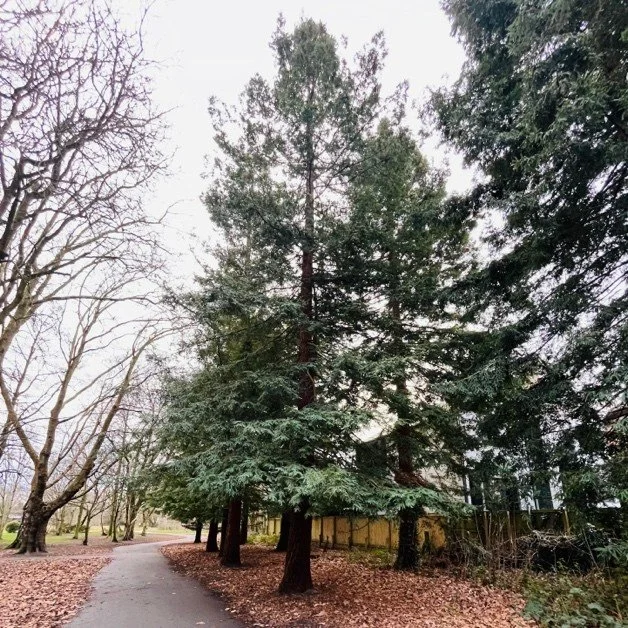
The group of coast redwoods near the Old Broadway entrance provide a splash of colour even in winter - the species name "sempervirens" means "evergreen". They are related to giant redwoods and can grow to 110m tall in their native NW America, but fortunately for us only grow to around 40m in the UK. Look out for their elegant conical shape, soft red bark and small cones.
Witch hazel
Hamamelis sp
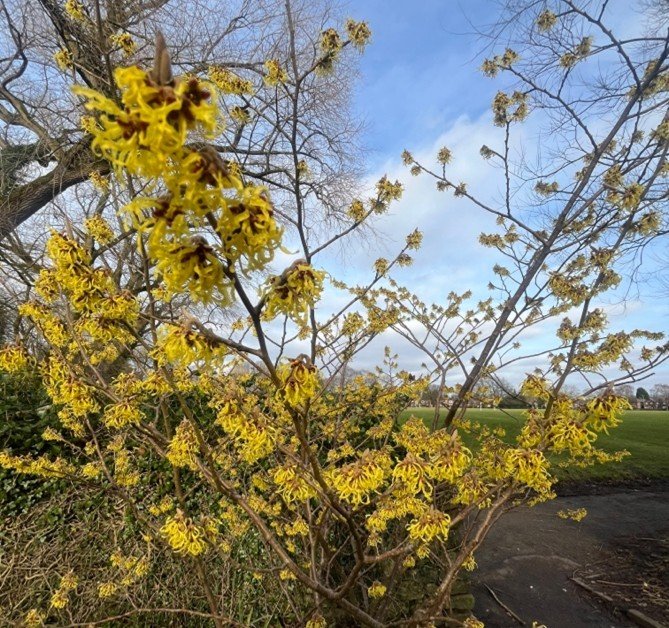
Our witch hazel tree is small but beautifully formed. Located by the raised beds near the pond, the yellow winter flowers are stunning to look at close up with their unusual spidery shape.
These trees have no link to witchcraft but the name is derived from the old English word wice, meaning pliant or bendable and they have a long history of use in medicine for skin complaints.
Hornbeam
Carpinus betulus
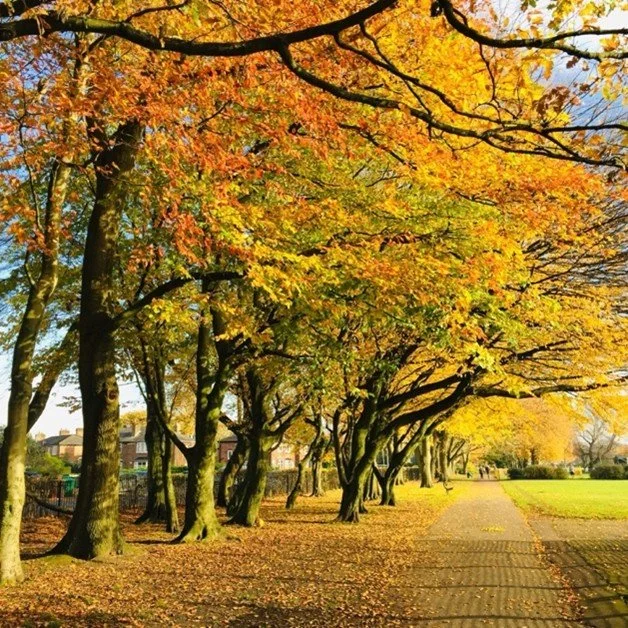
For stunning autumn colours head over to the Parkville Road side of the park and see our fabulous hornbeams that reach out over the path. Part of the same family as birch trees, hornbeams are long living with a hard wood traditionally used for chopping boards and cog wheels.
Hornbeams can be distinguished from the common beech trees also in this row by their twisted gnarly trunks and bark with silver grey bark vertical lines. You’ll need to look closely to tell the leaves apart though – they are very similar in shape but the hornbeam’s leaves are doubly serrated whilst the beech leaves have smooth wavey edges.
Cherry
Prunus sp
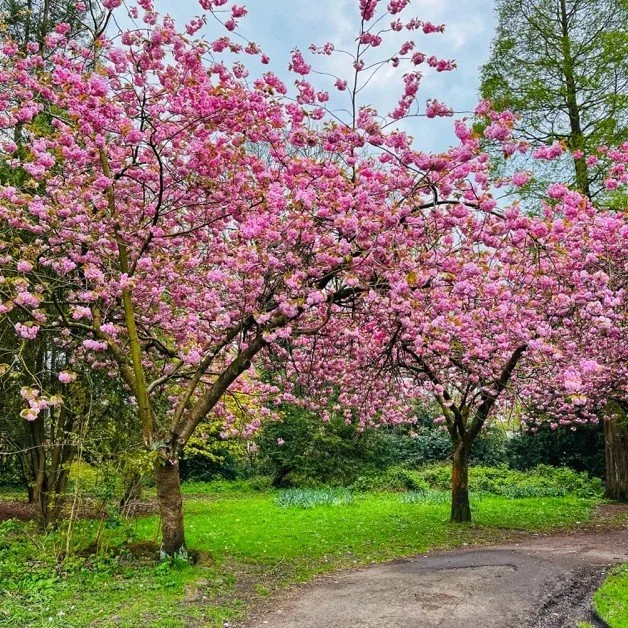
There are around 100 cherry trees of over ten different species in Fog Lane Park. The best time to see them is in spring, when the blossom is in full bloom and whilst they can be found all over the park, the Serpentine walk is the best place to start. We have native wild cherry trees, cherry plum trees and a number of different ornamental Japanese cherry trees so there’s a variety of colours and blossom structures to see along the way.
Scots Pine
Pinus sylvestris
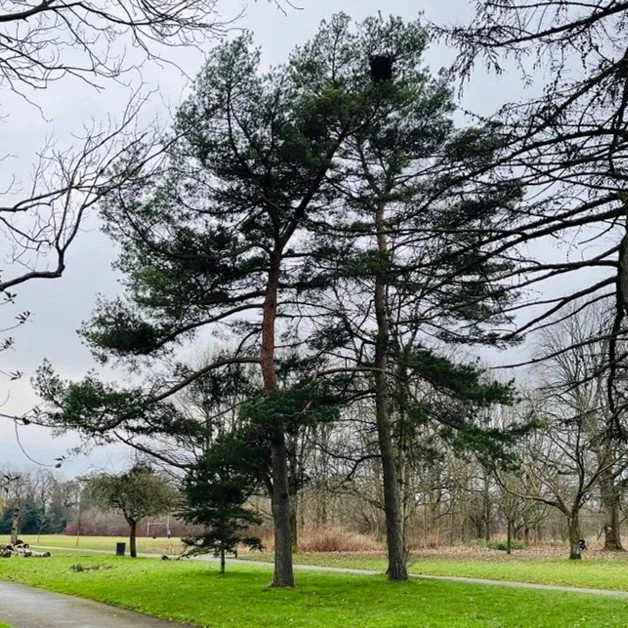
Native to the Scottish Highlands (the clue was in the name), the main concentration of Scots Pine is around the old bandstand in the north western corner of the park. An evergreen tree with long twisted needles, Scots Pines have a distinctive shape and can usually be found with pine cones of different seasons on the same tree.
Lombardy Poplar
Populus nigra 'Italica'
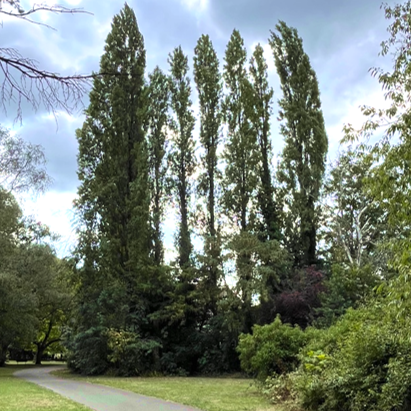
Tall thin architectural trees traditionally used as a windbreak or visual screen, these were presumably originally planted along the whole western edge of the park. What’s left is a striking row just to the north of the Old Broadway entrance, although if you look closely there are also a number further south too. Note the Latin name – despite being a completely different shape these are closely related to the rare Manchester poplars on the other side of the park.
Giant Redwood
Sequoiadendron giganteum
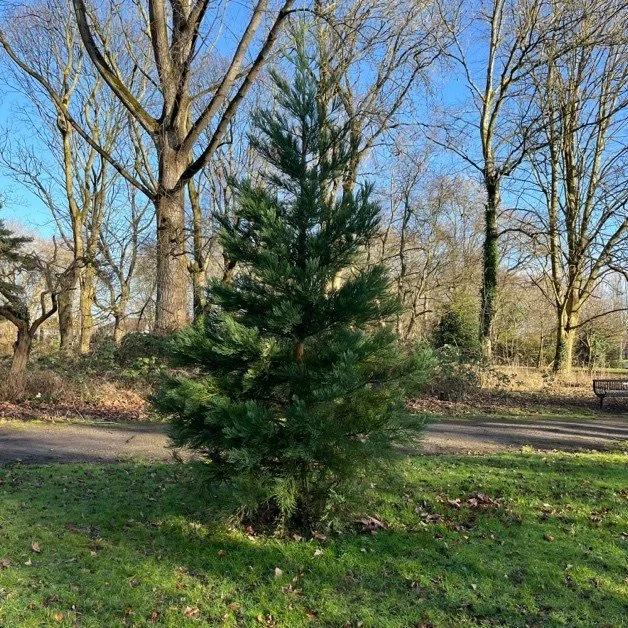
Yes, you read that right – we have giant redwoods in Fog Lane Park! An ancient species, known to survive for hundreds of years and grow to enormous proportions in its native north America, giant redwoods are iconic trees for very good reasons. Don’t get too excited though, our specimens are babies by comparison in size and age. Look in the grass opposite Old Broadway entrance – you don’t need to look up as it’s only about 3m tall and has some serious growing to do - hang around for a couple of centuries and you’ll see it at its full height.
White willow
Salix alba
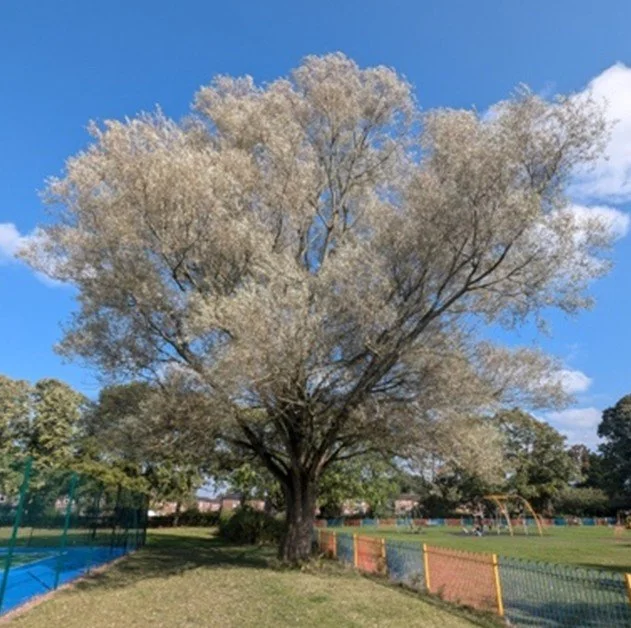
The easiest of our white willows to spot is this one standing alone between the tennis courts and the playground. It’s easy to see how it got its name with long thin leaves that have hairs that appear silvery-white. This native tree supports caterpillars of a number of moth species that feed on the white willow leaves.
Red oak
Quercus rubra
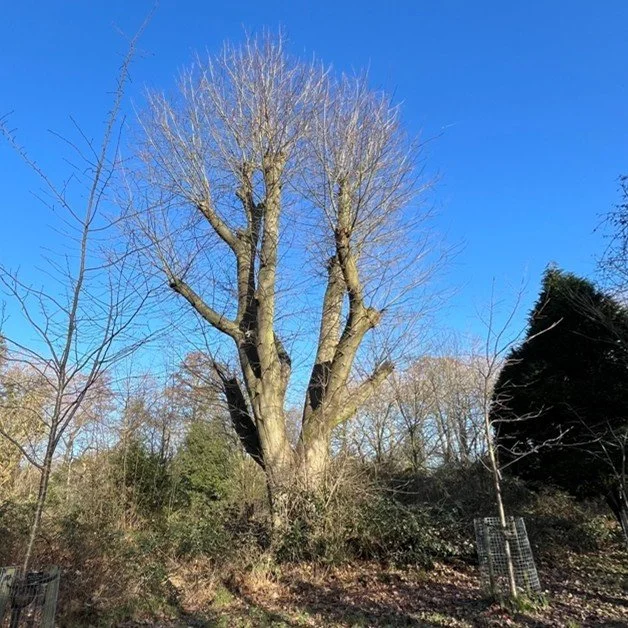
The most obvious of our red oaks is the venerable one on the Serpentine Walk that has been heavily pollarded (and OK it also has a label on it). Pollarding is a woodland management technique to reduce the size of the crown to make the tree less top heavy – it can look brutal but can be essential to keep it living longer. Non-native, it has large leaves that are more pointed than English Oak and which turn a striking red colour in autumn.
Dawn redwood
Metasequoia glyptostroboides
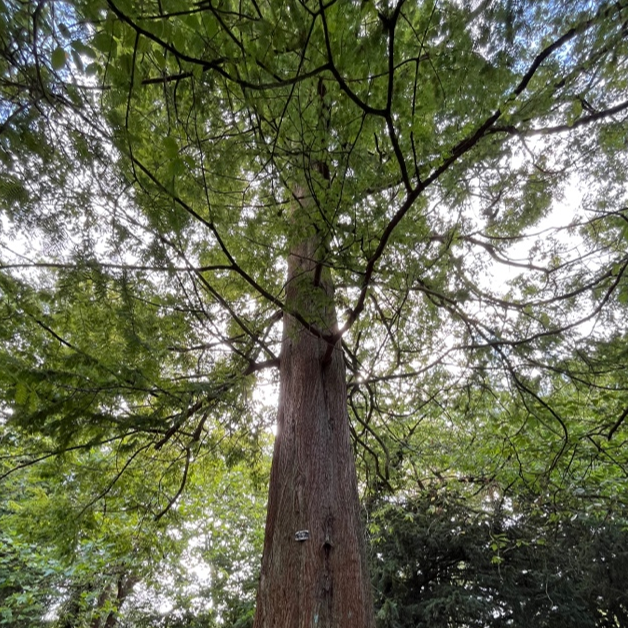
Try to wrap your tongue around the latin name of our dawn redwood found on the Serpentine walk. This conifer was thought to be extinct, but after being rediscovered in China in 1941, was introduced to Britain in 1948 and planted in parks and gardens, but remains rare worldwide. Notice that this particular conifer is deciduous and look closely at its red “stringy” bark.
English Yew
Taxus baccata
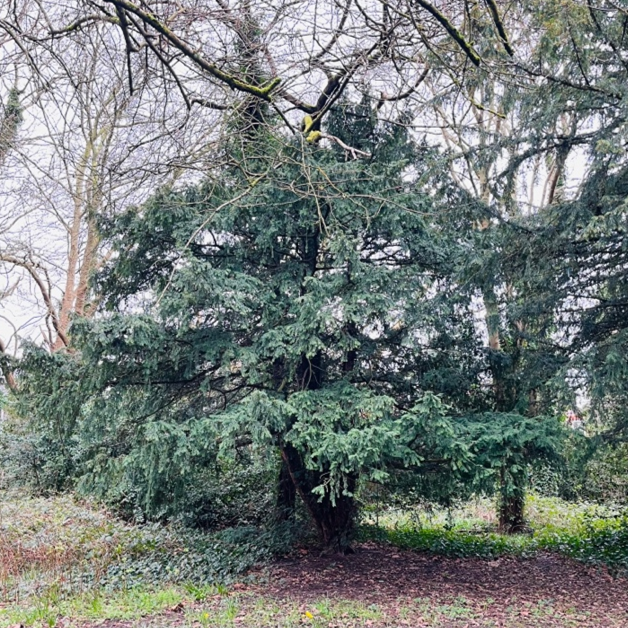
Slow growing and long-lived evergreen yews are not considered ancient until they reach 900 years old. They are native to Europe, are often found in churchyards and are associated with immortality but also doom. Unusually for a conifer it bears seeds in small red berries rather than cones, but look and don’t touch as the leaves, bark and seeds are all poisonous.
Holly
Ilex aquifolium
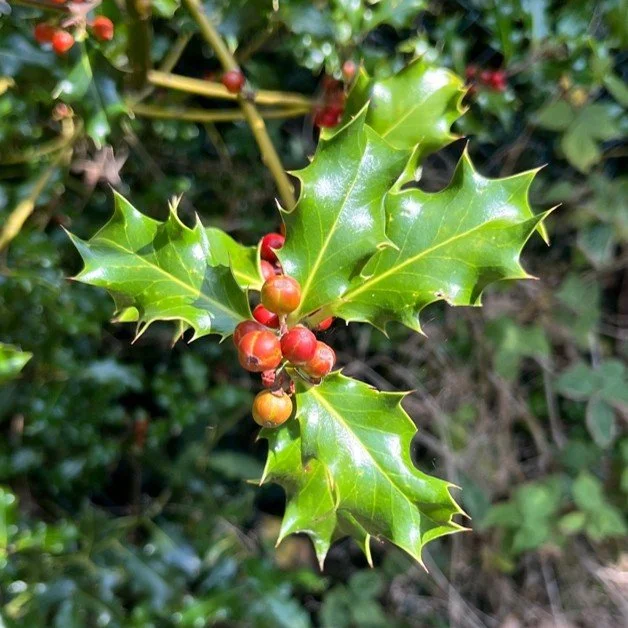
The shiny, spiky evergreen leaves of young holly trees are easy to identify, but older trees have smoother leaves. They are also thought to be able to adapt and produce spikey leaves to deter animals trying to eat them! Red berries are only found on female trees and provide a valuable source of food to birds and mammals.
Sawara Cypress
Chamaecyparis pisifera
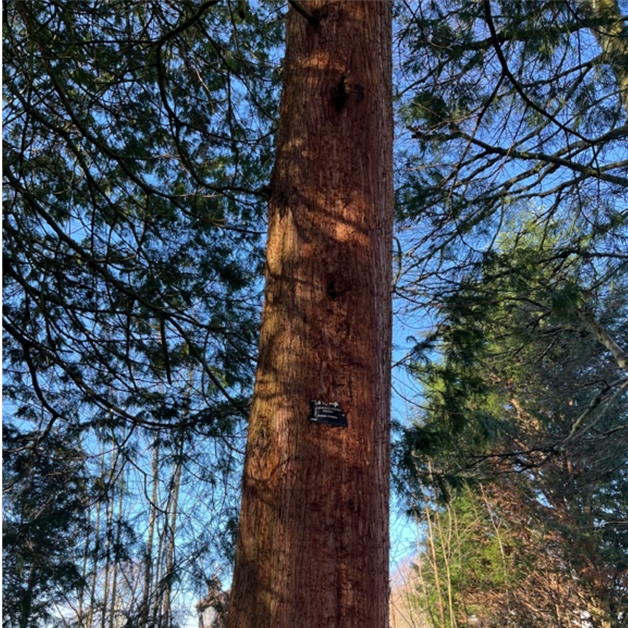
Sawara cypress trees are dotted along the Serpentine walk but the easiest one to find is next to the bird hide and has a label on it. These slow growing coniferous trees are native to the Japanese islands of Honshū and Kyūshū and have fissured and stringy red bark. The latin name pisifera means "pea-bearing" and refers to the small round green cones.
Magnolia
Magnolia sp.
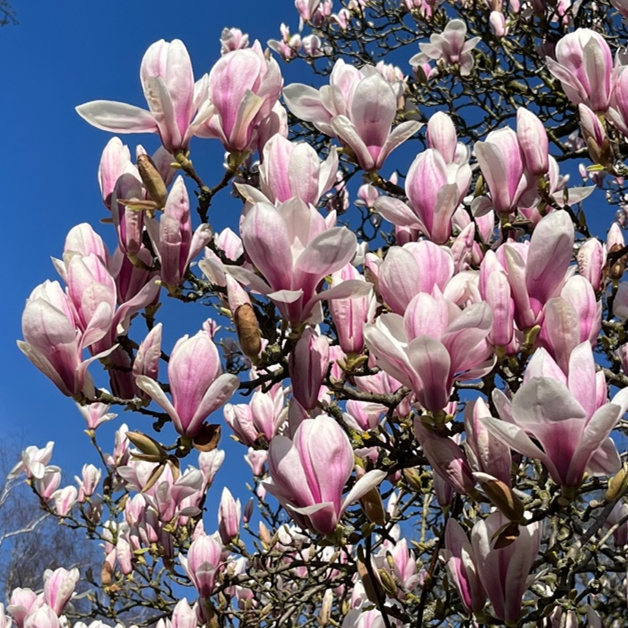
Magnolias are ornamental trees with magnificent early spring tulip shaped flowers tinged with pinks and purples. We have a row of them near the café with some of the older trees now replaced with new ones that will continue to provide colour for many more years.
Hazel
Corylus avellana
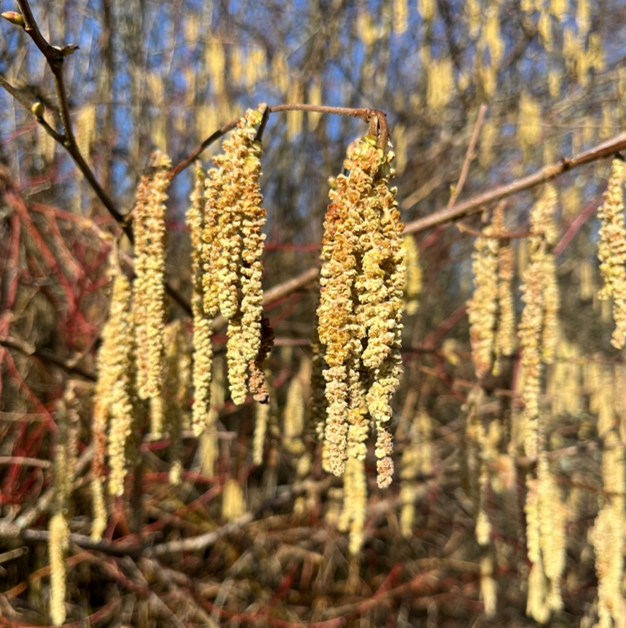
In early spring you’ll see yellow catkins on the young hazel trees in Tiger Wood. Once pollinated, these will develop into hazelnuts providing an important food source for many birds and mammals.
Blackthorn
Prunus spinosa
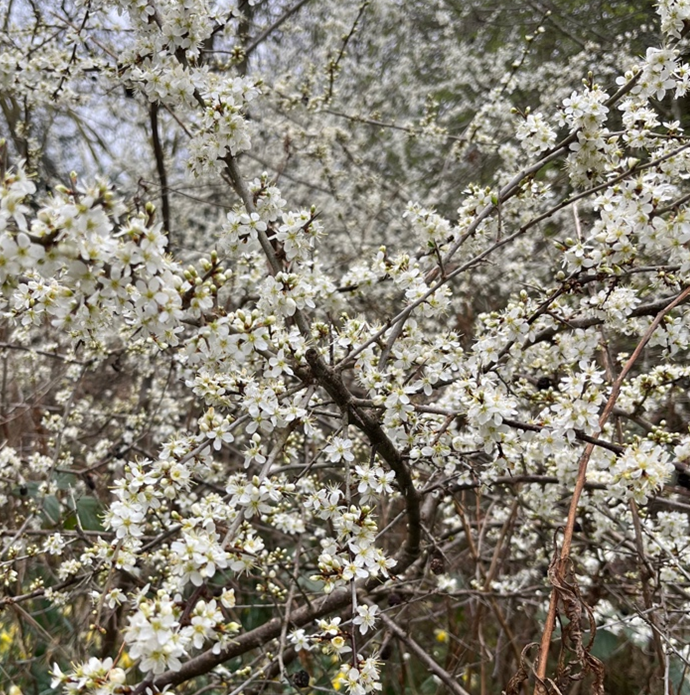
The Jekyll and Hyde of trees with lovely profuse early spring blossom, sour sloe berries used for flavouring gin but huge long thorns. Our thickets of blackthorn on the edge of Tiger Wood provide great nesting habitat for birds, an early supply of nectar and pollen for bees and a feast of sloes in autumn.
Korean Fir
Abies koreana
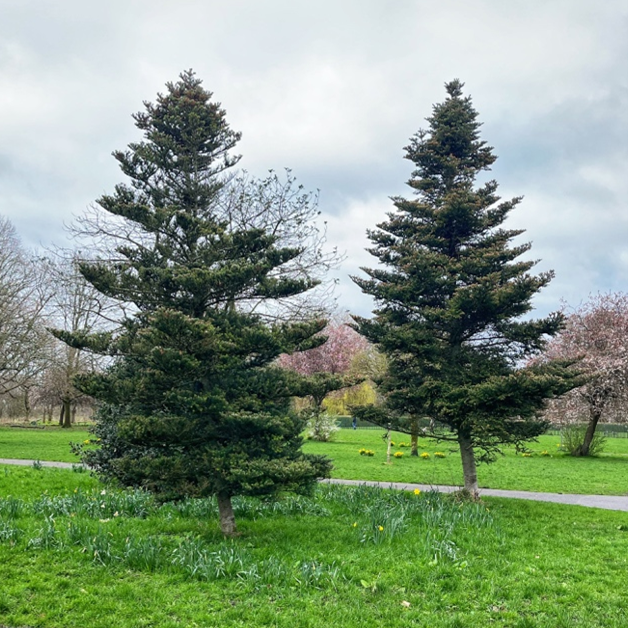
This pair of Korean Fir trees are found near the playground. They have a conical shape, dark green evergreen needles like leaves that are white beneath and blue or purple cones.
Bhutan Pine
Pinus wallichiana
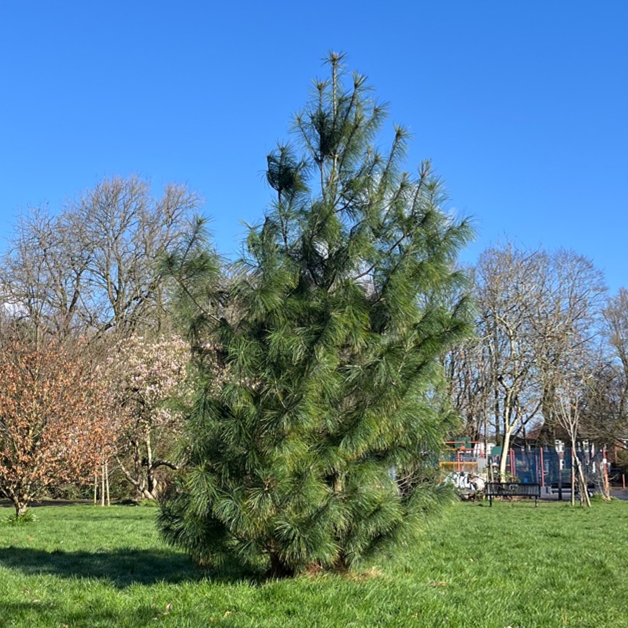
Get up close to the single Bhutan Pine near the Old Broadway entrance, and you’ll be able to see its distinctive very long thin blue grey drooping needles, and in season banana shaped cones.
Sycamore 'Brilliantissimum'
Acer pseudoplatanus 'Brilliantissimum'
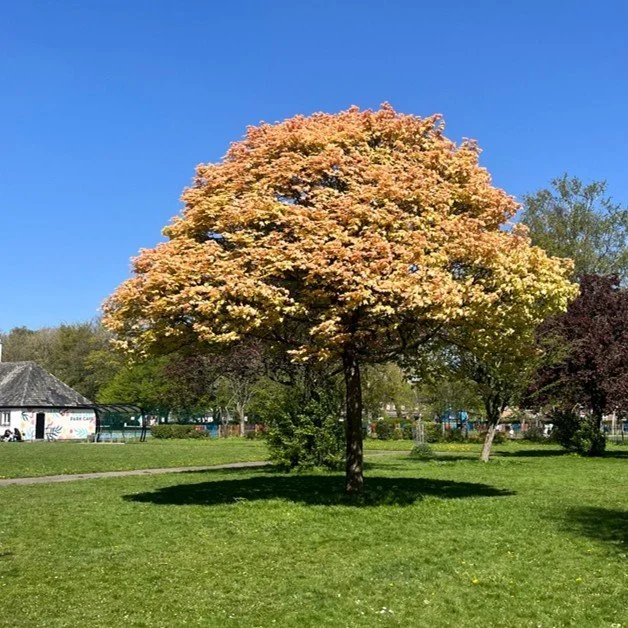
You can’t miss the two wonderfully colourful trees near the café. Mop headed shape with salmon pink spring foliage turning yellow green and finally darker green later in the year – stunning!
Horse Chestnut
Aesculus hippocastanum
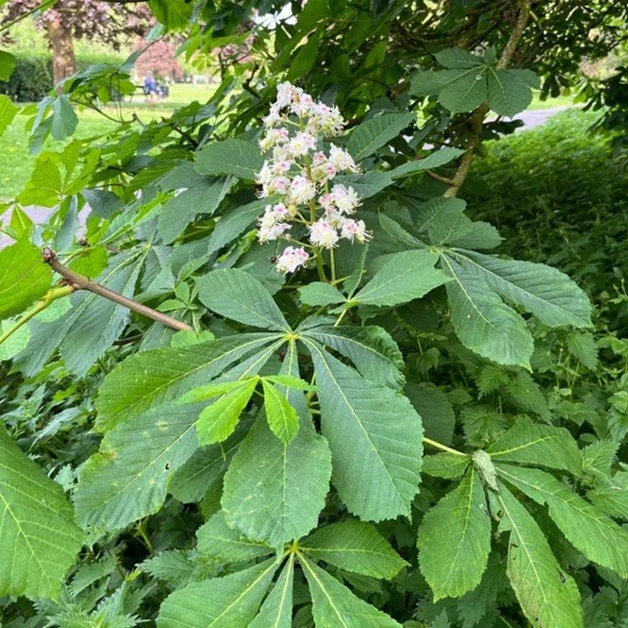
Horse chestnuts are easy to identify from their large palmate leaves, upright flowers and of course the autumn conkers loved by children and squirrels alike. The first recorded game of conkers was in 1848 and now has world championships!
Laburnum
Laburnum sp.
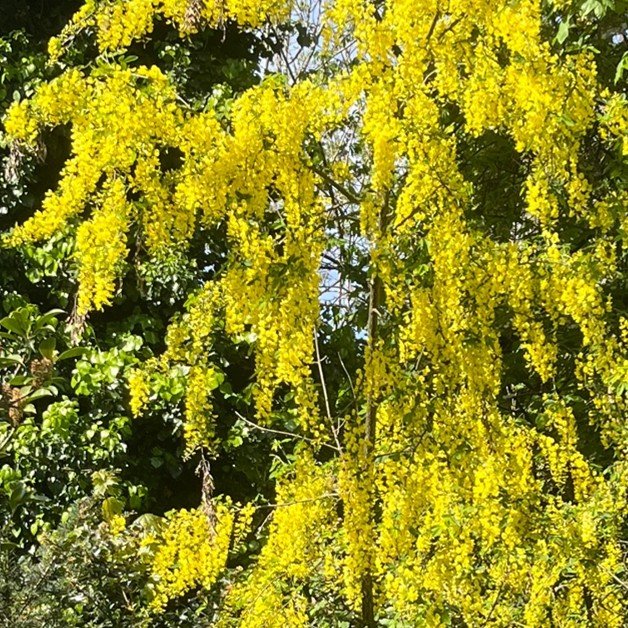
Part of the pea family, the impressive hanging bunches of bright yellow flowers in spring turn into shiny black peapods in autumn. It is widely used as an ornamental tree in parks and gardens but beware - all parts of the plant are poisonous.
Silver Lime
Tilia tomentosa
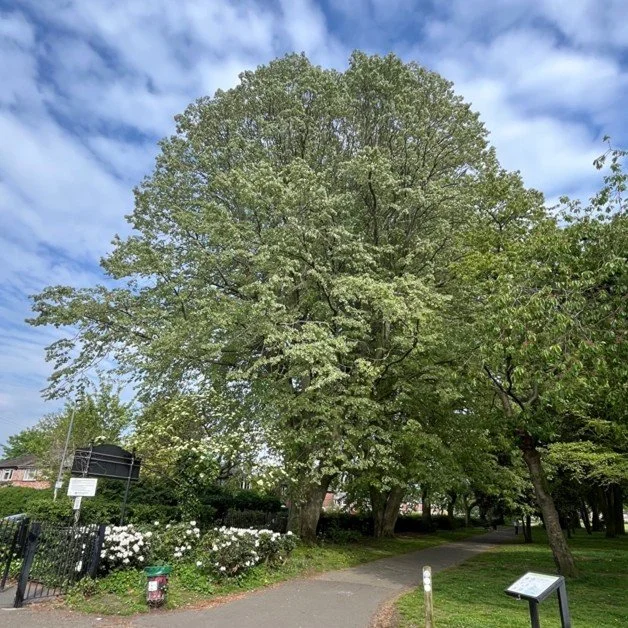
There’s a majestic pair of Silver Limes next to the playground entrance. These large trees are usually found in parks or large gardens and gets its name from the white hairs on the underside of the leaves which give a silvery appearance.
Small Leaved Lime
Tilia cordata
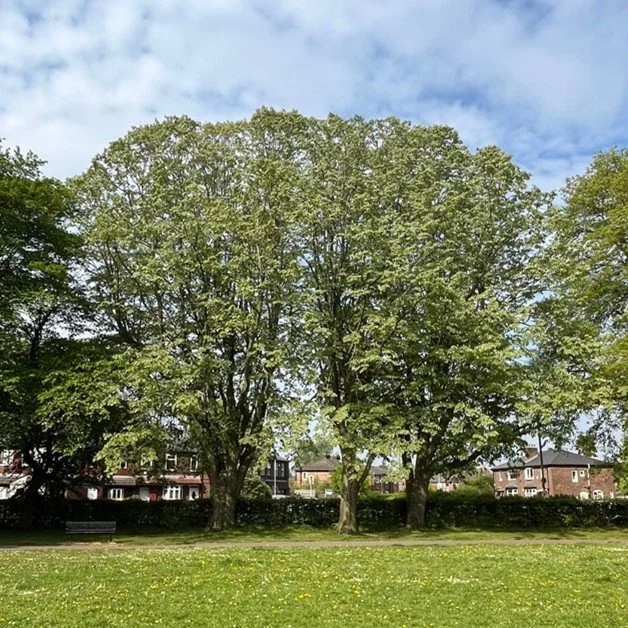
This native lime grows naturally across northern Britain, but is also a fine specimen tree for parks. Its name reflects that the leaves are smaller than Common Limes, but don’t be fooled – there’s no citrus fruit to be found here. Our Small Leaved Limes are north of the tennis courts.
Goat Willow
Salix caprea
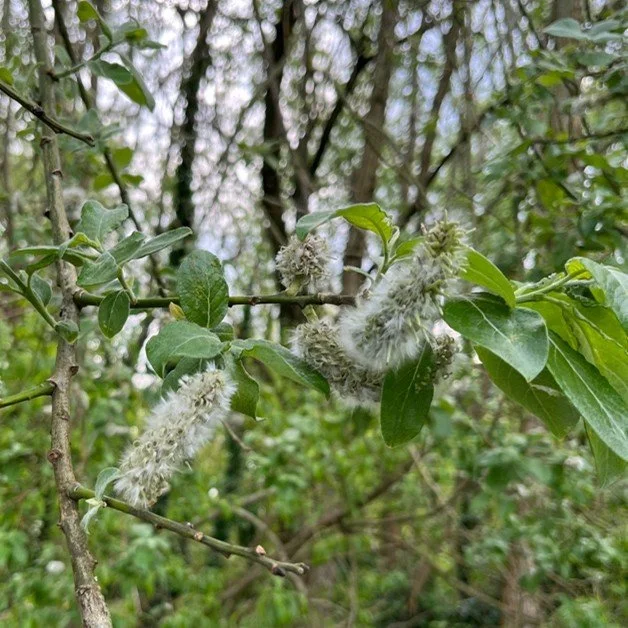
Also known as pussy willow, the goat willow has rounder leaves than most other willow trees, with hairs underneath that give the tree a pale green colour. The name is due to the belief that the male catkins look like cats’ paws – although we’re not quite convinced!
Laurel
Prunus laurocerasus
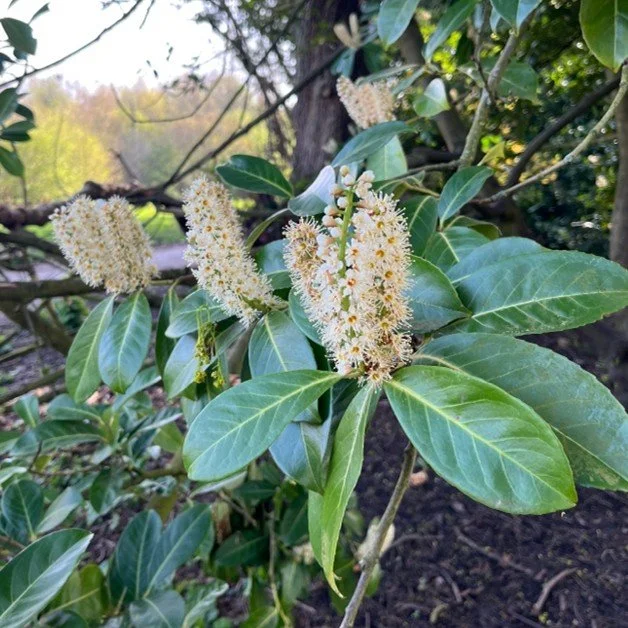
Laurels are widely found around the park, providing evergreen colour year-round. Glossy leaves with upright white flowers in spring, these shrubs are actually part of the cherry family.
Hawthorn
Crataegus sp.
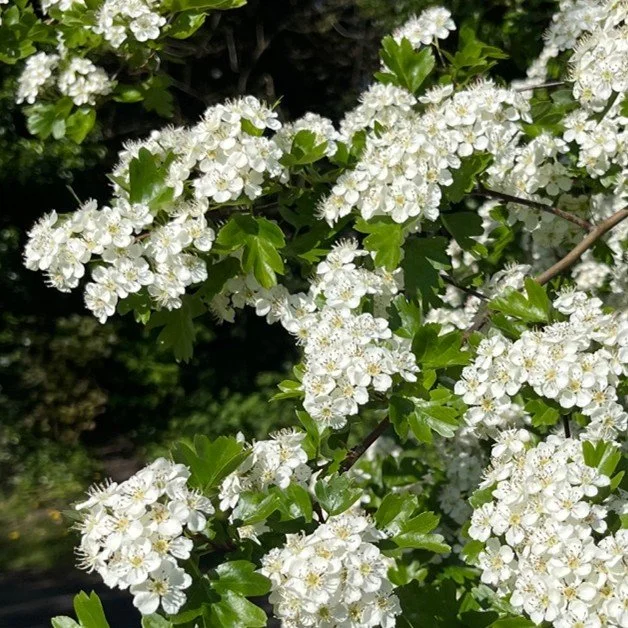
Native to the UK and also known as the May tree, hawthorn is a pagan symbol of fertility and has long associations with May Day. Widely grown as trees and hedges, it has small deeply lobed leaves and dense long lasting and scented white blossom which turn into red berries known as haws in autumn which are a favourite for birds and other wildlife.
Copper Beech
Fagus sylvatica 'Cuprea'
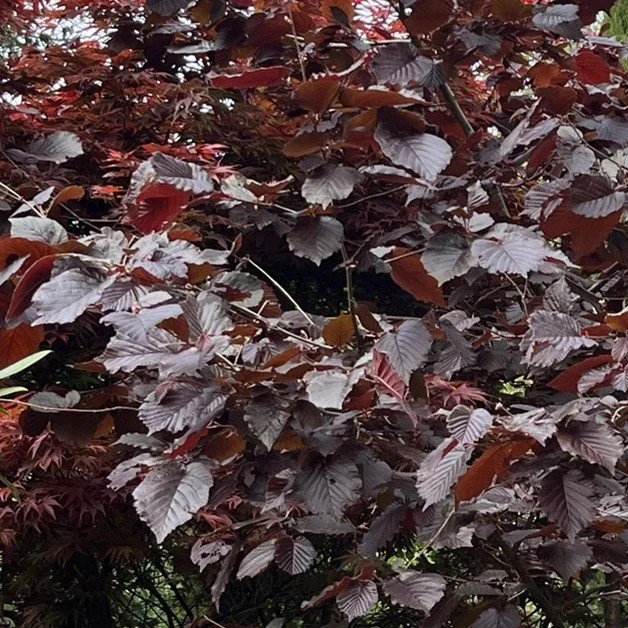
Striking coloured trees with red to purple leaves, these were cultivated from common beech for ornamental purposes. Long lasting trees, they provide habitat for hole nesting birds and wood boring insects and produce nuts known as beechmast giving a valuable autumn food source for wildlife.
Whitebeam
Sorbus aria
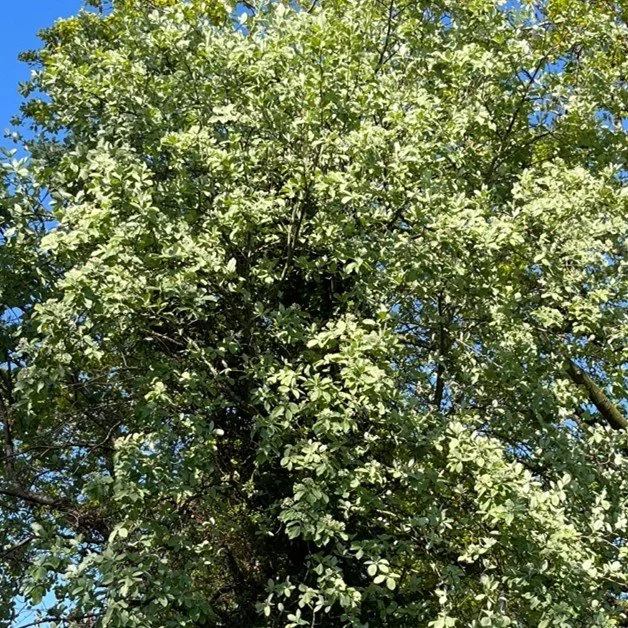
This deciduous broadleaved tree has thick oval leaves with white hairy undersides giving the tree a very pale green appearance. It’s often used as an ornamental tree with white blossom and red berries popular with birds. One can be spotted right in the NE corner of the park.
European Larch
Larix decidua
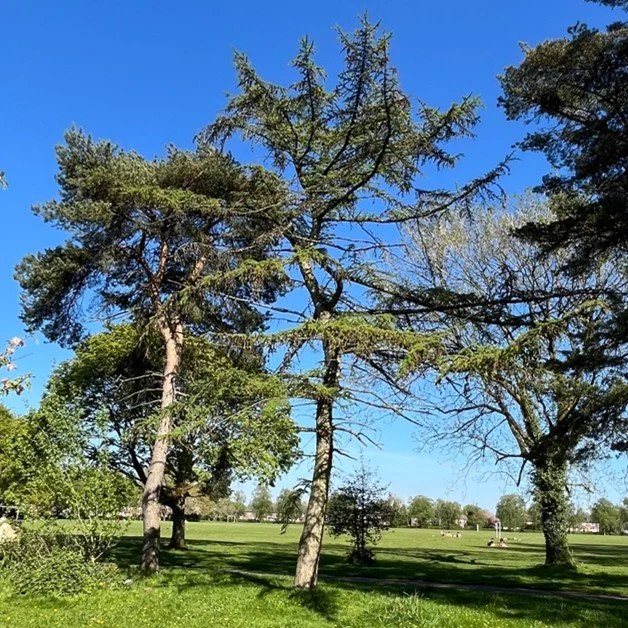
This deciduous conifer has sweeping branches with clusters of needles that turn golden yellow before falling in autumn, and small oval cones that remain on the tree throughout winter. It was introduced to the UK for its timber, but our larch is purely ornamental.
Caucasian Wingnut
Pterocarya fraxinifolia
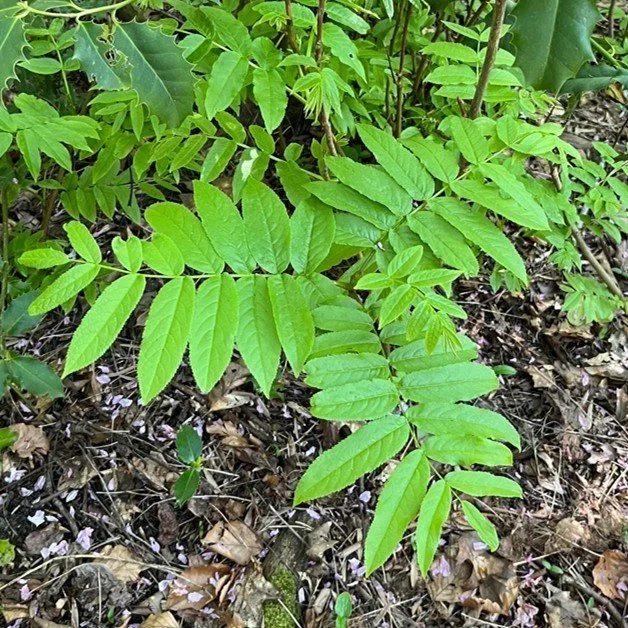
These tall deciduous trees are originally native of the Caucasus region and introduced to parks and large gardens in the UK in 1782. Ours are South of the Serpentine Walk – looks for a large mature tree with a black label on in, and self-seeded saplings in front. They have large pinnate leaves with catkins in spring, followed by spikes of winged fruits in autumn.
Rowan
Sorbus aucuparia
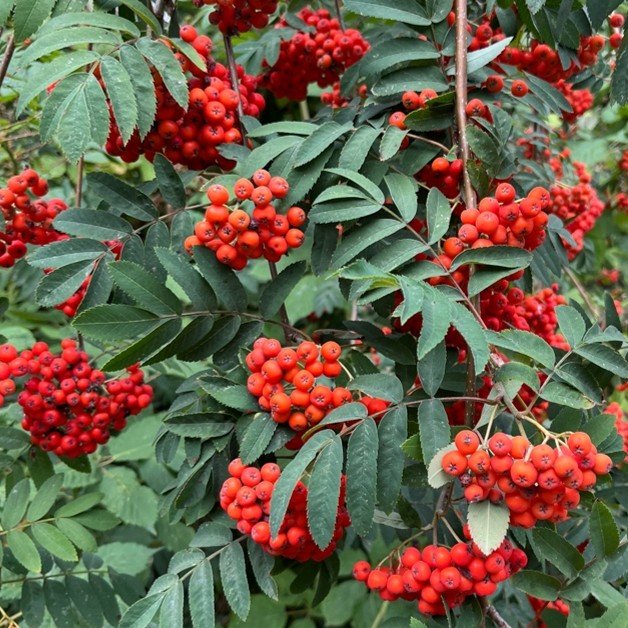
The rowan or mountain ash was once believed to protect against witchcraft and fight evil. It can grow naturally on hillsides up to 1000m and despite the name is not related to the common ash. Forming plentiful clusters of red berries, it provides a vital source of food for birds and other wildlife.
Apple
Malus sp.
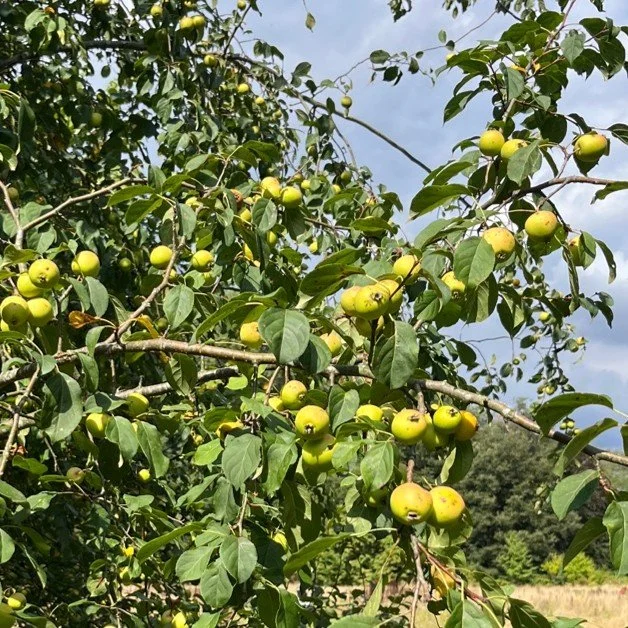
Not native to the UK (unlike crab apples), the apple tree is widely grown for fruit to eat, bake or juice. They are part of the rose family and provide a food source for many birds including thrushes and bullfinches. Did you know there are over 2500 different varieties?
Common Alder
Alnus glutinosa
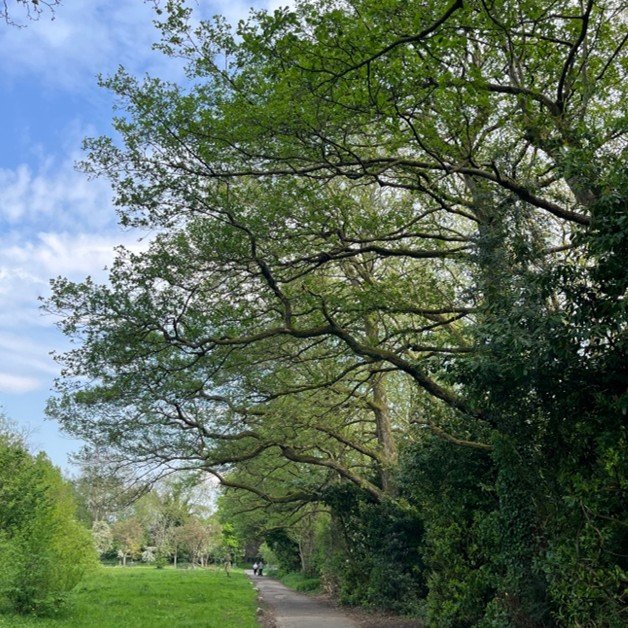
Alders like wet conditions and often grow along rivers and in wet woodlands. Found all along the path south of Tiger Wood, ours may have been deliberately chosen to cope in this often-boggy area near where the original stream used to flow. The wood is so resilient to water it was used for shoring up canals and riverbanks!
Northern Catalpa
Catalpa speciosa
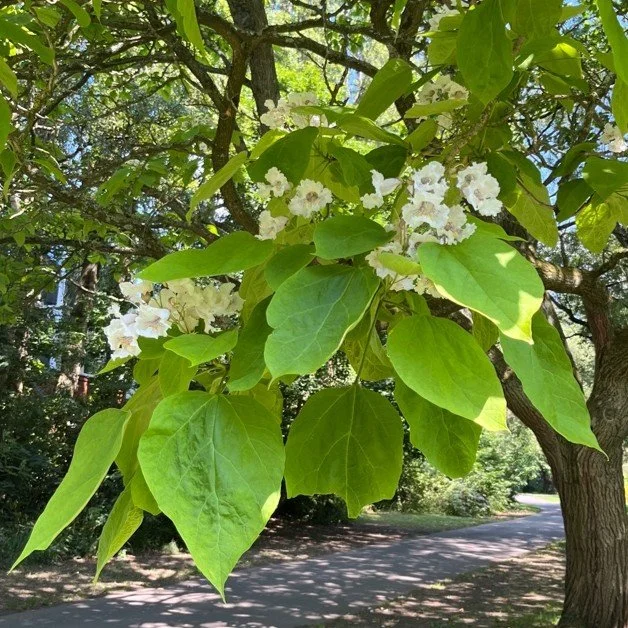
Listed on Manchester City Council website as a rare tree, our Northern Catalpas can be found just inside the Old Broadway entrance. Look out for the large heart shaped leaves, the upright panicles of white flowers in late spring and slender bean-like pods in autumn.
Black Locust
Robinia pseudoacacia
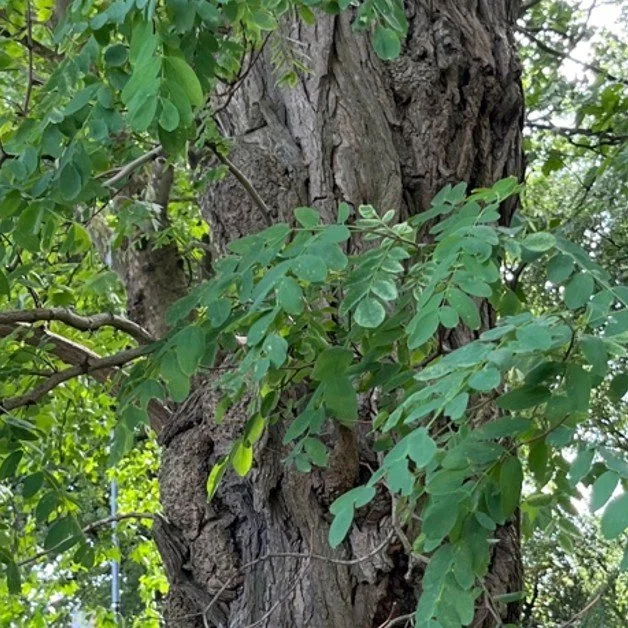
Another common name for this tree is false acacia – a literal translation of its Latin name. There are several mature trees along the Parkville Road boundary with deeply furrowed bark, acacia like composite leaves and drooping clusters of white flowers in spring that develop into pea like pods in autumn.
Golden Honey Locust
Gleditsia tricanthos 'Sunburst'
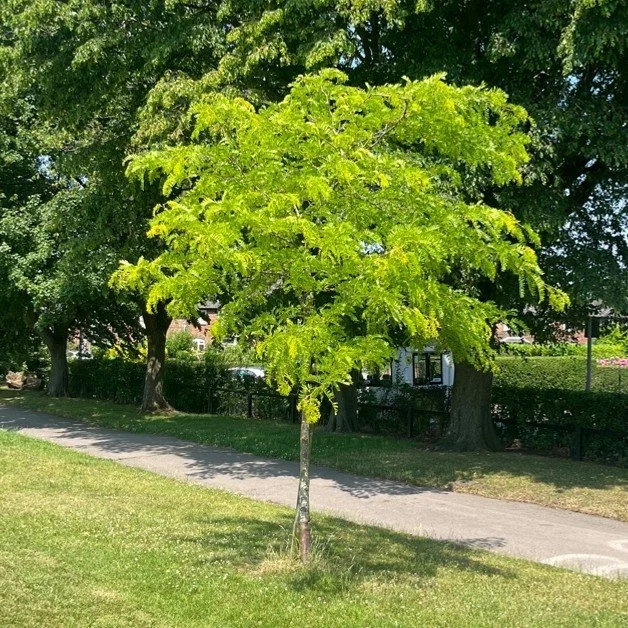
Unrelated to the black locust trees, the Honey Locust has similarly shaped acacia like leaves but in a vibrant yellow green colour making it an attractive ornamental tree. You’ll find a number of young trees along the north side of the playing fields and the east side of the meadow.
Tulip Tree
Liriodendron tulipifera
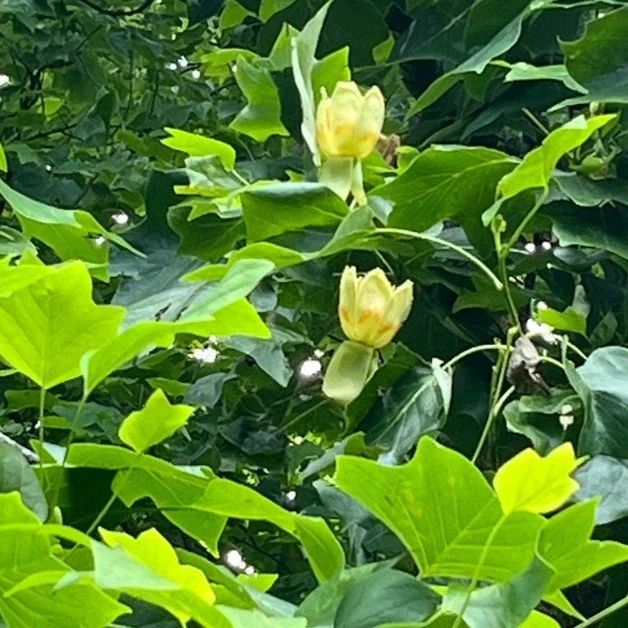
This tree has unusual shaped four lobed leaves and upright tulip shaped yellow flowers. It’s part of the magnolia family, native to eastern north America and was introduced to the UK in the 17th Century. Ours is South of the café on the main avenue across the park.
Turkey Oak
Quercus cerris
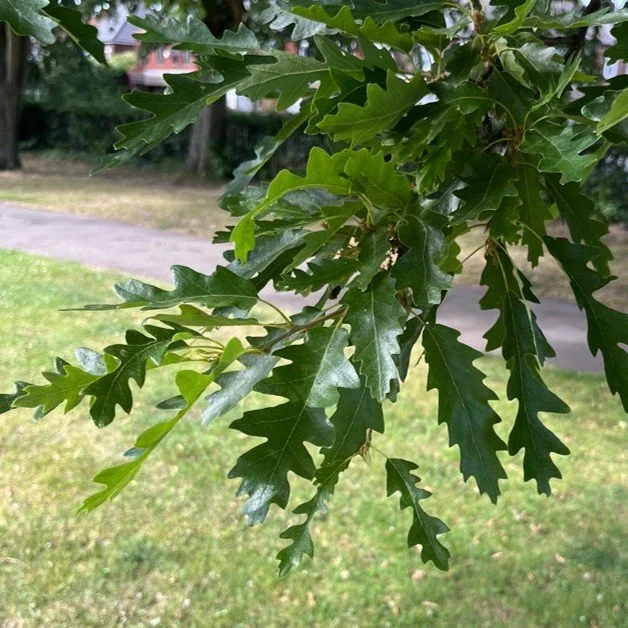
Introduced from Southern Europe in the 1700s, the Turkey oak has longer thinner lobed leaves than an English Oak, and the acorns sit in a “whiskered” or “hairy” cup. It provides habitat for the Knopper Gall wasp that has a complicated lifecycle that results in galls on English oak acorns. Several mature trees can be found along the northern boundary of the park.
Common Beech
Fagus sylvatica
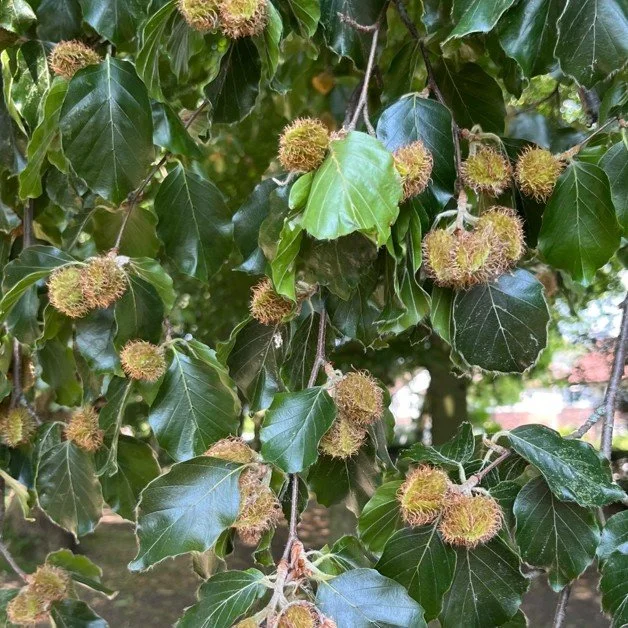
Mature beech trees are majestic with a huge domed crown and dense foliage that shades the ground and prevents much from growing underneath. Pollinated flowers develop into woody beech masts that enclose the seeds. There’s a group north of the basketball court, that along with the hornbeams next to them provide a great display of autumn leaf colours.
Sycamore
Acer pseudoplatanus
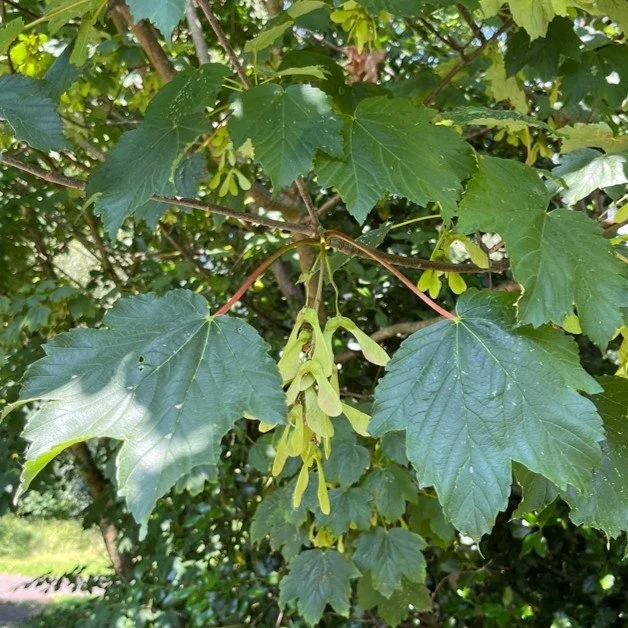
Sycamores are large broadleaf trees found all over the park with large five lobed leaves and distinctive winged seeds known as samaras. They are easily confused with Norway maples but can be differentiated by the red leaf stems in younger trees and narrower angle of the seeds.
Indian Horse Chestnut
Aesculus indica
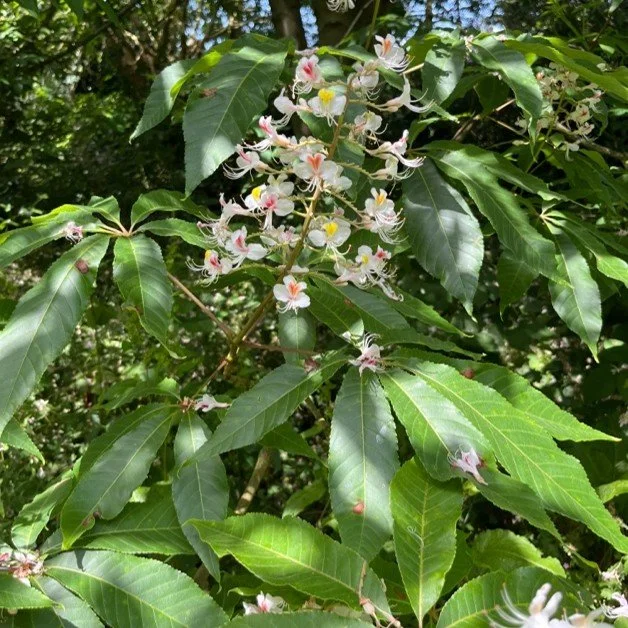
Also known as the Himalayan horse chestnut, this deciduous tree has large upright white and pink flowers and long leaves and was introduced into parks in the UK in the mid 19th Century. Don’t try this at home, but apparently in India the seeds are dried and ground into flour used for making chapatis and halwa. There’s one at the western end of the Serpentine Walk.
Common Ash
Fraxinus excelsior
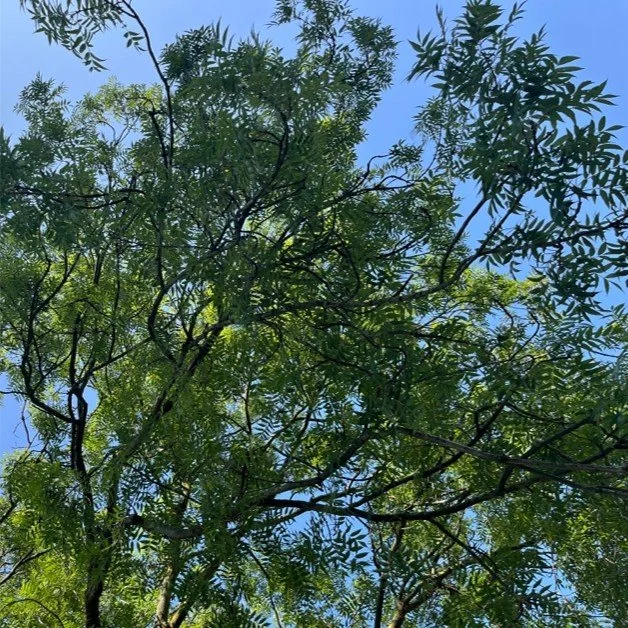
Tall and graceful with an airy canopy, these long living native trees are one of the most common in the UK and are found all around the park. Distinctive black buds allow them to be easily identified in winter, whilst the compound leaves and large bunches of winged key fruit are notable at other times of year. They support a wide range of wildlife and are home for many bird species and the tough timber is prized for making tool and sports handles such as hammers, axes and hockey sticks.
Aspen
Populus tremula
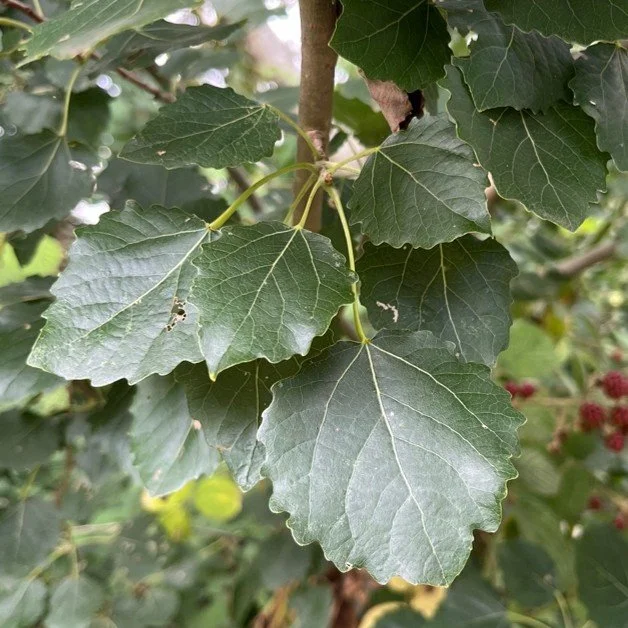
The aspen’s Latin name describes the way the leaves flutter in the wind, giving the whole tree a shimmering or trembling appearance and is caused by the unusual flattened leaf stalks or petioles which catch the wind. One of several very differing poplar species found in the park, a group of aspens can be found just to the South of the Westholme Road entrance.
Norway Maple
Acer platanoides
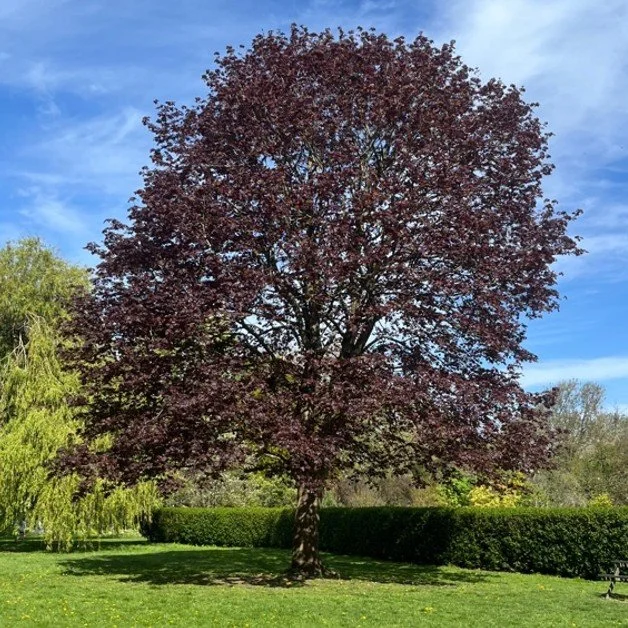
There are a number of Norway Maple species found across the park including varieties named Royal Red and Emerald Queen which gives a hint to the range of leaf colours that can be found, including this striking deep burgundy tree south of the café. Widely planted as an ornamental tree in parks due to the tolerance of pollution, the five lobed leaves are similar to sycamores’ and are a favourite with caterpillars.
Sweet Chestnut
Castanea sativa
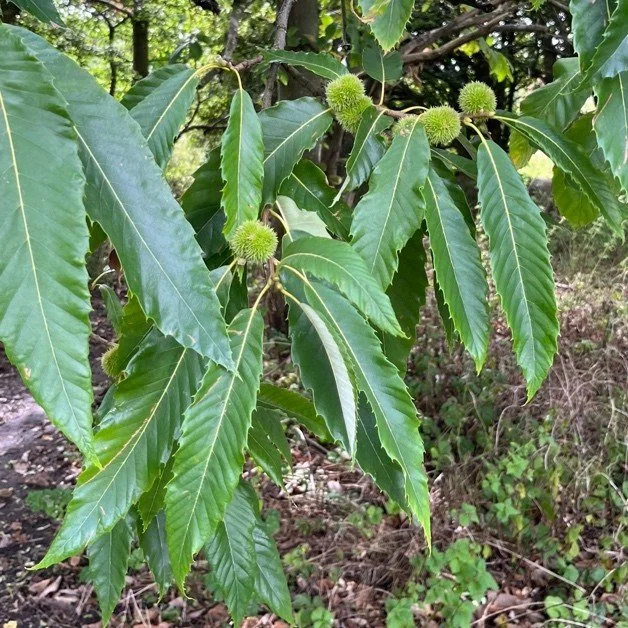
Not related to the horse chestnut, these large, long lived deciduous trees have long glossy leaves and only produce fruit when they are about 25 years old. The prickly green case holds edible chestnuts loved by the Romans and traditionally roasted or used in nut roasts and stuffings. According to the Woodland Trust website, the level of starch in the nuts is twice as high as the potato!
Spindle
Euonymus europaeus
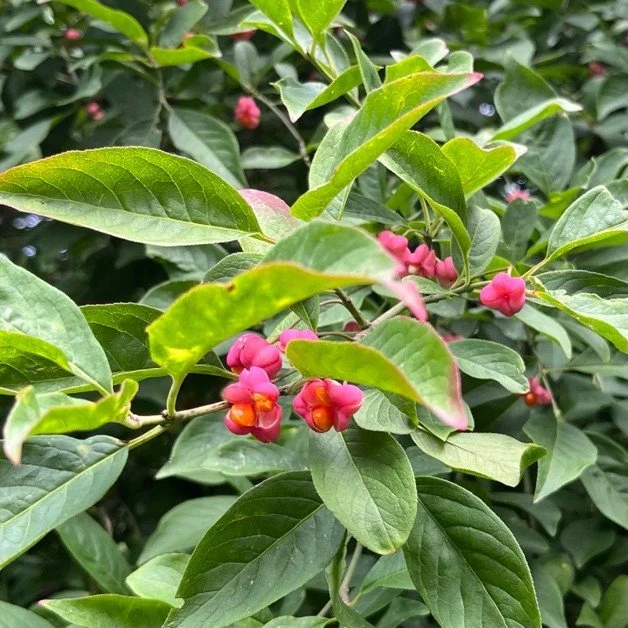
Ever of heard of Spindle Tree before? Me neither until I stumbled across it on the southern edge of Tiger Wood. It is native to Britain and the dense timber has been widely used in small wooden implements giving rise to a huge number of common names. As well as spindles (used for spinning wool) it is also known as Skewerwood and Pegwood – work it out for yourself. It’s at its best in autumn with vivid pink fruits with bright orange seeds.
Field Maple
Acer campestre
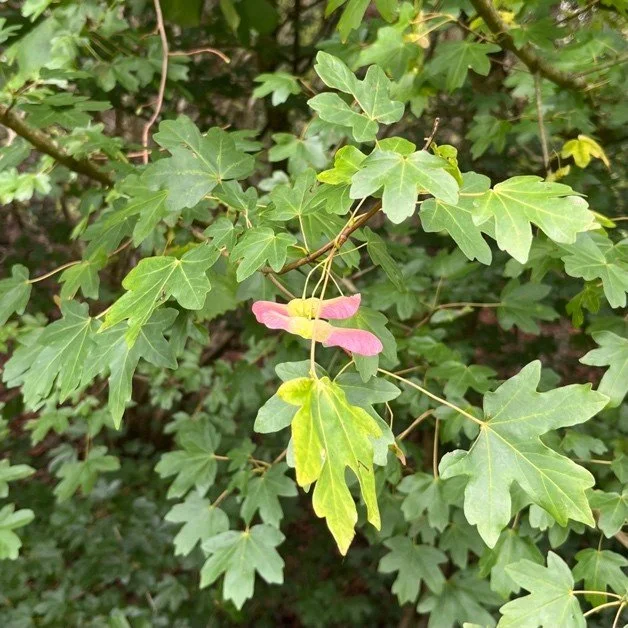
These native deciduous trees have smaller, rounder green leaves compared to the Norway and Freeman maples in the park, turning yellow before falling in autumn. The seed keys are almost straight (unlike those of sycamore and ash) and can have a hint of pink. A sturdy tree that can live for up to 350 years, it supports caterpillars, aphids, and all their predators, all while resisting air pollution and produces a hard, dense timber useful for carving and even making harps. Some younger trees can be found in Tiger Wood.
Elder
Sambucus nigra
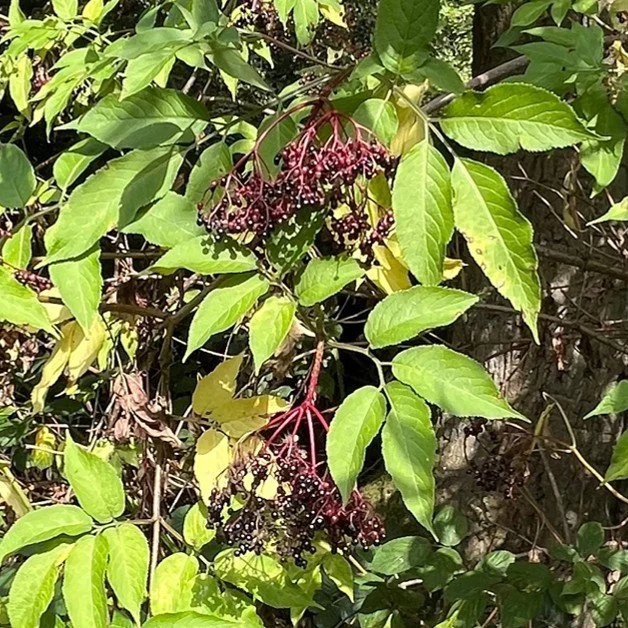
Elder is best known for its flowers and fruit – loved by wildlife and humans alike. Elderflower cordial and elderberry pie are best known but note that the uncooked berries are poisonous. Usually found in scrubby woodlands and hedgerows, it has also been historically used for making dyes for cloths including Harris Tweed.
Cockspur Thorn
Crataegus crus-galli
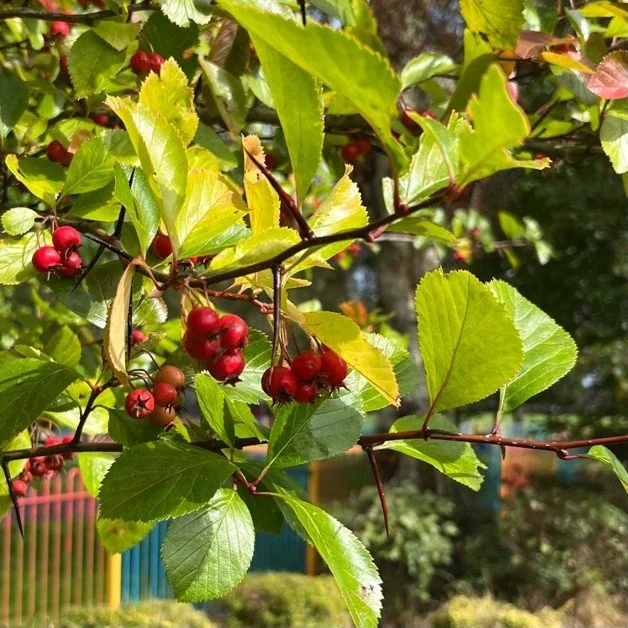
This small deciduous hawthorn tree is originally native to Canada and North America. Part of the wider rose family, it has glossy green leaves, viciously long thorns on some of the wild varieties and clusters of white flowers which are generally considered to smell unpleasant. Fortunately, the copious berries provide a good food source for birds and other wildlife.
Indian Bean Tree
Catalpa bignonioides
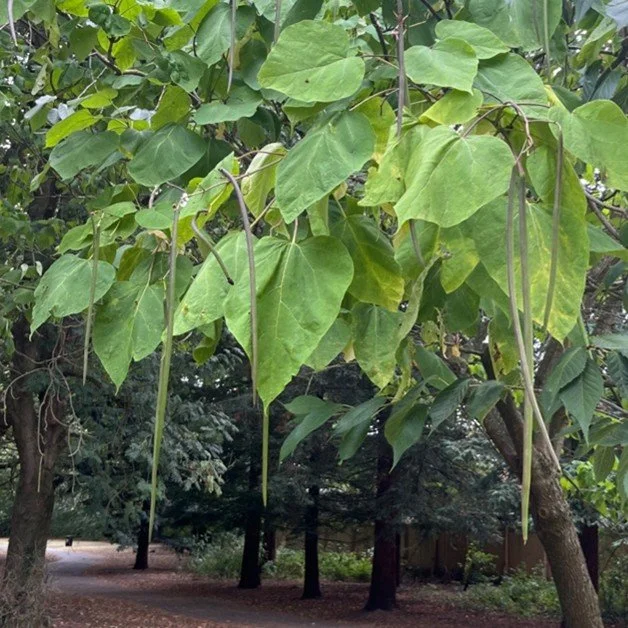
This tree doesn’t originate from India and it doesn’t grow “beans” but once you spot it, it’s difficult to miss. Located just inside the Old Broadway entrance it has huge heart shaped leaves and large clusters of flowers in Spring followed by unusual 30 cm long slender bean like seed pods that stay on the tree into the winter.
Common Walnut
Juglans regia
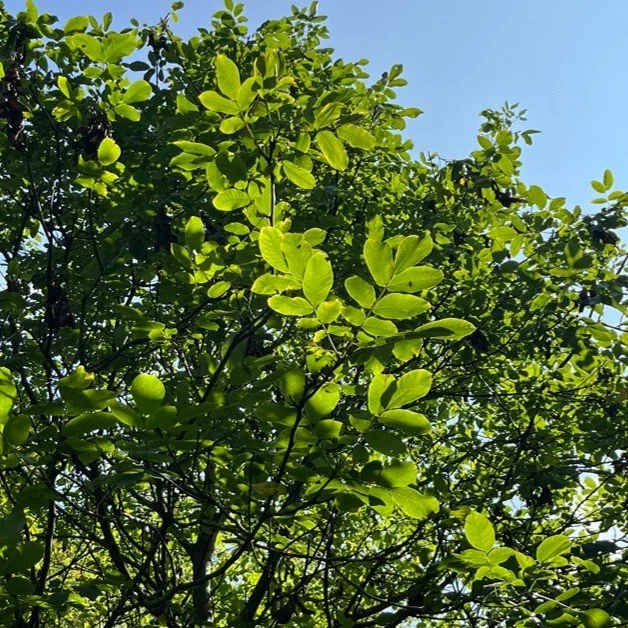
Grown in Britain since Roman times, the botanical name of the English walnut, Juglans regia, means the 'royal nut of Jupiter' and the nut itself is known as a ‘drupe’ – a fruit that has the seed enclosed by a stony layer. The nuts have been used in medicine and cookery for over 2000 years, and the timber is valued for fine furniture making. Ours is tucked behind the Japanese maples near the Fog Lane entrance and can be identified from the compound leaves with oval leaflets.
Swedish Whitebeam
Sorbus intermedia
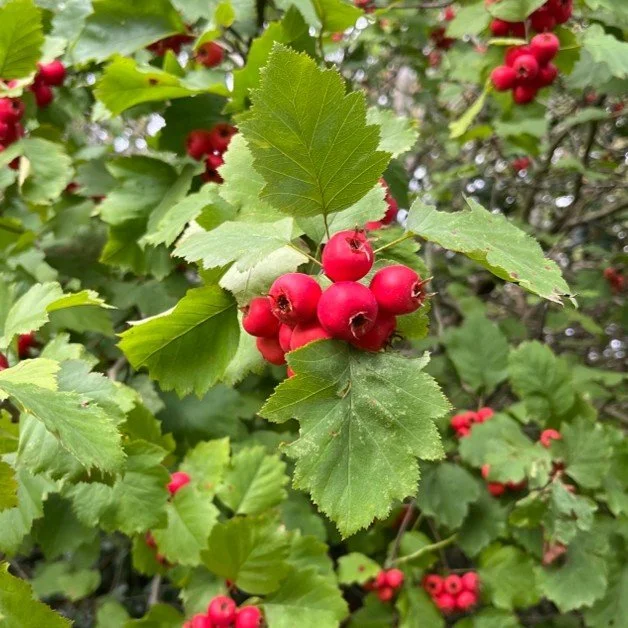
Unsurprisingly originally from Sweden, this tree is a hybrid of rowan and common whitebeam. It has clusters of white flowers in spring attracting pollinators followed by red berries in autumn providing food for birds. You can find one opposite the Old Broadway entrance.
Tiger Wood
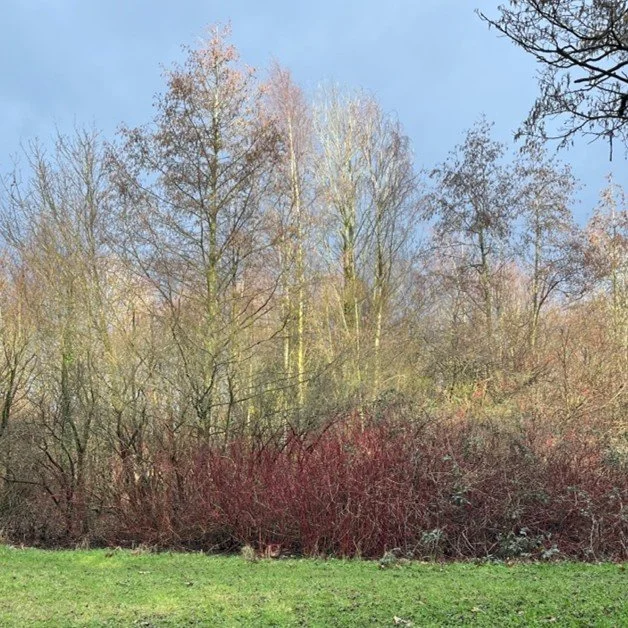
Not so much a type of tree, but a unique area of the park made up of trees. Tiger Wood is a copse of trees first planted in 2009, with silver birch, blackthorn, rowan trees, dogwood, a variety of other trees and bushes and native plants and flowers. Go into it via one of the trails and feel transported far away from urban living into a haven of woodland and wildlife.