The History of Fog Lane Park - Another playground for Manchester
Having sorted out the fencing, culverting and general layout of the park, it was now possible to go ahead with park construction. An article in the Manchester Evening News entitled: ‘New Parks. Two More Lungs for South Manchester’ reported on a visit by the Parks Committee to Fog Lane and Chorlton Parks:
Both are examples of the modern tendency in park construction, namely use rather than ornament. It would seem, indeed, that the “Keep off the grass” injunction will eventually disappear completely. Almost the whole of the 49 acres at Didsbury……are devoted to games -tennis, bowls, cricket, football and hockey pitches, and putting greens.
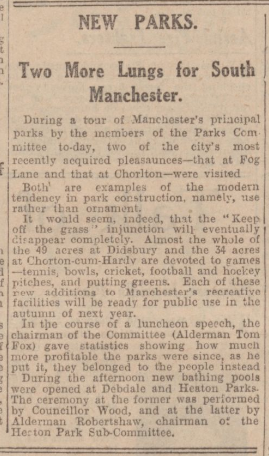
Manchester Evening News 15 July 1926
It stated in the article that Fog Lane Park would be ready for public use in the autumn of 1927, but there was still much to do. The Minutes of the Parks and Cemeteries Committee begins to list various accounts for materials for the park. On 3rd Sept 1926 there was a bill from Edmondson and Wyatt for 776 tons of shale at 12/6 (62.5p) per ton and 360 tons at 14/6 (70.5p) per ton. This would have been for the tennis courts, 20 of which were going to be of shale and 4 of grass. On the same date there was a bill from the Waterworks Department for laying a 3 inch main drain for the cost of £165 10s 3d.
On 1st Oct 1926 there was a bill from Partington Steel and Iron Co. Ltd., Irlam for 130 tons of Tarred Slag at 22/- (£1.10) per ton. This was the early twentieth century precursor to modern tarmac and was made by coating slag, which was the waste material that came from a blast furnace, with hot tar. Presumably, they were using this to lay out the paths in the park.
On Friday 8th October 1926, there was an article in the Manchester Evening News entitled ‘The Playgrounds of Manchester.’ This was written by Alderman Tom Fox, Lord Mayor of Manchester 1919-20, as part of a series of articles during the newspaper’s Civic Week. In the article, Alderman Fox pointed out how things had improved since 1914:
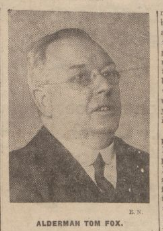
‘The year when the world thrust all constructive effort on one side and adopted as its motto “destruction.”… In 1914 the city possessed 114 public tennis courts upon which 82,234 games were played; today there are 319 tennis courts upon which last year 400,000 games were played.’
He went on to compare the increase in the numbers of bowling greens, football, hockey and cricket pitches over the same period, and stated that last year’s total income from games was £20,000. In most years, he said, the income covered the costs. However, money was not everything, he explained:
‘Our main return is in the health and happiness of the people – and the safety of the children. …Observant people will have noticed the absence of young children roaming aimlessly about in our main thoroughfares. Many of them, indeed, used to have little but the garbage of the gutter as playthings. We are repaid for all our efforts on their behalf by the admission of teachers, and all interested in the well-being of the rising generation that both in physique and behaviour the improvement of the children is most marked by what we have done for them by the provision of free recreation, with cricket and football thrown in until they reach the age of sixteen years.’
It is interesting how those in local government were beginning to realise the importance of open space and recreational opportunities for the working classes. Parks were no longer just gardens with floral displays to be admired from the paths, although this still had its place, but were now places where adults and children could run around and play games.
1927 was a time of great progress in the creation of the park. In January J. F. Lord of Liverpool Road wanted payment for 1500 blue edging tiles at 29 shillings (£1.45) per thousand and 10,540 blue edging tiles at 27 shillings (£1.35) per thousand. You might wonder what they were for, but if you look very carefully at the edges of some of the original paths you can still see them hidden under the grass. There were also further payments to Partington Steel and Iron Company in Irlam for many more tons of tarred slag.
By 21st January Mr Pettigrew reported that the laying out of the park had progressed so far that he considered that the time had arrived when the Committee should instruct the City Architect to prepare plans and estimates for the Bandstand and other buildings.
At the meeting on April 29th 1927, Mr Pettigrew reported that the tennis courts were practically ready for play, but they needed to be equipped. He suggested:
‘Two sets of temporary conveniences £70
Temporary ticket office and bowl house £50
Equipment for tennis courts £175 ‘
He advised that the expenditure should be submitted quickly:‘in order that the season might be made as long as possible.’ With regard to the bowling greens:
‘whilst the bowling greens are not so far forward as he would like, owing to the weather experienced, he suggests that the bowling greens might be opened for the season as and from Saturday next, the 30th April, subject, of course, to the weather being favourable.’
The public were now able to start using some of the facilities of the park, but with temporary accommodation. However, discussion was still on-going with regard to the provision of changing rooms for footballers and cricketers at the meeting on 14th Oct. Progress had been made by the end of the year, and on 25 Nov 1927 the Committee were informed that the fencing of Fog Lane Park by Messrs. Gorton and Blakemore Ltd. was now complete.
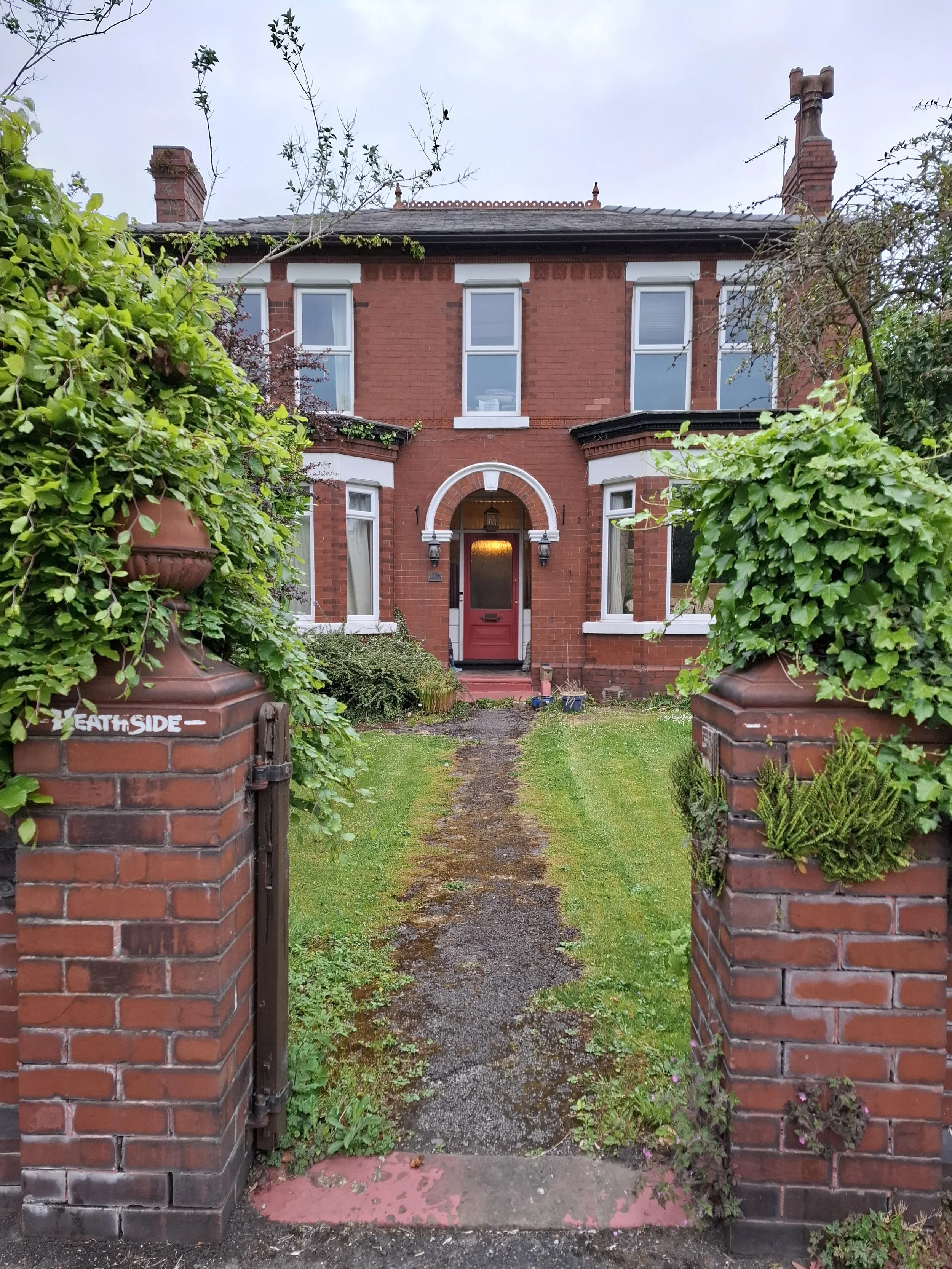
At the same time as the park was being laid out, they were making plans for the park keeper’s house. Originally, they had intended to build a house, together with tool house, mess room, store shed and stables. However, they had quickly realised that there was a house with outbuildings right next to the park which was ideal for their purposes. This was ‘Heathside’, which was owned by a Mr Crabtree. They approached the owner, who agreed to sell the property to them for £1,900, which, as the City Architect stated:
‘such premises could not be erected at the present time at anything like the price asked.’
The purchase took a while to go through, as Mr Crabtree had to give notice to his tenant, but on Jan 6th 1928 the Parks Committee finally gained vacant possession. They decided that the present Head Gardener at Fog Lane should be asked to take possession as Caretaker until the Committee decided how the house was to be used.