The History of Fog Lane Park - A terrible accident
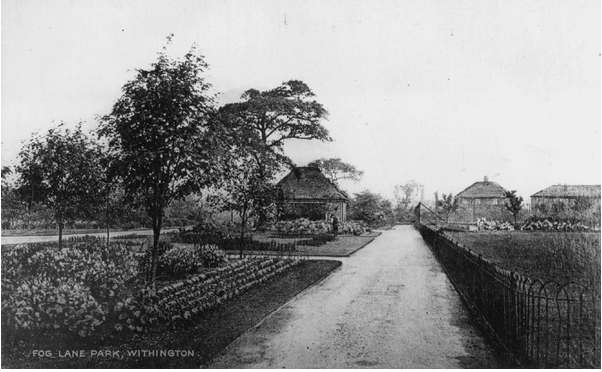
Image courtesy of Manchester Libraries
This is the oldest photograph of Fog Lane Park. It is supposed to have been taken in 1920, but must be much later than that, possibly more like 1930, as we can see one of the shelters in the photograph and they weren’t built until at least 1929. I have spent a great deal of time looking at this photo and trying to decide where it was taken, but to no avail. This is partly due to the houses in the distance and also what appear to be the tennis courts on the top right-hand side. Please get in touch, if you can figure it out.
Certainly, by the middle of 1928 the park had been laid out and fenced, construction of the buildings was underway, the playing fields were being used and the park was being planted up with trees and flower beds. Mr Pettigrew, the General Superintendent, reported back to the Parks and Cemeteries Committee after attending the Royal Horticultural Society’s Great Spring Show which was held in the Chelsea Hospital Gardens:
‘Notwithstanding the very backward season the exhibits almost without exception were extraordinarily fine and probably in no other Country in the world would it have been possible for the skill of the horticulturist to be seen in such perfection. As is usual at the Chelsea Show, quite a number of new and rare plants were in evidence and many of these were noted by the General Superintendent with a view to their being secured later on for use under appropriate conditions in your Parks Department.’
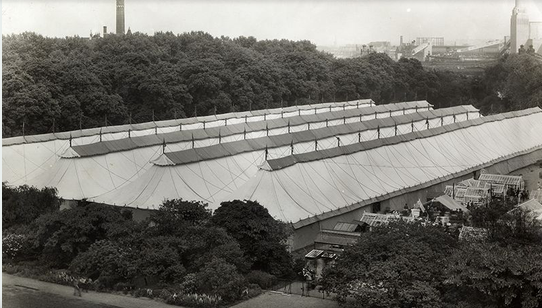
The floral marquee at the 1934 Chelsea Show. Image courtesy of RHS Lindley Collections
The Chelsea Flower Show had been running since 1913 and showed that Manchester Parks Department wanted to keep up with the latest fashions in horticulture.
At the meeting on 20 July, Mr Pettigrew reported back on a terrible accident which had happened at the park:
‘…whilst the horse at Fog Lane was tipping grass mowings near Wilmslow Road on the 12th instant, it took fright from the noise of a motor cycle which was backfiring on being started up in a building close by.
The horse with the lorry behind it ran along Broadway back to the Park. On entering the Park one of the wheels caught the gate post and the sudden impact caused the horse to rear on its hind legs. It then fell on the spiked railings causing two severe punctures in its chest. The Veterinary Surgeon was called in but he said it was doubtful if the horse would ever be right again and in the meantime it would suffer very considerably. He recommended that it should be destroyed. The General Superintendent therefore arranged for the horse to be destroyed the same afternoon.’
In September, the Parks Department received an interesting communication from the land agents selling off the remaining portions of Dr Slater’s estate in Withington. Dr Slater had lived at Withington Cottage and owned all the land around it. The agents wanted to know if the Corporation wanted to buy the land in order to extend Fog Lane Park. They were offering two separate plots; one to the north of Old Broadway, containing approximately 11 acres, and the other on the south side of 8.65 acres. These plots of land went almost up to Wilmslow Road, excluding the buildings which fronted on to that road. The Town Planning Committee were interested to know the views of the Parks Department, who responded saying that they were not interested in extending the park any further.
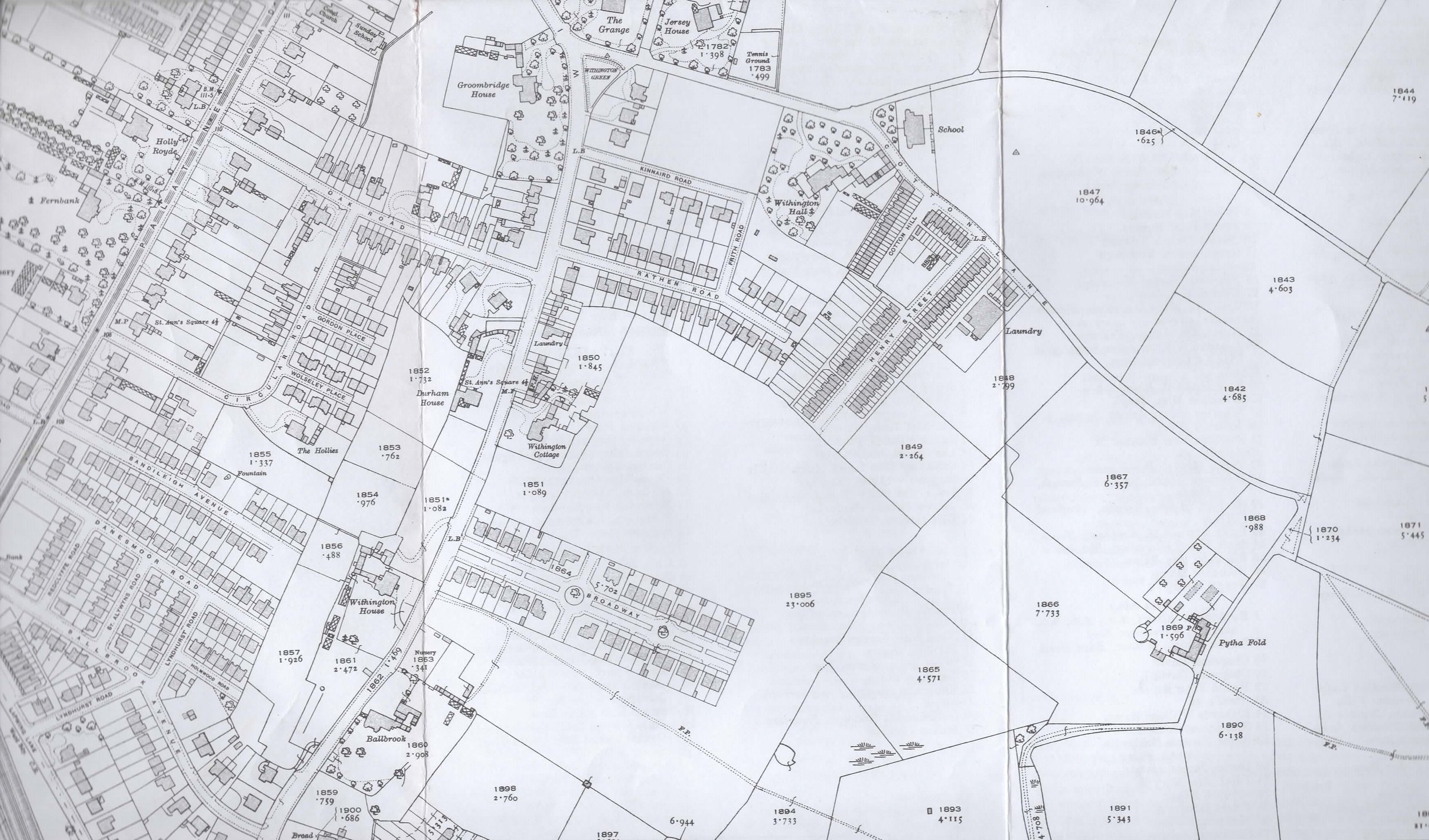
Image courtesy of OS map Withington and Burnage 1916
Looking at the map, it’s interesting to imagine the park taking the place of Brooklawn Drive, Westholme Road, Ferndene Road and the top end of Parkville Road and virtually surrounding Old Broadway. I wonder what the residents of Old Broadway would have made of that? Anyway, it was not to be. Instead they were surrounded by two new housing estates.
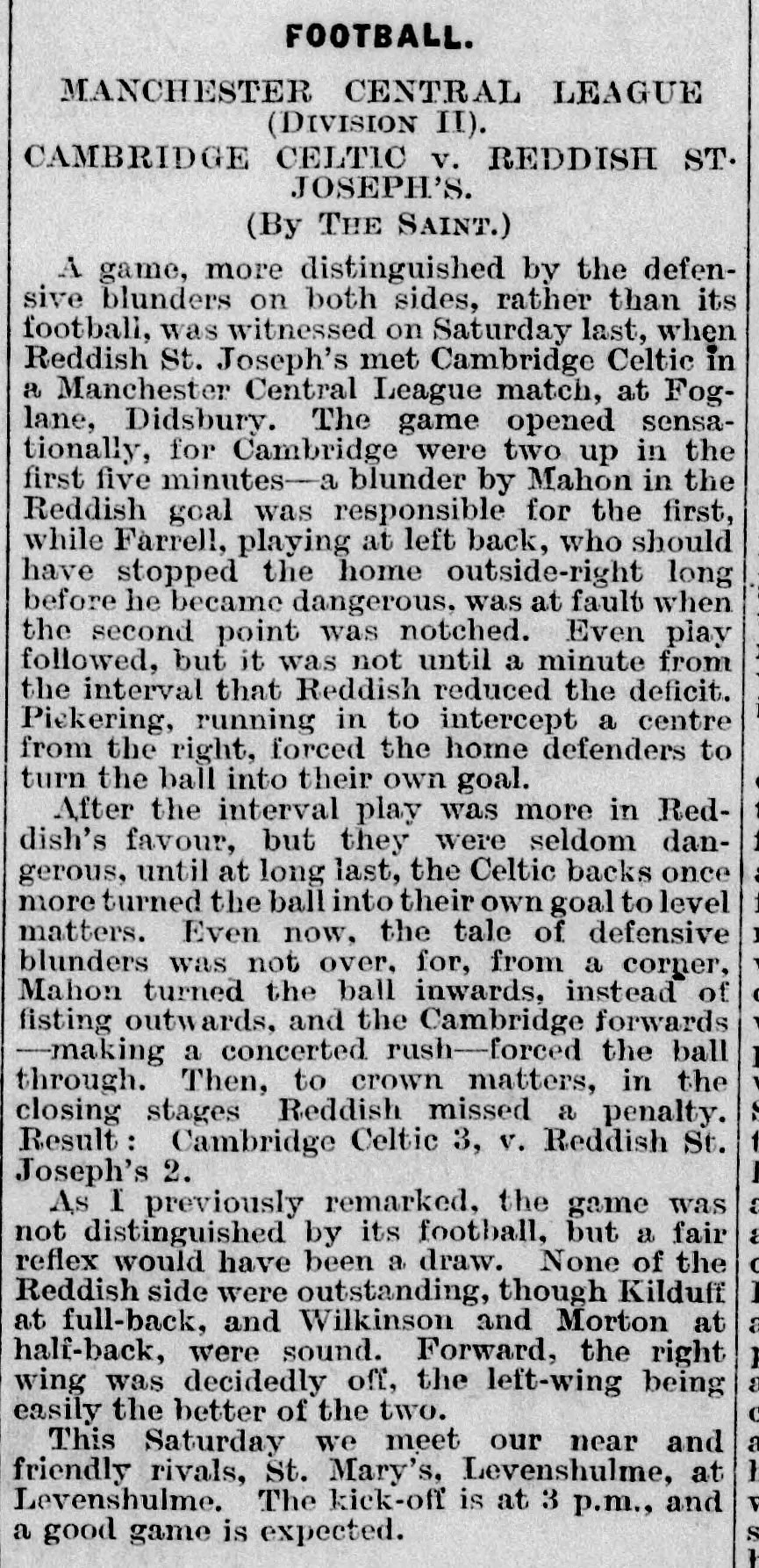
By September 14th 1928, the City Architect had drawn up plans for Dressing Rooms for Footballers. The plans show groups of four and eight rooms, each room being 10ft by 8ft, which are provided with seating accommodation, and a top light and ventilation. In other words, a basic shed with no running water or electricity. As Fog Lane Park had 14 pitches, it was estimated that the dressing rooms would cost £1,250. The plans were submitted for approval. By the time of the Parks Committee meeting on 7th December, 19 firms had submitted quotes for the Footballers’ Dressing Huts. Initially, they had accepted the lowest tender by Mr E.W. Haslam of High Lane Stockport for £2,358. This seems a lot, but was for all the changing rooms in Fog Lane, Chorlton, Broadhurst and Heaton Parks, and also Cringle Fields and Boggart-Hole-Clough. However, ‘the result of enquiries which have been made regarding this firm are very unsatisfactory’. The City Architect recommended the next lowest tender of £3,451 10s 4d from Messrs. E. Hughes & Co. Worsley Avenue, Moston. Changing rooms, or no changing rooms, this didn’t stop local teams from playing at Fog Lane Park, as this report in the Stockport County Express on 25 Oct 1928 shows:
The last Parks Department meeting of the year on 21 December 1928, saw a flurry of activity, with tenders being agreed for the two shelters and the bowls house and tennis pavilion. The General Superintendent reported that as the bandstand was expected to be ready before the next music season, it was necessary to put in an order for 2000 chairs which were to be collapsible garden chairs at the cost of £300. This seems to be an awfully large number of chairs for the bandstand area in Fog Lane Park, but as they were also discussing Chorlton Park Bandstand, they may have intended 1000 for each park. This still seems a very large number to me.
However, at a later meeting on 15th February 1929, the City Architect reported that the estimate for the cost of building the Bandstand had been too low. The lowest tender received for this contract was £576 13s 4d, which was £76 13s 4d in excess of the amount provided by the Council for the work. However, there was money over from the allocation of funds for the Conveniences, so the City Architect suggested that the Finance Committee be requested to approve a transfer of £77 between them. This was approved by the Parks Department and presented to the Finance Committee.
Fog Lane Park does not crop up again in the Minutes of the Parks and Cemeteries Committee for 1929. However, in the Minutes for 14th November 1930, the City Architect reported that ‘the work of painting the shelters, lavatories, bandstand, bowlhouse, seats, rails, gates &c.’ had now been completed by the Public Health (Painting) Department at the cost of £327 4s 11d and the Treasurer was authorised to pay the accounts. It appears that the work on Fog Lane Park had been completed, and it was now fully open to the public.